
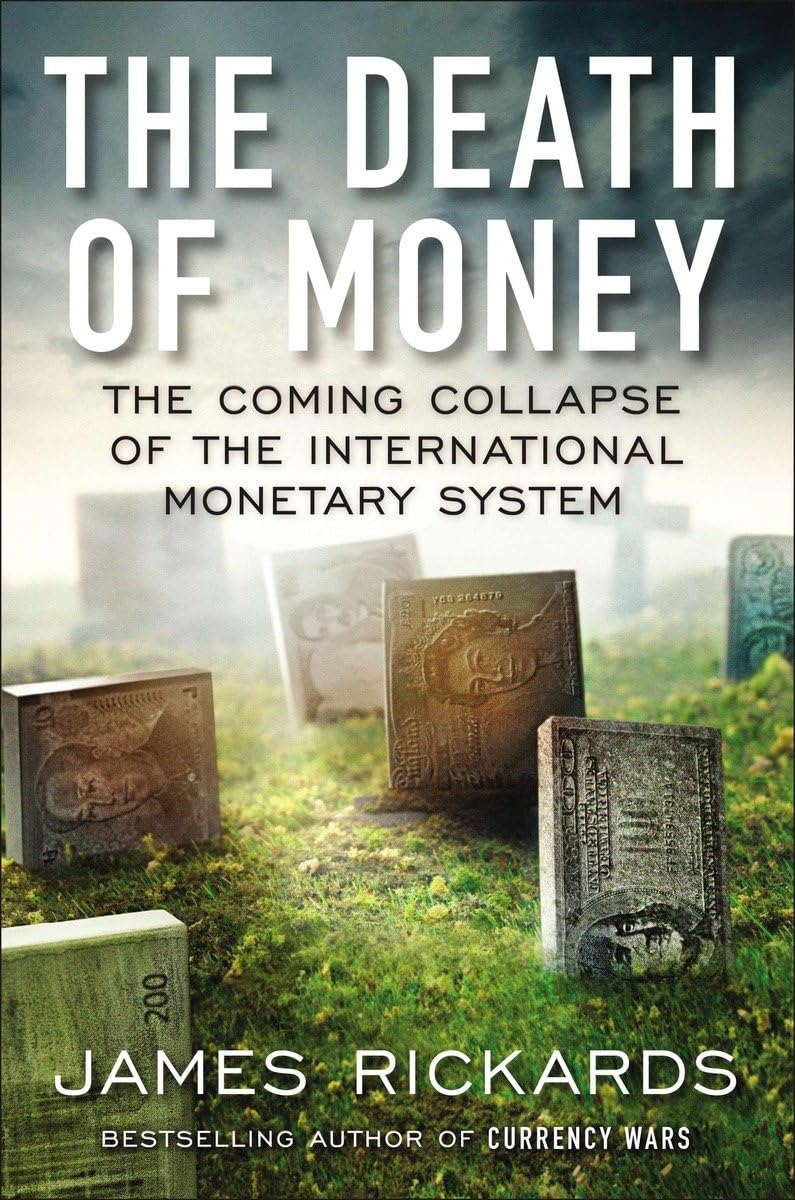
Title
The Death Of Money: The Coming Collapse Of The International Monetary System
Sold by Ergodebooks, an authorized reseller.
Returns accepted within 30 days | support@ergodebooks.com
Shipping Information
- Free Standard Shipping — United States only
- Processing Time: 3–5 business days
- Estimated Delivery: 6–10 business days after dispatch
- Double-boxed, fully insured & discreetly packaged
- Tracking number sent via email once dispatched
Returns & Refund
Returns accepted within 30 days of delivery.
Damaged or Defective Item
Free return shipping + replacement or full refund
Wrong Item Received
Free return shipping + replacement or full refund
Change of Mind
Return shipping at customer's expense · 25% restocking fee applies
Payment Option

The Next Financial Collapse Will Resemble Nothing In History. . . . Deciding Upon The Best Course To Follow Will Require Comprehending A Minefield Of Risks, While Poised At A Crossroads, Pondering The Death Of The Dollar.The International Monetary System Has Collapsed Three Times In The Past Hundred Years, In 1914, 1939, And 1971. Each Collapse Was Followed By A Period Of Tumult: War, Civil Unrest, Or Significant Damage To The Stability Of The Global Economy. Now James Rickards, The Acclaimed Author Of Currency Wars, Shows Why Another Collapse Is Rapidly Approachingand Why This Time, Nothing Less Than The Institution Of Money Itself Is At Risk.The American Dollar Has Been The Global Reserve Currency Since The End Of The Second World War. If The Dollar Fails, The Entire International Monetary System Will Fail With It. No Other Currency Has The Deep, Liquid Pools Of Assets Needed To Do The Job.Optimists Have Always Said, In Essence, That Theres Nothing To Worry Aboutthat Confidence In The Dollar Will Never Truly Be Shaken, No Matter How High Our National Debt Or How Dysfunctional Our Government. But In The Last Few Years, The Risks Have Become Too Big To Ignore. While Washington Is Gridlocked And Unable To Make Progress On Our Longterm Problems, Our Biggest Economic Competitorschina, Russia, And The Oilproducing Nations Of The Middle Eastare Doing Everything Possible To End U.S. Monetary Hegemony. The Potential Results: Financial Warfare. Deflation. Hyperinflation. Market Collapse. Chaos.Rickards Offers A Bracing Analysis Of These And Other Threats To The Dollar. The Fundamental Problem Is That Money And Wealth Have Become More And More Detached. Money Is Transitory And Ephemeral, And It May Soon Be Worthless If Central Bankers And Politicians Continue On Their Current Path. But True Wealth Is Permanent And Tangible, And It Has Real Value Worldwide.The Author Shows How Everyday Citizens Who Save And Invest Have Become Guinea Pigs In The Central Bankers Laboratory. The Worlds Major Financial Playersnational Governments, Big Banks, Multilateral Institutionswill Always Muddle Through By Patching Together New Rules Of Thegame. The Real Victims Of The Next Crisis Will Be Small Investors Who Assumed That What Worked For Decades Will Keep Working.Fortunately, Its Not Too Late To Prepare For The Coming Death Of Money. Rickards Explains The Power Of Converting Unreliable Money Into Real Wealth: Gold, Land, Fine Art, And Other Longterm Stores Of Value. As He Writes: The Coming Collapse Of The Dollar And The International Monetary System Is Entirely Foreseeable. . . . Only Nations And Individuals Who Make Provision Today Will Survive The Maelstrom To Come.
⚠️ WARNING (California Proposition 65):
This product may contain chemicals known to the State of California to cause cancer, birth defects, or other reproductive harm.
For more information, please visit www.P65Warnings.ca.gov.
- Q: How many pages does the book have? A: This book has three hundred sixty-eight pages. It provides an in-depth analysis of the international monetary system and its potential collapse.
- Q: What are the dimensions of the book? A: The book measures six point three inches in length, one point twenty-four inches in width, and nine point three inches in height. These dimensions make it a suitable size for most bookshelves.
- Q: What type of binding does the book have? A: The book is bound in hardcover. This type of binding offers durability and a premium feel that enhances its longevity.
- Q: Who is the author of 'The Death of Money'? A: The author is James Rickards. He is known for his expertise in economics and finance, particularly in monetary policy.
- Q: What is the main theme of the book? A: The main theme revolves around the potential collapse of the international monetary system, focusing on the risks associated with the American dollar. It discusses historical precedents and future implications.
- Q: Is this book suitable for beginners in finance? A: Yes, this book is suitable for beginners. It explains complex financial concepts in an accessible manner, making it easier for readers new to monetary policy.
- Q: How can I apply the insights from this book? A: You can apply the insights by understanding the risks associated with fiat currency and considering alternatives like gold or real estate as wealth preservation strategies.
- Q: What age group is this book appropriate for? A: This book is appropriate for adults and older teens interested in economics. Its content is complex and may not be suitable for younger readers.
- Q: What should I do if the book gets damaged? A: If the book arrives damaged, you should contact the retailer for their return policy. Most retailers will allow for returns or exchanges within a specified period.
- Q: Are there any warranty options for this book? A: No, books typically do not come with a warranty. However, you can inquire about the retailer's return and exchange policies.
- Q: How should I store this book to keep it in good condition? A: Store the book upright on a shelf in a cool, dry place. Avoid exposure to direct sunlight to prevent fading of the cover and pages.
- Q: Can I lend this book to others? A: Yes, you can lend this book to others. Just ensure that they handle it carefully to avoid wear and tear.
- Q: What is the significance of the dollar in this book? A: The dollar is significant as it is the world's reserve currency. The book discusses the implications of its potential failure on the global economy.
- Q: What are some key risks mentioned in the book? A: Key risks include financial warfare, inflation, and the detachment of money from real wealth. The book emphasizes the urgency of addressing these issues.
- Q: Is this book a good resource for understanding financial crises? A: Yes, it is a valuable resource for understanding financial crises. It provides historical context and insights into future risks facing the economy.
- Q: What makes this book stand out from others on monetary policy? A: This book stands out due to its timely analysis of the dollar's potential collapse and practical advice on preserving wealth amidst economic uncertainty.