
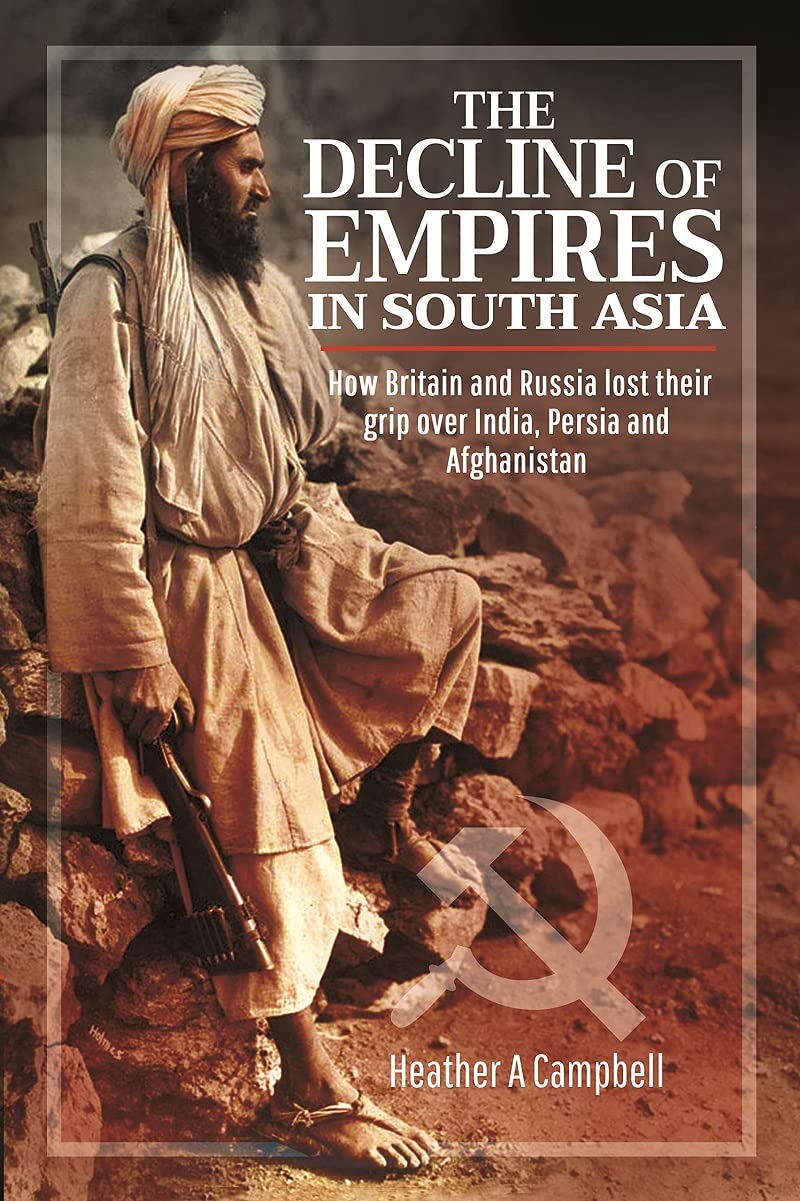
Title
The Decline of Empires in South Asia: How Britain and Russia lost their grip over India, Persia and Afghanistan,Used
Sold by Ergodebooks, an authorized reseller.
Returns accepted within 30 days | support@ergodebooks.com
Shipping Information
- Free Standard Shipping — United States only
- Processing Time: 3–5 business days
- Estimated Delivery: 6–10 business days after dispatch
- Double-boxed, fully insured & discreetly packaged
- Tracking number sent via email once dispatched
Returns & Refund
Returns accepted within 30 days of delivery.
Damaged or Defective Item
Free return shipping + replacement or full refund
Wrong Item Received
Free return shipping + replacement or full refund
Change of Mind
Return shipping at customer's expense · 25% restocking fee applies
Payment Option

The postFirst World War period was pivotal in global history, international relations and geopolitics. And no more than in South Asia. where for decades the Great Game in geopolitical rivalry of the two greatest modern empires Britain and Russia had dominated international relations. But with the advent of Communism in Russia and growing nationalism and panIslamism in Afghanistan, Persia, and India, Britians imperial standing was under threat. Faced with these problems, some in the British government, such as Lord Curzon, the dominant imperialist in the British Foreign Office, fell back on what they knew old patterns of rivalry and highhandedness that characterized the Great Game. Not all, however, agreed with Curzon, and with war in Afghanistan, civil unrest in India, and rising tensions in Persia, those who opposed this Great Game mindset advocated a new way forward for British foreign relations.
⚠️ WARNING (California Proposition 65):
This product may contain chemicals known to the State of California to cause cancer, birth defects, or other reproductive harm.
For more information, please visit www.P65Warnings.ca.gov.
- Q: How many pages does this book have? A: This book has two hundred forty pages. It provides an in-depth exploration of the decline of empires in South Asia.
- Q: What is the binding type of the book? A: The book is hardcover. This binding offers durability and a premium feel for readers.
- Q: What are the dimensions of the book? A: The book measures six point two six inches in length, zero point nine eight inches in width, and nine point two five inches in height.
- Q: Who is the author of this book? A: The author is Heather Campbell. She provides a detailed analysis of the geopolitical shifts in South Asia.
- Q: What historical period does this book cover? A: The book covers the post-First World War period. It focuses on the geopolitical dynamics in South Asia during that time.
- Q: Is this book suitable for young readers? A: The book is suitable for older teens and adults. It contains complex themes related to history and politics.
- Q: How can I apply the insights from this book? A: Readers can apply the insights by understanding historical geopolitical strategies. This can enhance discussions on current international relations.
- Q: Is this book well-researched? A: Yes, it is well-researched and provides historical context. It draws on various sources to present a factual narrative.
- Q: How should I store this hardcover book? A: Store it upright on a shelf. This prevents damage to the spine and pages.
- Q: Can I clean the book if it gets dirty? A: Yes, you can clean the book with a dry cloth. Avoid using water or cleaning solutions to protect the cover.
- Q: What if the book arrives damaged? A: If it arrives damaged, you can return it for a full refund or replacement. Check the retailer's return policy for details.
- Q: Does this book contain illustrations? A: No, the book does not contain illustrations. It focuses on text to convey its historical analysis.
- Q: Is this book a good choice for someone interested in military history? A: Yes, it is a great choice for military history enthusiasts. It discusses the decline of empires, particularly in a military context.
- Q: Does this book discuss the impact of nationalism? A: Yes, it discusses the rise of nationalism in South Asia. This theme is central to understanding the geopolitical changes.
- Q: Are there any specific case studies in the book? A: Yes, the book includes case studies on India, Persia, and Afghanistan. These examples illustrate the broader themes discussed.