
Title
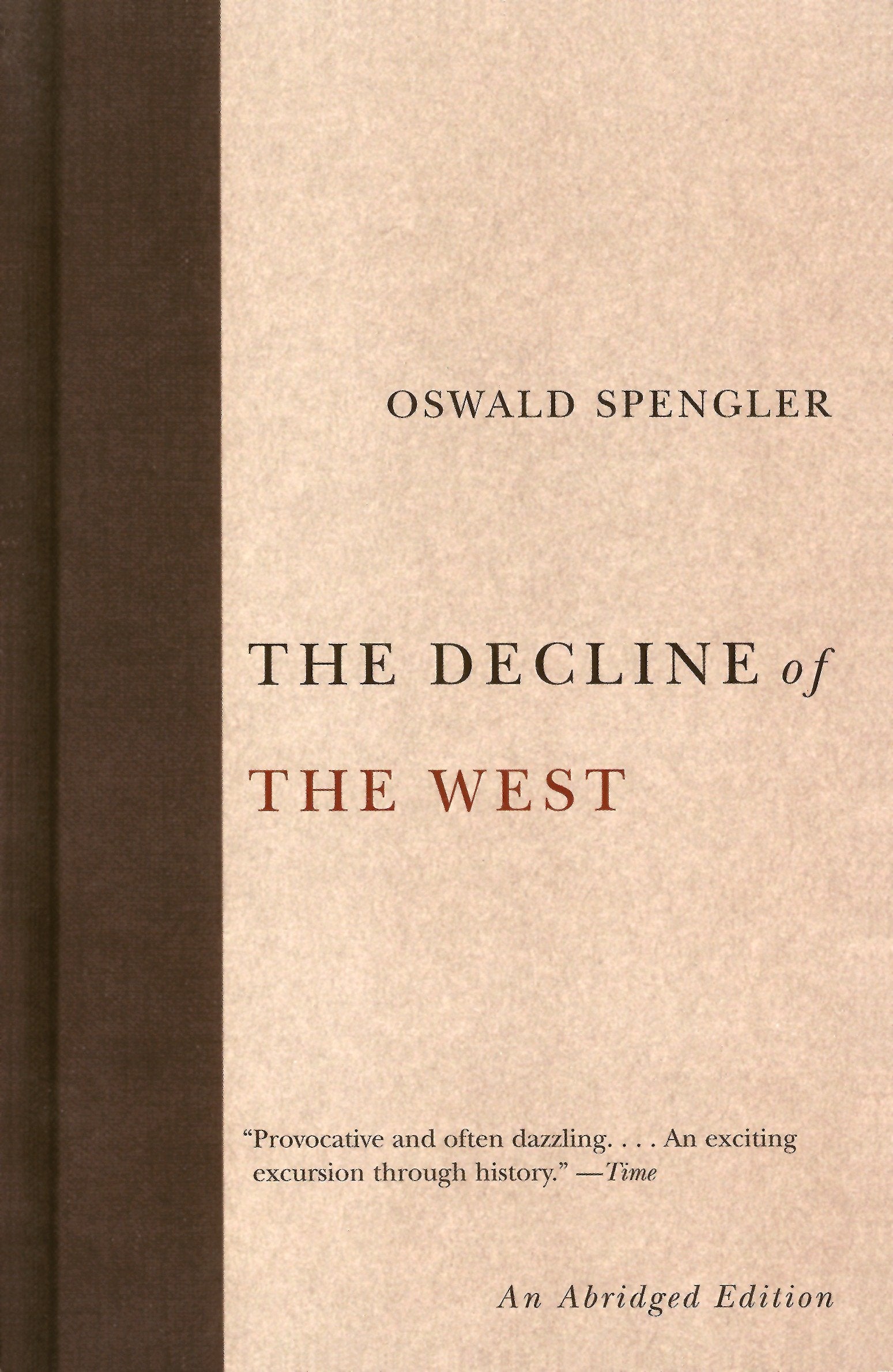
The Decline Of The West (Abridged)
Sold by Ergodebooks, an authorized reseller.
Returns accepted within 30 days | support@ergodebooks.com
Shipping Information
- Free Standard Shipping — United States only
- Processing Time: 3–5 business days
- Estimated Delivery: 6–10 business days after dispatch
- Double-boxed, fully insured & discreetly packaged
- Tracking number sent via email once dispatched
Returns & Refund
Returns accepted within 30 days of delivery.
Damaged or Defective Item
Free return shipping + replacement or full refund
Wrong Item Received
Free return shipping + replacement or full refund
Change of Mind
Return shipping at customer's expense · 25% restocking fee applies
Payment Option

Product Descriptionsince Its First Publication More Than Eighty Years Ago, The Decline Of The West Has Ranked As One Of The Most Widely Read And Talked About Books Of Our Time. A Sweeping Account Of Western Culture By A Historian Of Legendary Intellect, It Is An Astonishingly Informed, Forcefully Eloquent, Thrillingly Controversial Work That Advances A World View Based On The Cyclical Rise And Fall Of Civilizations.This Abridgment Presents The Most Significant Of Oswald Spenglers Arguments, Linked By Illuminating Explanatory Passages. It Makes Available In One Volume A Masterpiece Of Grandscale History And Farreaching Prophesy That Remains Essential Reading For Anyone Interested In The Factors That Determine The Course Of Civilizations.Reviewprovocative And Often Dazzling. . . . An Exciting Excursion Through History. Timeaudacious, Profound . . . Exciting And Magnificent.The New Republicthis Grand Panorama, This Imaginative Sweep, This Staggering Erudition, This Nietzschean Prose, With Its Fine Color And Ringing Force, Mark A Work That Must Endure. The New York Sunwith Monumental Learning . . . Spengler Surveys Mans Cosmic March. . . . Always Forceful . . . Eloquent.The New York Timesabout The Authoroswald Spengler, One Of The Most Controversial Historians Of The Twentieth Century, Was Born In Blankenburg, Germany, In 1880. He Studied Mathematics, Philosophy, And History In Munich And Berlin. Except For His Doctors Thesis On Heraclitus, He Published Nothing Before The First Volume Of The Decline Of The West, Which Appeared When He Was Thirtyeight. The Agadir Crisis Of 1911 Provided The Immediate Incentive For His Exhaustive Investigations Of The Background And Origins Of Our Civilization. Spengler Chose His Main Title In 1912, Finished A Draft Of The First Volume Two Years Later, And Published It In 1918. The Second, Concluding Volume Was Published In 1922. The Decline Of The West Was First Published In This Country In 1926 (Vol. 1) And 1928 (Vol. 2); This Abridged Edition Was First Published Here In 1962.For Many Years Spengler Lived Quietly In His Home In Munich, Thinking, Writing, And Pursuing His Hobbiescollecting Pictures And Primitive Weapons, Listening To Beethoven Quartets, And Reading The Comedies Of Shakespeare And Molire. He Took Occasional Trips To The Harz Mountains And To Italy. In 1936, Three Weeks Before His Fiftysixth Birthday, He Died In Munich Of A Heart Attack.Excerpt. Reprinted By Permission. All Rights Reserved.Iintroductionin This Book Is Attempted For The First Time The Venture Of Predetermining History, Of Following The Still Untravelled Stages In The Destiny Of A Culture, And Specifically Of The Only Culture Of Our Time And On Our Planet Which Is Actually In The Phase Of Fulfilmentthe West Europeanamerican.Is There A Logic Of History? Is There, Beyond All The Casual And Incalculable Elements Of The Separate Events, Something That We May Call A Metaphysical Structure Of Historic Humanity, Something That Is Essentially Independent Of The Outward Formssocial, Spiritual And Politicalwhich We See So Clearly? Are Not These Actualities Indeed Secondary Or Derived From That Something? Does Worldhistory Present To The Seeing Eye Certain Grand Traits, Again And Again, With Sufficient Constancy To Justify Certain Conclusions? And If So, What Are The Limits To Which Reasoning From Such Premisses May Be Pushed?Is It Possible To Find In Life Itselffor Human History Is The Sum Of Mighty Lifecourses Which Already Have Had To Be Endowed With Ego And Personality, In Customary Thought And Expression, By Predicating Entities Of A Higher Order Like The Classical Or The Chinese Culture, Modern CivilizationA Series Of Stages Which Must Be Traversed, And Traversed Moreover In An Ordered And Obligatory Sequence? For Everything Organic The Notions Of Birth, Death, Youth, Age, Lifetime, Are Fundamentalsmay Not These Notions, In This Sphere Also, Po
⚠️ WARNING (California Proposition 65):
This product may contain chemicals known to the State of California to cause cancer, birth defects, or other reproductive harm.
For more information, please visit www.P65Warnings.ca.gov.
- Q: How many pages does the book have? A: This book has four hundred eighty pages. It provides a comprehensive examination of Western culture and civilization.
- Q: What are the dimensions of this book? A: The dimensions of the book are five point twenty-one inches in length, one point zero six inches in width, and seven point ninety-four inches in height.
- Q: What type of binding does this book have? A: This book is paperback bound. This makes it lightweight and portable for readers.
- Q: Who is the author of this book? A: The author of this book is Oswald Spengler. He is known for his profound insights into the cyclical nature of civilizations.
- Q: What is the main theme of this book? A: The main theme is the cyclical rise and fall of civilizations. It explores cultural and historical dynamics in a grand context.
- Q: Is this book suitable for beginners in history? A: Yes, this book is suitable for beginners. It presents complex ideas in an accessible format through an abridgment.
- Q: Can I read this book as a high school student? A: Yes, high school students can read this book. It offers essential insights into Western history and culture.
- Q: What makes this book a classic? A: This book is considered a classic due to its influential arguments and comprehensive analysis of civilization. It has been widely discussed for over eighty years.
- Q: How should I store this book? A: Store this book in a cool, dry place. Keeping it away from direct sunlight will help preserve its condition.
- Q: Is this book safe for children? A: No, this book is not specifically aimed at children. It discusses complex historical themes that may not be suitable for younger audiences.
- Q: What is the condition of used copies of this book? A: Used copies of this book are typically in good condition. However, check for specific details if purchasing pre-owned.
- Q: What if the book arrives damaged? A: If the book arrives damaged, contact the seller for a return or exchange. Many sellers have policies for damaged items.
- Q: Is there a warranty for this book? A: No, typically there is no warranty for books. However, check the return policy for specific seller conditions.
- Q: How do I clean the book if it gets dirty? A: To clean the book, gently wipe the cover with a dry cloth. Avoid using water or cleaning solutions on the pages.
- Q: Can I return the book if I don’t like it? A: Yes, you can return the book if you follow the seller's return policy. Make sure to check the conditions for returns.
- Q: What is the significance of this book in modern culture? A: This book remains significant as it challenges readers to think critically about the evolution of civilizations and cultural dynamics.