
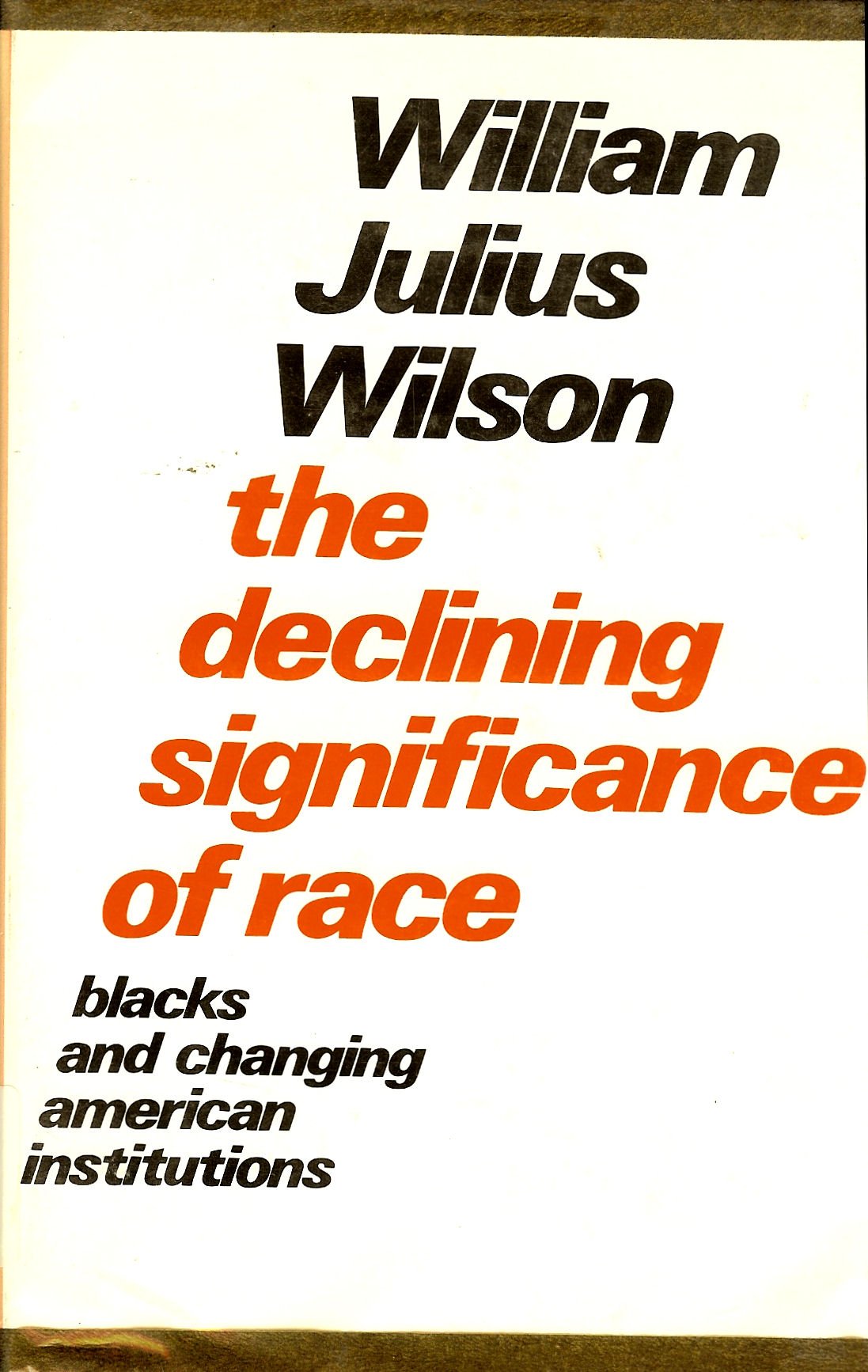
Title
The Declining Significance Of Race: Blacks And Changing American Institutions
Sold by Ergodebooks, an authorized reseller.
Returns accepted within 30 days | support@ergodebooks.com
Shipping Information
- Free Standard Shipping — United States only
- Processing Time: 3–5 business days
- Estimated Delivery: 6–10 business days after dispatch
- Double-boxed, fully insured & discreetly packaged
- Tracking number sent via email once dispatched
Returns & Refund
Returns accepted within 30 days of delivery.
Damaged or Defective Item
Free return shipping + replacement or full refund
Wrong Item Received
Free return shipping + replacement or full refund
Change of Mind
Return shipping at customer's expense · 25% restocking fee applies
Payment Option

When First Published In 1980, The Declining Significance Of Race Immediately Sparked Controversy With Its Contentious Thesis That Race Was Becoming Less Of A Deciding Factor In The Life Chances Of Black Americans Than Class.
⚠️ WARNING (California Proposition 65):
This product may contain chemicals known to the State of California to cause cancer, birth defects, or other reproductive harm.
For more information, please visit www.P65Warnings.ca.gov.
- Q: How many pages does the book have? A: This book has two hundred sixteen pages. It provides a comprehensive discussion on race and social policy.
- Q: What type of binding does this book have? A: This book is available in hardcover binding. Hardcover offers durability and a professional appearance for bookshelf display.
- Q: Who is the author of this book? A: The author is William Julius Wilson. He is a prominent sociologist known for his work on race and social issues.
- Q: What is the main theme of the book? A: The book explores the changing significance of race in American institutions. It addresses complex issues of race, class, and social policy.
- Q: Is this book suitable for academic study? A: Yes, this book is suitable for academic study. It is recognized as a significant contribution to the field of social sciences.
- Q: What kind of discussions does the book include? A: The book includes discussions on race, class, and the impact of social policies. It offers a critical analysis of historical and contemporary issues.
- Q: How do I care for this hardcover book? A: To care for this hardcover book, keep it in a dry place and avoid direct sunlight. Clean the cover with a soft, dry cloth.
- Q: Can this book be used as a reference for research? A: Yes, this book can be used as a reference for research. It synthesizes various findings and provides insights into race relations.
- Q: What should I do if the book arrives damaged? A: If the book arrives damaged, contact the seller for a return or exchange. Most sellers will assist with damaged items.
- Q: Is this book recommended for beginners in sociology? A: Yes, this book is recommended for beginners in sociology. It presents complex ideas clearly and is accessible for new readers.
- Q: What are the main criticisms addressed in the book? A: The book addresses criticisms of previous theories on race and disadvantage. It challenges assumptions and offers new perspectives.
- Q: How does this book compare to others in its genre? A: This book stands out for its integration of historical and contemporary analysis. It offers a unique synthesis that is often cited in the field.
- Q: What is the publication date of this book? A: The paperback edition was published recently, including a major new essay by the author. It reflects current discussions on race.
- Q: Is this book part of a series? A: No, this book is not part of a series. It is a standalone work focusing on significant themes in social sciences.
- Q: Are there any illustrations or graphs in the book? A: No, this book does not include illustrations or graphs. It primarily contains text discussing theoretical and empirical findings.
- Q: What age group is this book suitable for? A: This book is suitable for high school students and above. It addresses complex social issues that require mature understanding.