
Title
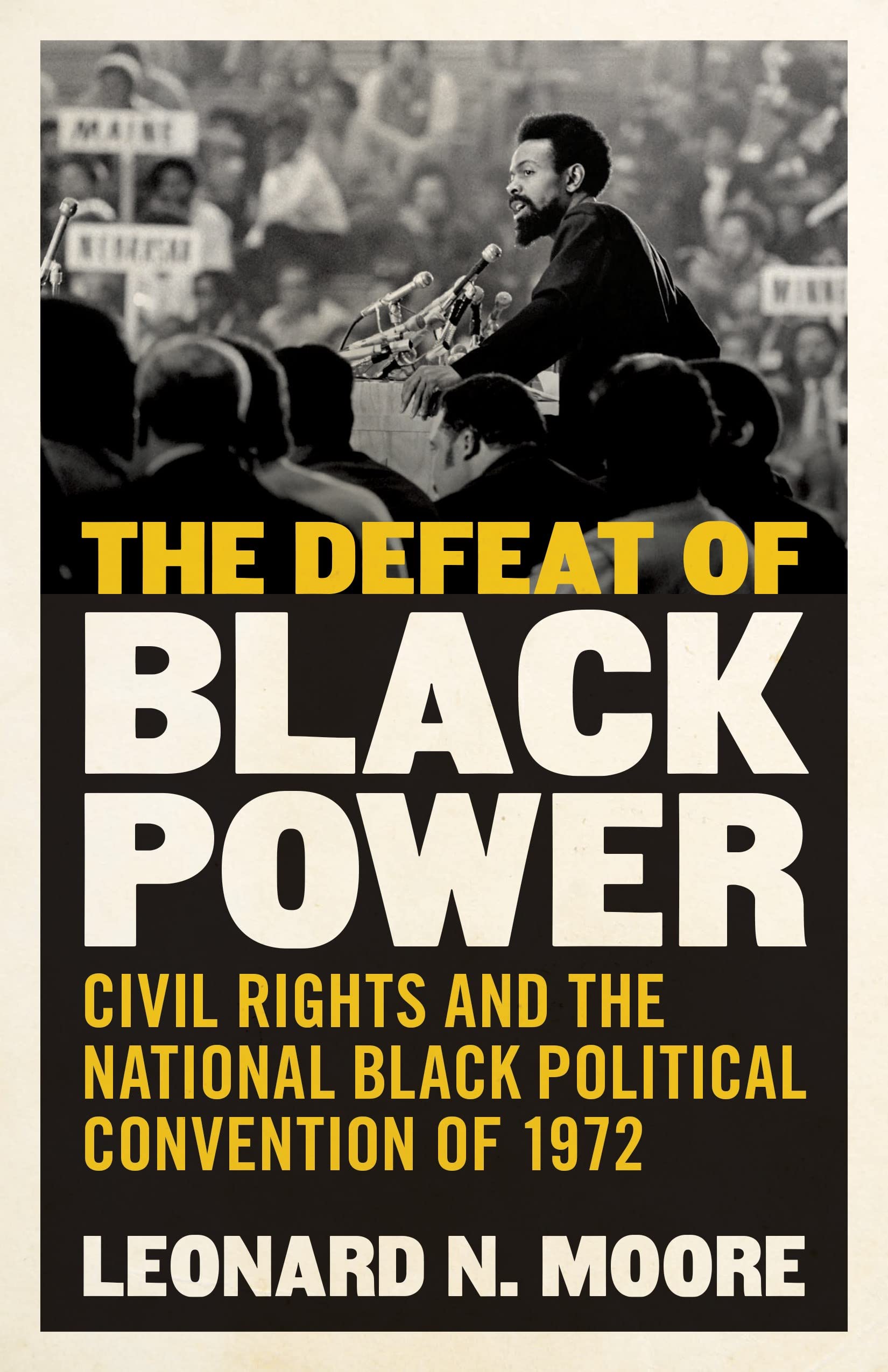
The Defeat Of Black Power: Civil Rights And The National Black Political Convention Of 1972,Used
Sold by Ergodebooks, an authorized reseller.
Returns accepted within 30 days | support@ergodebooks.com
Shipping Information
- Free Standard Shipping — United States only
- Processing Time: 3–5 business days
- Estimated Delivery: 6–10 business days after dispatch
- Double-boxed, fully insured & discreetly packaged
- Tracking number sent via email once dispatched
Returns & Refund
Returns accepted within 30 days of delivery.
Damaged or Defective Item
Free return shipping + replacement or full refund
Wrong Item Received
Free return shipping + replacement or full refund
Change of Mind
Return shipping at customer's expense · 25% restocking fee applies
Payment Option

For three days in 1972 in Gary, Indiana, eight thousand American civil rights activists and Black Power leaders gathered at the National Black Political Convention, hoping to end a yearslong feud that divided black America into two distinct camps: integrationists and separatists. While some form of this rift existed within black politics long before the 1968 assassination of Dr. Martin Luther King, Jr., his deathand the power vacuum it createdheightened tensions between the two groups, and convention leaders sought to merge these competing ideologies into a national, unified call to action. What followed, however, effectively crippled the Black Power movement and fundamentally altered the political strategy of civil rights proponents. An intense and revealing history, Leonard N. Moores The Defeat of Black Power provides the first indepth evaluation of this critical moment in American history.During the brief but highly charged meeting in March 1972, attendees confronted central questions surrounding black peoples involvement in the established political system: reject or accept integration and assimilation; determine the importance or futility of working within the broader white system; and assess the perceived benefits of running for public office. These issues illuminated key differences between integrationists and separatists, yet both sides understood the need to mobilize under a unified platform of black selfdetermination. At the end of the convention, determined to reach a consensus, officials produced The National Black Political Agenda, which addressed the black constituencys priorities. While attendees and delegates agreed with nearly every provision, integrationists maintained their rejection of certain planks, namely the call for a U.S. constitutional convention and separatists demands for reparations. As a result, black activists and legislators withdrew their support less than ten weeks after the convention, dashing the promise of the 1972 assembly and undermining the prerogatives of black nationalists.In The Defeat of Black Power, Moore shows how the convention signaled a turning point for the Black Power movement, whose leaders did not hold elective office and were now effectively barred access to the levers of social and political power. Thereafter, their influence within black communities rapidly declined, leaving civil rights activists and elected officials holding the mantle of black political leadership in 1972 and beyond.
⚠️ WARNING (California Proposition 65):
This product may contain chemicals known to the State of California to cause cancer, birth defects, or other reproductive harm.
For more information, please visit www.P65Warnings.ca.gov.