
Title
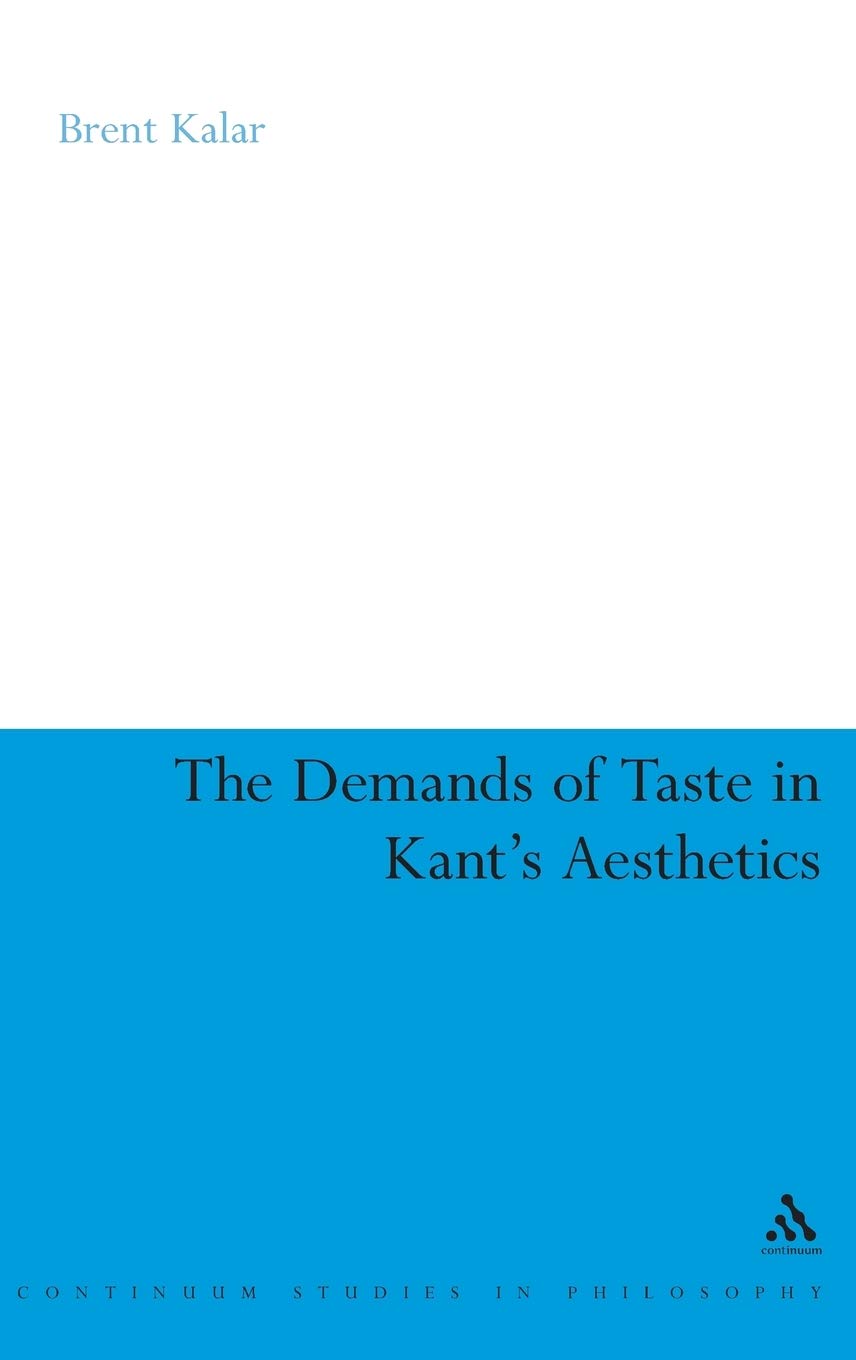
The Demands of Taste in Kant's Aesthetics (Continuum Studies in Philosophy, 42),Used
Sold by Ergodebooks, an authorized reseller.
Returns accepted within 30 days | support@ergodebooks.com
Shipping Information
- Free Standard Shipping — United States only
- Processing Time: 3–5 business days
- Estimated Delivery: 6–10 business days after dispatch
- Double-boxed, fully insured & discreetly packaged
- Tracking number sent via email once dispatched
Returns & Refund
Returns accepted within 30 days of delivery.
Damaged or Defective Item
Free return shipping + replacement or full refund
Wrong Item Received
Free return shipping + replacement or full refund
Change of Mind
Return shipping at customer's expense · 25% restocking fee applies
Payment Option

Typically philosophers have either viewed beauty as objective and judgments of beauty as universally valid, or else they have viewed beauty as subjective and regarded judgments of beauty as merely private preferences. Immanuel Kant is famous for his unique third path. Kant argues that beauty is subjective, but the judgment of taste about beauty is capable of universal validity. In his view, the beautiful is not a feature of objects themselves, but merely represents the way we respond to objects. Furthermore, the judgment of taste about beauty is a merely 'aesthetic' judgment i.e., one based on a feeling of pleasure we take in the object. The judgment of taste, on the other hand, possesses 'universal validity': to call something beautiful is implicitly to 'demand' that all others find it beautiful as well.Kant's views about the taste for the beautiful have long been the subject of controversy. Scholars have differed over the interpretation of the demand contained in a judgment of taste and whether Kant's attempt to legitimate this demand is successful. Brent Kalar argues that the demands of taste should be understood as involving a uniquely aesthetic normativity rooted in Kant's cognitive psychology. If the basis of aesthetic pleasure in the activity of the cognitive faculties is properly understood, then Kant's attempt to legitimate the demands of taste may be regarded as a success. This leads Kalar to give a new interpretation of the nature of the beautiful according to Kant that reexamines the relationship between 'free play' and the 'form of purposiveness' in Kant's aesthetics, and restores the 'aesthetic ideas' to their rightful centrality in Kant's theory.
⚠️ WARNING (California Proposition 65):
This product may contain chemicals known to the State of California to cause cancer, birth defects, or other reproductive harm.
For more information, please visit www.P65Warnings.ca.gov.