
Title
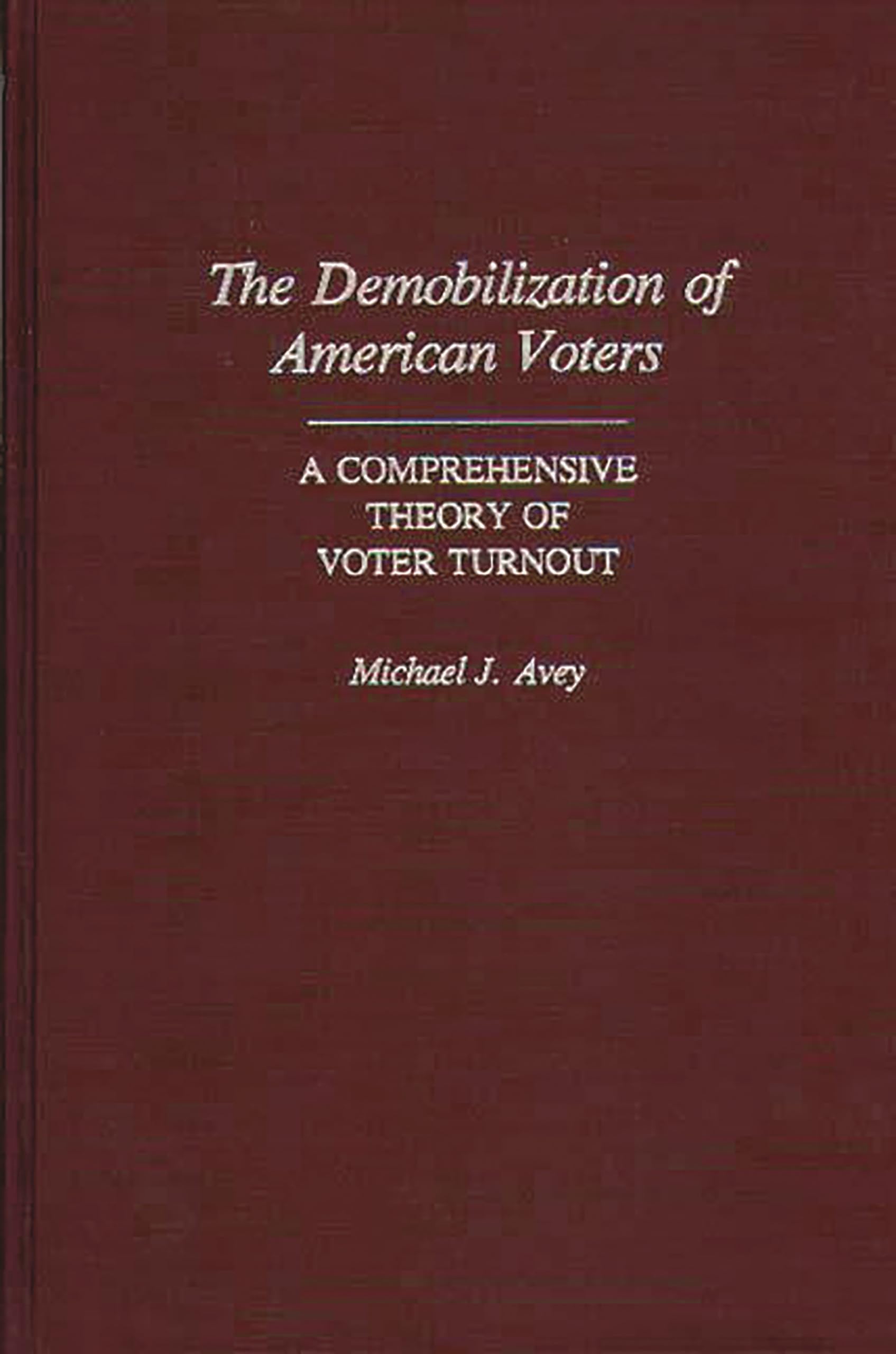
The Demobilization of American Voters: A Comprehensive Theory of Voter Turnout (Contributions in Political Science),Used
Sold by Ergodebooks, an authorized reseller.
Returns accepted within 30 days | support@ergodebooks.com
Shipping Information
- Free Standard Shipping — United States only
- Processing Time: 3–5 business days
- Estimated Delivery: 6–10 business days after dispatch
- Double-boxed, fully insured & discreetly packaged
- Tracking number sent via email once dispatched
Returns & Refund
Returns accepted within 30 days of delivery.
Damaged or Defective Item
Free return shipping + replacement or full refund
Wrong Item Received
Free return shipping + replacement or full refund
Change of Mind
Return shipping at customer's expense · 25% restocking fee applies
Payment Option

This book presents an alternative empirical theory of voter turnout. Named the Mobilization/Demobilization Theory, it analyzes voter turnout of different segments of the voting age population in terms of barriers created to prevent participation and efforts to stimulate participation. This study challenges the theory that the characteristics of nonvoters, low levels of education and political apathy, are the root causes of poor voter turnout among persons of low socioeconomic status (SES). The Mobilization/Demobilization Theory argues instead that nonvoting results from the behavior of politicians, political elites, and the political system and not from the characteristics of the poor and working class. The study suggests that voter turnout for national elections could reach an 80 percent level if a major party focuses on these two groups. Statistical evidence is given to show why the poor and working class do not vote when neither party represents them.Chapter One of the book presents the evidence against the current theory of voter turnoutthe Standard Socioeconomic model. Chapter Two presents the alternative theorythe Mobilization/Demobilization model. Chapters Three and Four cover the issues of removing obstacles to voting and nonpolicy related organizational efforts. This is followed by a discussion in Chapter Five of the major party focus of nonparticipators and a discussion in Chapter Six of the impact of party alignment. The final chapter takes a look at mobilization and demobilization today. This book makes for informative reading to anyone interested in political behavior, public opinion, electoral politics, or political parties. It should be of special interest to persons active in election activity, from grassroots organizers to persons making election regulations.
⚠️ WARNING (California Proposition 65):
This product may contain chemicals known to the State of California to cause cancer, birth defects, or other reproductive harm.
For more information, please visit www.P65Warnings.ca.gov.