
Title
The Devil And Commodity Fetishism In South America
Sold by Ergodebooks, an authorized reseller.
Returns accepted within 30 days | support@ergodebooks.com
Shipping Information
- Free Standard Shipping — United States only
- Processing Time: 3–5 business days
- Estimated Delivery: 6–10 business days after dispatch
- Double-boxed, fully insured & discreetly packaged
- Tracking number sent via email once dispatched
Returns & Refund
Returns accepted within 30 days of delivery.
Damaged or Defective Item
Free return shipping + replacement or full refund
Wrong Item Received
Free return shipping + replacement or full refund
Change of Mind
Return shipping at customer's expense · 25% restocking fee applies
Payment Option

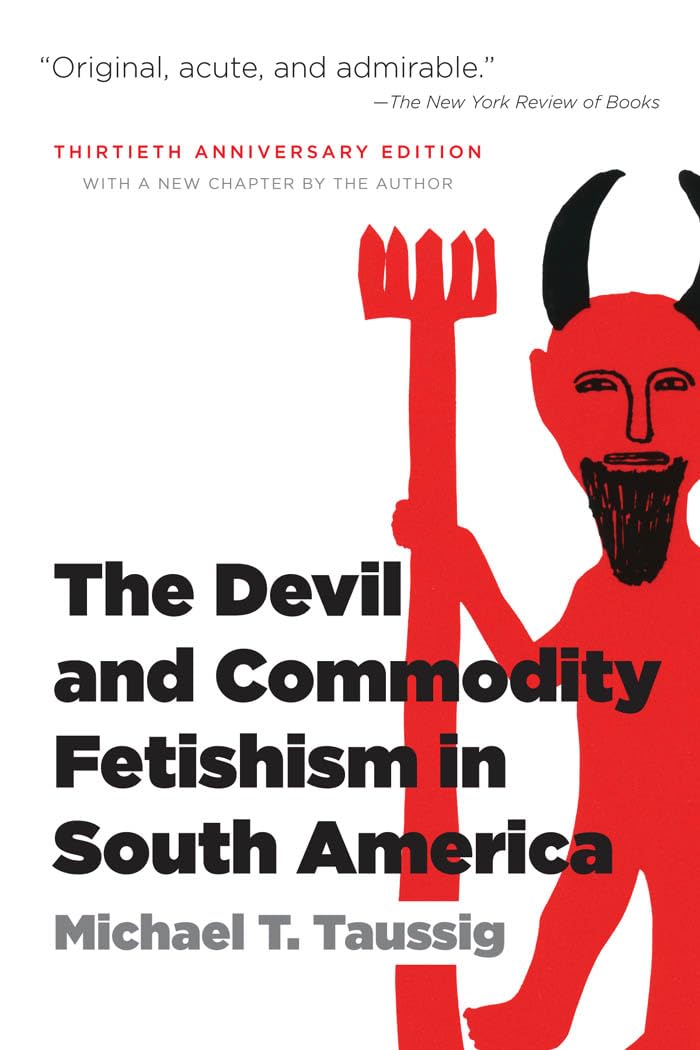
In This Classic Book, Michael Taussig Explores The Social Significance Of The Devil In The Folklore Of Contemporary Plantation Workers And Miners In South America. Grounding His Analysis In Marxist Theory, Taussig Finds That The Fetishization Of Evil, In The Image Of The Devil, Mediates The Conflict Between Precapitalist And Capitalist Modes Of Objectifying The Human Condition. He Links Traditional Narratives Of The Devilpact, In Which The Soul Is Bartered For Illusory Or Transitory Power, With The Way In Which Production In Capitalist Economies Causes Workers To Become Alienated From The Commodities They Produce. A New Chapter For This Anniversary Edition Features A Discussion Of Walter Benjamin And Georges Bataille That Extends Taussig'S Ideas About The Devilpact Metaphor.
⚠️ WARNING (California Proposition 65):
This product may contain chemicals known to the State of California to cause cancer, birth defects, or other reproductive harm.
For more information, please visit www.P65Warnings.ca.gov.
- Q: How many pages are in this book? A: This book contains three hundred twenty pages. It provides a comprehensive exploration of the themes presented by the author.
- Q: What is the binding type of this book? A: This book is available in paperback binding. Paperback editions are typically more flexible and lightweight than hardcover books.
- Q: What are the dimensions of the book? A: The book measures six inches in length, zero point seventy-one inches in width, and nine point zero two inches in height. These dimensions make it easy to handle and store.
- Q: Who is the author of this book? A: The author of this book is Michael Taussig. He is known for his insightful analysis in the field of anthropology.
- Q: What is the main topic of the book? A: The main topic explores the social significance of the devil in South American folklore. It delves into the conflict between precapitalist and capitalist modes of existence.
- Q: Is this book suitable for academic study? A: Yes, this book is suitable for academic study. It is grounded in Marxist theory and offers deep insights into cultural and economic contexts.
- Q: How should I care for this book? A: To care for this book, keep it in a dry, cool place and handle it gently. Avoid exposing it to moisture to prevent damage.
- Q: Can I return this book if I don't like it? A: Yes, you can return this book if you are not satisfied. Be sure to check the return policy of the seller for specific terms.
- Q: Is this book appropriate for all ages? A: No, this book is not appropriate for all ages. It deals with complex themes that may not be suitable for younger readers.
- Q: What genre does this book belong to? A: This book belongs to the Development and Growth genre. It engages with anthropological and socio-economic themes.
- Q: Does the book include any special features? A: Yes, the book includes a new chapter that discusses the ideas of Walter Benjamin and Georges Bataille. This adds depth to the original text.
- Q: How can I benefit from reading this book? A: Reading this book can enhance your understanding of cultural dynamics and economic theories. It provides valuable insights into the human condition.
- Q: Is there a digital version of this book? A: Yes, there may be a digital version available. Check online retailers for options in eBook format.
- Q: What condition is the used book in? A: The used book is in good condition. It has been well-maintained and is suitable for reading.
- Q: Who published this book? A: This book is published by the University of North Carolina Press. This publisher is known for academic and scholarly works.