If you have any questions, you are always welcome to contact us. We'll get back to you as soon as possible, withing 24 hours on weekdays.
Customer service
All questions about your order, return and delivery must be sent to our customer service team by e-mail at yourstore@yourdomain.com
Sale & Press
If you are interested in selling our products, need more information about our brand or wish to make a collaboration, please contact us at press@yourdomain.com
Help
If you have any questions, you are always welcome to contact us. We'll get back to you as soon as possible, withing 24 hours on weekdays.
Customer service
All questions about your order, return and delivery must be sent to our customer service team by e-mail at yourstore@yourdomain.com
Sale & Press
If you are interested in selling our products, need more information about our brand or wish to make a collaboration, please contact us at press@yourdomain.com
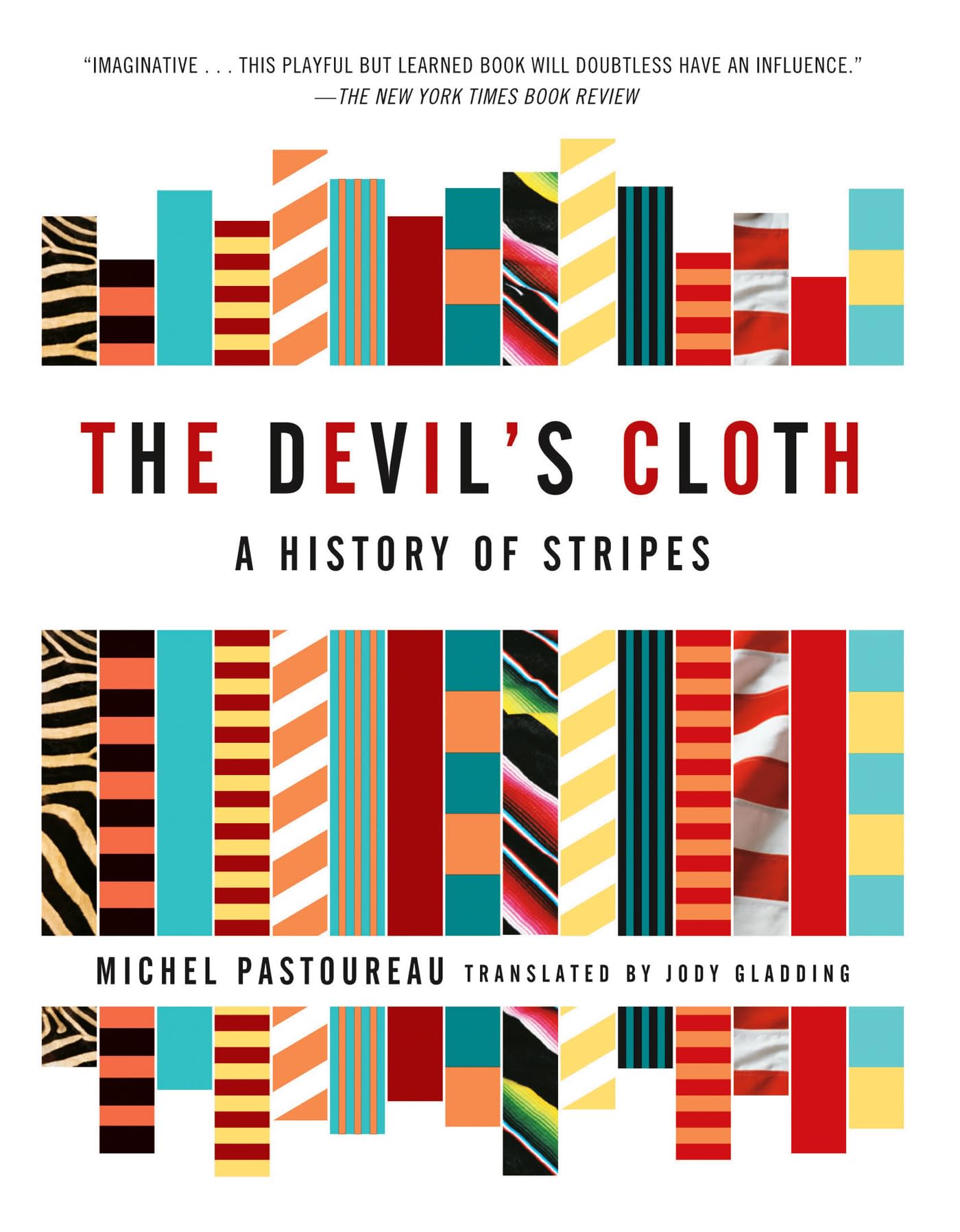
To stripe a surface serves to distinguish it, to point it out, to oppose it or associate it with another surface, and thus to classify it, to keep an eye on it, to verify it, even to censor it.Throughout the ages, the stripe has made its mark in mysterious ways. From prisoners' uniforms to tailored suits, a street sign to a set of sheets, Pablo Picasso to Saint Joseph, stripes have always made a bold statement. But the boundary that separates the good stripe from the bad is often blurred. Why, for instance, were stripes associated with the devil during the Middle Ages? How did stripes come to symbolize freedom and unity after the American and French revolutions? When did the stripe become a standard in men's fashion? 'In the stripe,' writes author Michel Pastoureau, 'there is something that resists enclosure within systems.' So before putting on that necktie or waving your country's flag, look to The Devil's Cloth for a colorful history of the stripe in all its variety, controversy, and connotation.
⚠️ WARNING (California Proposition 65):
This product may contain chemicals known to the State of California to cause cancer,
birth defects, or other reproductive harm.
For MAP (Minimum Advertised Price) violations and Intellectual Property (IP) or Trademark concerns, please contact:
support@ergodebooks.com
⚠️ California Proposition 65 Warning: Some products sold on this website may expose you to chemicals known to the State of California to cause cancer, birth defects, or other reproductive harm. For more information, visit www.P65Warnings.ca.gov.