
Title



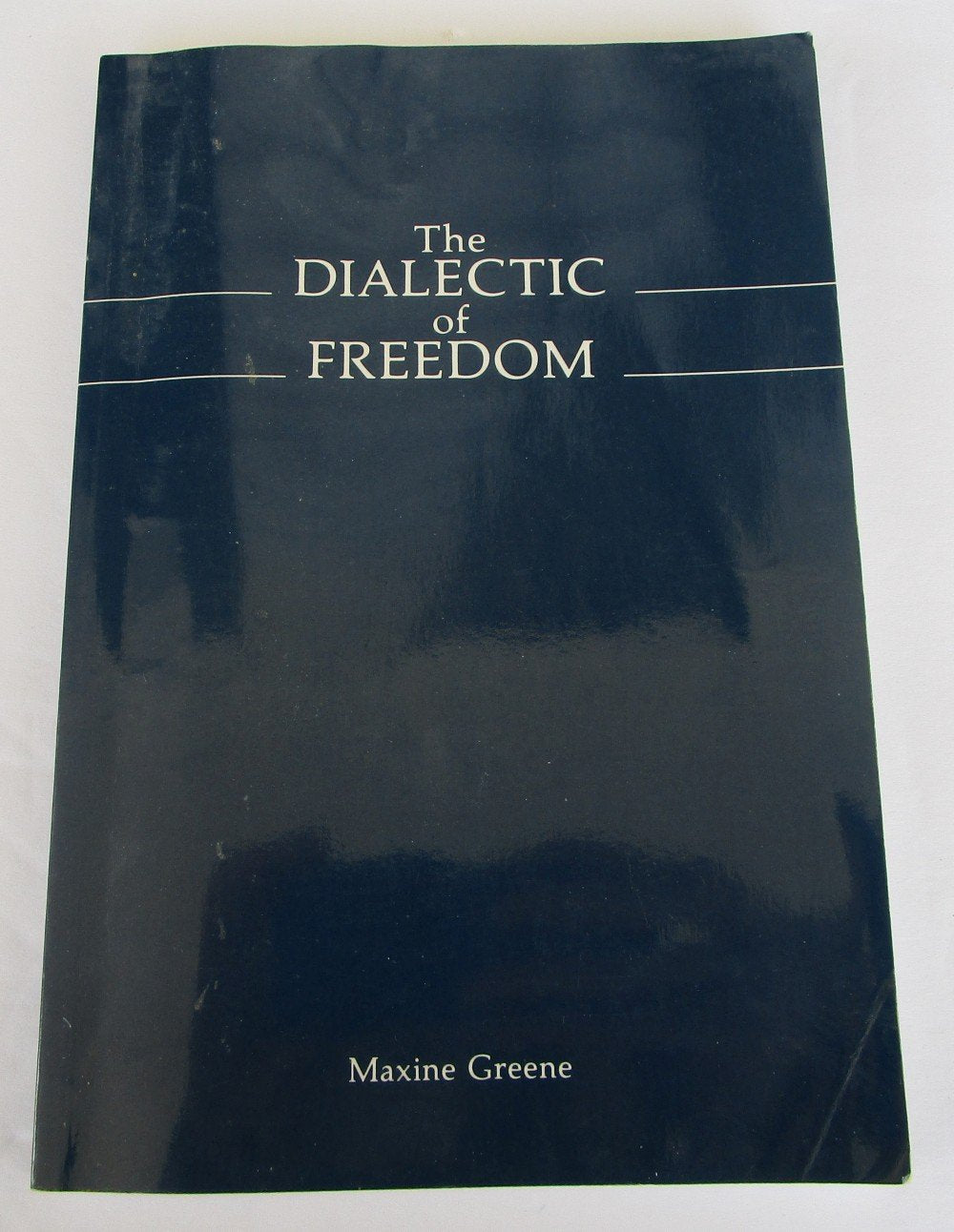
The Dialectic of Freedom (John Dewey Lecture Series),Used
Sold by Ergodebooks, an authorized reseller.
Returns accepted within 30 days | support@ergodebooks.com
Shipping Information
- Free Standard Shipping — United States only
- Processing Time: 3–5 business days
- Estimated Delivery: 6–10 business days after dispatch
- Double-boxed, fully insured & discreetly packaged
- Tracking number sent via email once dispatched
Returns & Refund
Returns accepted within 30 days of delivery.
Damaged or Defective Item
Free return shipping + replacement or full refund
Wrong Item Received
Free return shipping + replacement or full refund
Change of Mind
Return shipping at customer's expense · 25% restocking fee applies
Payment Option

Special 2018 EditionFrom the new Introduction by Michelle Fine, Graduate Center, CUNY :'Why now, you may ask, should I return to a book written in 1988? Because, in Maxine's words: 'When freedom is the question, it is always time to begin.''In The Dialectic of Freedom, Maxine Greene argues that freedom must be achieved through continuing resistance to the forces that limit, condition, determine, andtoo frequentlyoppress.Examining the interrelationship between freedom, possibility, and imagination in American education, Greene taps the fields of philosophy, history, educational theory, and literature in order to discuss the many struggles that have characterized Americans quests for freedom in the midst of what is conceived to be a free society. Accounts of the lives of women, immigrants, and minority groups highlight the ways in which Americans have gone in search of openings in their lived situations, learned to look at things as if they could be otherwise, and taken action on what they found.Greene presents a unique overview of American concepts and images of freedom from Jeffersons time to the present. She examines the ways in which the disenfranchised have historically understood and acted on their freedomor lack of itin dealing with perceived and real obstacles to expression and empowerment. Strong emphasis is placed on the focal role of the arts and art experience in releasing human imagination and enabling the young to reach toward their vision of the possible.The author concludes with suggestions for approaches to teaching and learning that can provoke both educators and students to take initiatives, to transcend limits, and to pursue freedomnot in solitude, but in reciprocity with others, not in privacy, but in a public space.
⚠️ WARNING (California Proposition 65):
This product may contain chemicals known to the State of California to cause cancer, birth defects, or other reproductive harm.
For more information, please visit www.P65Warnings.ca.gov.
- Q: How many pages does The Dialectic of Freedom have? A: This book has one hundred sixty-eight pages. It offers a comprehensive exploration of freedom as discussed by Maxine Greene.
- Q: What is the binding type of this book? A: The binding type is paperback. This makes it lightweight and easy to handle for reading.
- Q: What are the dimensions of The Dialectic of Freedom? A: The dimensions are six point fourteen inches in length, nine point zero two inches in height, and zero point thirty-three inches in width.
- Q: Who is the author of this book? A: The author is Maxine Greene. She is well known for her contributions to philosophy and education.
- Q: What is the main theme of The Dialectic of Freedom? A: The main theme is the exploration of freedom through resistance to oppression. Greene discusses how imagination and possibility are integral to achieving freedom.
- Q: Is this book suitable for educational purposes? A: Yes, this book is suitable for educational purposes. It provides insights into American philosophy and educational theory.
- Q: How can I use this book in my studies? A: You can use this book as a reference for discussions on freedom in education. It offers historical context and philosophical perspectives.
- Q: Is The Dialectic of Freedom appropriate for high school students? A: Yes, it is appropriate for high school students. It encourages critical thinking about freedom and societal issues.
- Q: How should I store this book to keep it in good condition? A: Store this book in a cool, dry place, upright or flat. Avoid exposure to direct sunlight to preserve the cover and pages.
- Q: Can I lend this book to someone else? A: Yes, you can lend this book to others. Just ensure they handle it carefully to maintain its condition.
- Q: What should I do if this book arrives damaged? A: If the book arrives damaged, contact the retailer for a return or exchange. Keep all packaging for reference.
- Q: Is there a return policy for The Dialectic of Freedom? A: Yes, there is a return policy. Check with the retailer for specific terms regarding returns or exchanges.
- Q: Does this book include any illustrations or images? A: No, this book does not include illustrations or images. It focuses on text and philosophical discussions.
- Q: How does this book compare to other works in social philosophy? A: This book offers a unique perspective on freedom compared to other social philosophy works. It emphasizes the role of imagination and arts in education.
- Q: What age group is this book recommended for? A: This book is recommended for readers aged sixteen and up. It deals with complex themes suitable for mature audiences.
- Q: Are there any discussions on historical figures in this book? A: Yes, the book discusses historical figures like Thomas Jefferson in the context of freedom and education in America.