
Title
The Dictionary Of Imaginary Places
Sold by Ergodebooks, an authorized reseller.
Returns accepted within 30 days | support@ergodebooks.com
Shipping Information
- Free Standard Shipping — United States only
- Processing Time: 3–5 business days
- Estimated Delivery: 6–10 business days after dispatch
- Double-boxed, fully insured & discreetly packaged
- Tracking number sent via email once dispatched
Returns & Refund
Returns accepted within 30 days of delivery.
Damaged or Defective Item
Free return shipping + replacement or full refund
Wrong Item Received
Free return shipping + replacement or full refund
Change of Mind
Return shipping at customer's expense · 25% restocking fee applies
Payment Option

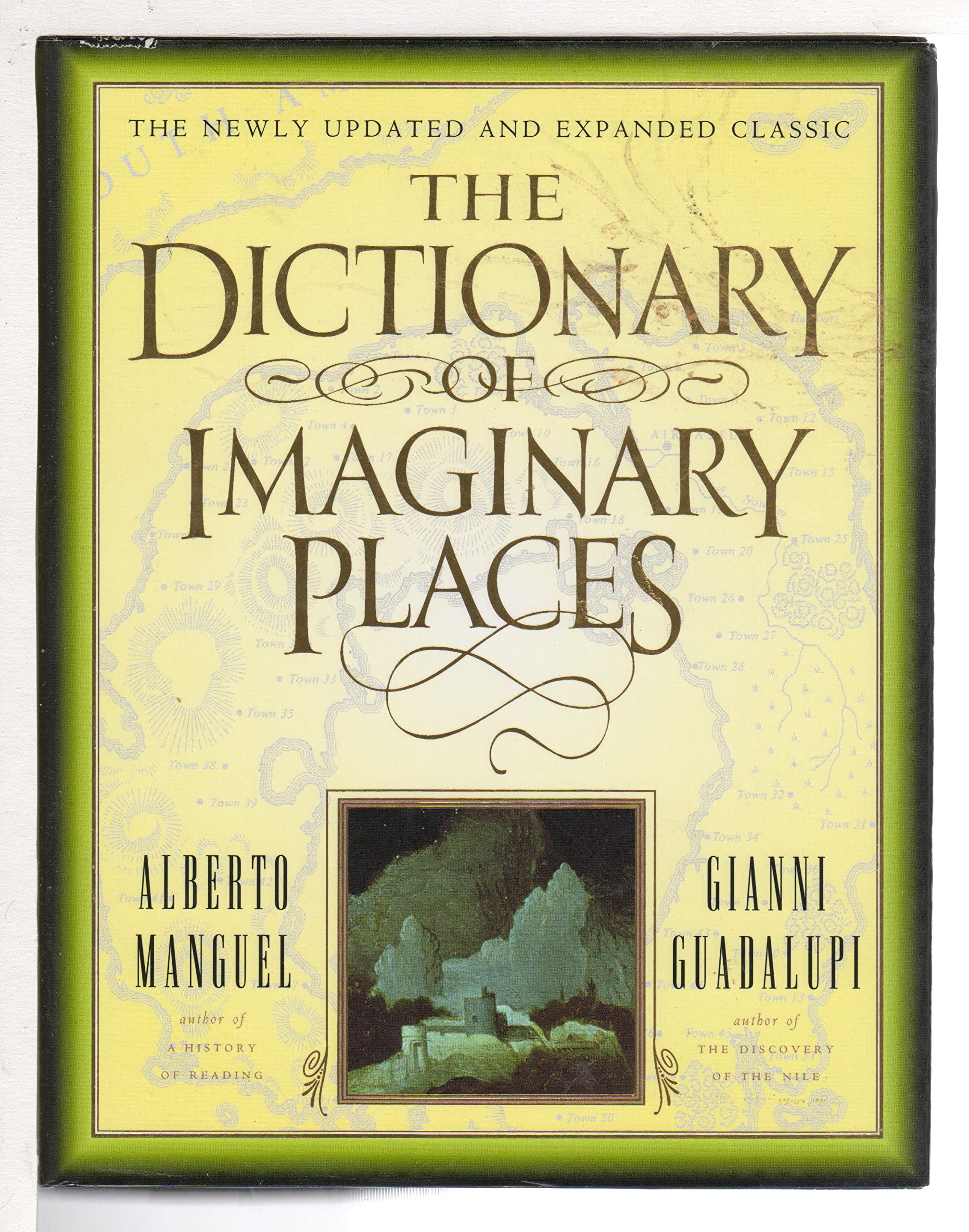
The Dictionary Of Imaginary Places Is Best Described As A Guidebook Of The Makebelieve. A Good Way To Understand What Alberto Manguel And Gianni Guadalupi Set Out To Do With Their Book Is To Imagine That You Want To Travel To A Place Like Oz, As In The Wizard Of. What You Remember From Watching The Classic Movie And What You Would Want To Know As A Traveler Are Two Very Distinct Things. What You'Ll Earn In This Book Is That Oz Is A Large Rectangular Country Where Everyone Works Half The Time And Plays Half The Time, One That Is Divided Into Four Smaller Countries: Munchkin Country, Winkie Country, Quadling Country, And Gillikin Country. Flip Through More Of The Book'S Alphabetized Listings And You'Ll Discover Fuddlecumjig, A Town In Oz'S Quadling Country Whose Inhabitants, The Fuddles, Are Among The Most Curious People In Oz. The Main Peculiarity Is That They Are Made Of Many Pieces, Rather Like Jigsaw Puzzles, And Literally Fall Apart When Strangers Approach, And Have To Be Reassembled With Skill And Patience. A Travel Tip For Readers With Vivid Imaginations: Put Fuddlecumjig'S Cook Together First If You Want A Meal. And So Go The Descriptions Of More Than 1,200 Worlds Invented By Storytellers Throughout History, From Homer'S Wandering Rocks In The Odyssey To Michael Crichton'S Jurassic Park. But There'S More Here Than Just The Worlds Of Literature And Film. You Can Learn More About John Lennon'S Nutopia From His Album Mind Games. Nutopia Is A Country With No Land, No Boundaries, No Passports, And No Laws Other Than Cosmic Laws. And The Beatles' Pepperland From Yellow Submarine Is Described As A Country 18,000 Leagues Beneath The Sea Of Green, Where Inhabitants Dress In Bright Colors And Rainbows Are Frequent. Written With Rich Descriptions That Bring Places To Life, The Dictionary Of Imaginary Places Is A Wonderful, Magical Reference Book Perfect For Fiction Lovers. John Russell
⚠️ WARNING (California Proposition 65):
This product may contain chemicals known to the State of California to cause cancer, birth defects, or other reproductive harm.
For more information, please visit www.P65Warnings.ca.gov.
- Q: How many pages does The Dictionary of Imaginary Places have? A: This book has seven hundred fifty-five pages. It provides extensive descriptions of fictional worlds created by various authors.
- Q: What is the binding type of this book? A: The Dictionary of Imaginary Places is a hardcover book. This binding type ensures durability and makes it suitable for frequent use.
- Q: Who are the authors of The Dictionary of Imaginary Places? A: The book is authored by Alberto Manguel and Gianni Guadalupi. They explore imaginary places from literature and storytelling.
- Q: What genres does The Dictionary of Imaginary Places cover? A: This book primarily falls under the reference genre. It serves as a guide to fictional locations from various narratives.
- Q: Is The Dictionary of Imaginary Places suitable for all ages? A: Yes, it is suitable for all ages. However, it can be particularly appealing to fiction lovers and imaginative readers.
- Q: Can I use this book for research on fictional worlds? A: Yes, it is an excellent resource for research on fictional worlds. The detailed descriptions cover over one thousand two hundred invented locations.
- Q: How should I store The Dictionary of Imaginary Places? A: Store it upright on a bookshelf to prevent damage. Keeping it away from direct sunlight will help preserve the cover and pages.
- Q: Can I clean the cover of The Dictionary of Imaginary Places? A: Yes, you can clean the cover with a dry, soft cloth. Avoid using water or cleaning solutions that could damage the hardcover.
- Q: What if The Dictionary of Imaginary Places arrives damaged? A: If the book arrives damaged, you should contact the seller for a return or exchange. Most sellers have policies in place for such issues.
- Q: Is there a warranty for The Dictionary of Imaginary Places? A: No, there is typically no warranty for books. However, you should check the seller's return policy for any guarantees.
- Q: What themes are explored in The Dictionary of Imaginary Places? A: The book explores themes of imagination and storytelling. It includes descriptions of fantastical places from literature and film.
- Q: Are there illustrations in The Dictionary of Imaginary Places? A: No, this book does not contain illustrations. It focuses on text descriptions of imaginary places.
- Q: What makes The Dictionary of Imaginary Places unique? A: It uniquely compiles descriptions of over one thousand two hundred fictional worlds. This breadth makes it a valuable reference for fiction enthusiasts.
- Q: Is there a specific reading level for this book? A: The reading level is suitable for teenagers and adults. Its rich descriptions may be complex for younger children.
- Q: Does The Dictionary of Imaginary Places include modern fictional worlds? A: Yes, it includes modern fictional worlds like Michael Crichton's Jurassic Park. It covers a wide range of storytelling timelines.
- Q: Can I find travel tips in The Dictionary of Imaginary Places? A: Yes, the book includes imaginative travel tips. For example, it suggests assembling characters in Fuddlecumjig for a meal.