
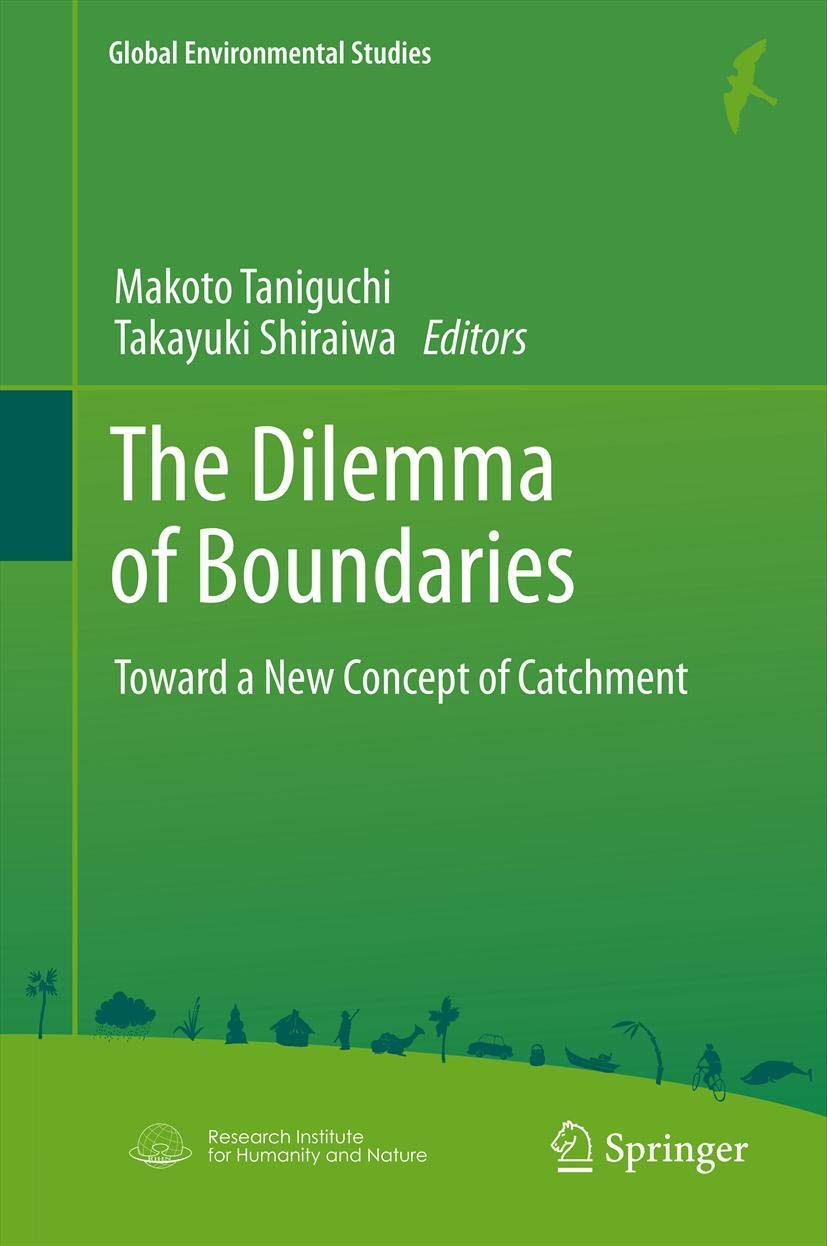
Title
The Dilemma of Boundaries: Toward a New Concept of Catchment (Global Environmental Studies),New
Sold by Ergodebooks, an authorized reseller.
Returns accepted within 30 days | support@ergodebooks.com
Shipping Information
- Free Standard Shipping — United States only
- Processing Time: 3–5 business days
- Estimated Delivery: 6–10 business days after dispatch
- Double-boxed, fully insured & discreetly packaged
- Tracking number sent via email once dispatched
Returns & Refund
Returns accepted within 30 days of delivery.
Damaged or Defective Item
Free return shipping + replacement or full refund
Wrong Item Received
Free return shipping + replacement or full refund
Change of Mind
Return shipping at customer's expense · 25% restocking fee applies
Payment Option

Product DescriptionWater circulates continuously and seamlessly on Earth with little regard for the boundaries we draw. There are natural boundaries as between land and ocean and surface and subsurface environments, as well as human or demographic boundaries between nations, cultures, and religions. Although considered necessary by societies, these humancreated boundaries disrupt natural water circulation, leading to serious waterrelated environmental problems. The dilemma of how to manage water beyond our boundaries remains, and nations have different ways and means of controlling each form of water, whether as vapor, surface water, groundwater, or seawater. Recent findings on the interaction of water from land, oceans, and the atmosphere encourage researchers to undertake collaborative work that goes beyond the boundaries of each discipline, be it oceanography, surface and subsurface hydrology, climatology, or glaciology. Drawing on all these fields, the book focuses on two major boundaries: that between surface water and ground water, and that between terrestrial water and ocean water. This comprehensive work is of great value to experts in academia, international organizations, consulting firms, water resources, fisheries, and urban development planning agencies.From the Back CoverWater circulates continuously and seamlessly on Earth with little regard for the boundaries we draw. There are natural boundaries as between land and ocean and surface and subsurface environments, as well as human or demographic boundaries between nations, cultures, and religions. Although considered necessary by societies, these humancreated boundaries disrupt natural water circulation, leading to serious waterrelated environmental problems. The dilemma of how to manage water beyond our boundaries remains, and nations have different ways and means of controlling each form of water, whether as vapor, surface water, groundwater, or seawater. Recent findings on the interaction of water from land, oceans, and the atmosphere encourage researchers to undertake collaborative work that goes beyond the boundaries of each discipline, be it oceanography, surface and subsurface hydrology, climatology, or glaciology. Drawing on all these fields, the book focuses on two major boundaries: that between surface water and ground water, and that between terrestrial water and ocean water. This comprehensive work is of great value to experts in academia, international organizations, consulting firms, water resources, fisheries, and urban development planning agencies.
⚠️ WARNING (California Proposition 65):
This product may contain chemicals known to the State of California to cause cancer, birth defects, or other reproductive harm.
For more information, please visit www.P65Warnings.ca.gov.