
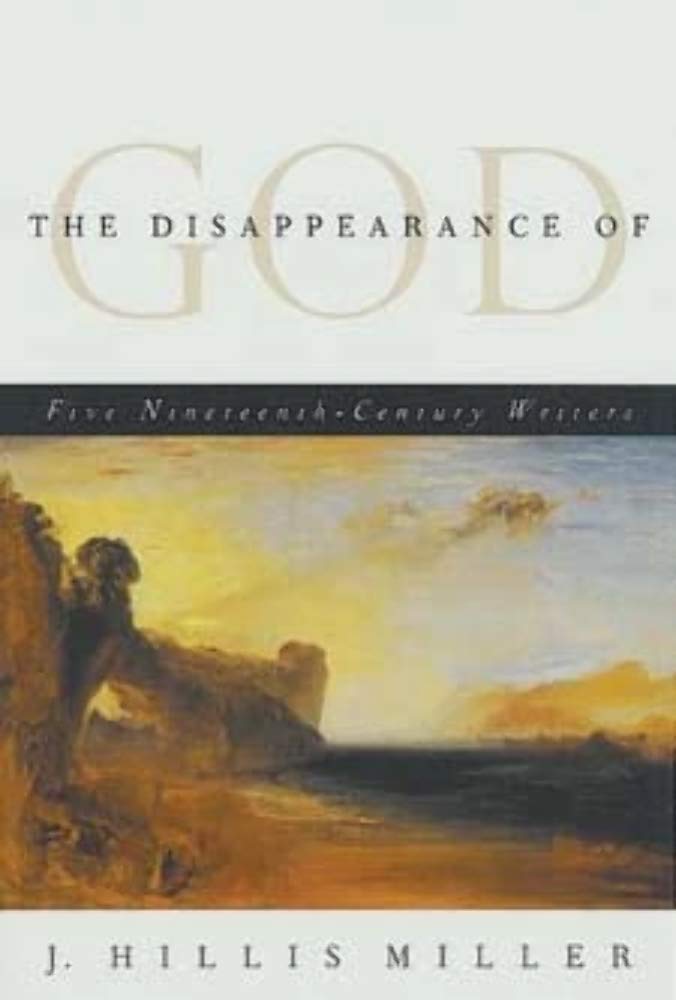
Title
The Disappearance Of God: Five Nineteenthcentury Writers
Sold by Ergodebooks, an authorized reseller.
Returns accepted within 30 days | support@ergodebooks.com
Shipping Information
- Free Standard Shipping — United States only
- Processing Time: 3–5 business days
- Estimated Delivery: 6–10 business days after dispatch
- Double-boxed, fully insured & discreetly packaged
- Tracking number sent via email once dispatched
Returns & Refund
Returns accepted within 30 days of delivery.
Damaged or Defective Item
Free return shipping + replacement or full refund
Wrong Item Received
Free return shipping + replacement or full refund
Change of Mind
Return shipping at customer's expense · 25% restocking fee applies
Payment Option

A Landmark Work Of Literary Criticism By One Of The Foremostinterpreters Of Nineteenthcentury England, The Disappearance Of God Confronts The Consciousness Of An Absent (Though Perhaps Still Existent) God In The Writings Of Thomas De Quincey, Robert Browning, Emily Bront, Matthew Arnold, And Gerard Manley Hopkins. J. Hillis Miller Surveys The Intellectual And Material Developments That Conspired To Cut Man Off From Godamong Other Factors The City, Developments Within Christianity, Subjectivism, And The Emergence Of The Modern Historical Senseand Shows How Each Writer'S Body Of Work Reflects A Sustained Response To The Experience Of God'S Disappearance.
⚠️ WARNING (California Proposition 65):
This product may contain chemicals known to the State of California to cause cancer, birth defects, or other reproductive harm.
For more information, please visit www.P65Warnings.ca.gov.
- Q: How many pages does the book have? A: This book has four hundred pages. It provides an in-depth analysis of the works of five influential nineteenth-century writers.
- Q: What is the binding type of this book? A: The binding type is paperback. This makes it lightweight and easy to handle, suitable for casual reading.
- Q: What are the dimensions of the book? A: The dimensions are nine point zero two inches in length, six point zero six inches in width, and zero point eight seven inches in height. These dimensions make it a standard-sized paperback.
- Q: Who is the author of this book? A: The author is J. Hillis Miller. He is recognized for his significant contributions to literary criticism and interpretation.
- Q: What literary categories does this book belong to? A: This book falls under the category of Criticism and Theory. It engages deeply with literary texts and their historical context.
- Q: What themes are explored in this book? A: The book explores themes of faith, absence, and literary response to the concept of a disappearing God. It analyzes how five writers reflect on these themes.
- Q: Is this book suitable for academic study? A: Yes, this book is suitable for academic study. Its critical insights make it valuable for students and scholars of literature.
- Q: What kind of criticism does the book provide? A: The book provides literary criticism focused on the intellectual and material developments in nineteenth-century England. It examines the implications of God's absence in literature.
- Q: Who would benefit from reading this book? A: Students, scholars, and anyone interested in literary criticism and the works of nineteenth-century writers would benefit from this book. It offers deep insights into their writings.
- Q: How does this book relate to historical context? A: The book examines the historical context of nineteenth-century England, discussing factors that influenced writers' thoughts about God and spirituality. It links literary works to their societal backdrop.
- Q: What makes this book a landmark work? A: This book is considered a landmark work due to its comprehensive analysis and critical approach to understanding significant literary figures of the nineteenth century.
- Q: Are there any illustrations in the book? A: No, this book does not contain illustrations. It focuses on textual analysis and critical commentary.
- Q: Can this book be used for book clubs? A: Yes, this book can be used for book clubs. Its thought-provoking themes provide ample material for discussion among readers.
- Q: What is the publisher of this book? A: The book is published by the University of Illinois Press. It is known for its academic publications in various fields.
- Q: Does the book cover contemporary implications of its themes? A: Yes, the book discusses contemporary implications of its themes, making connections between historical literary responses and modern perspectives on faith.