
Title
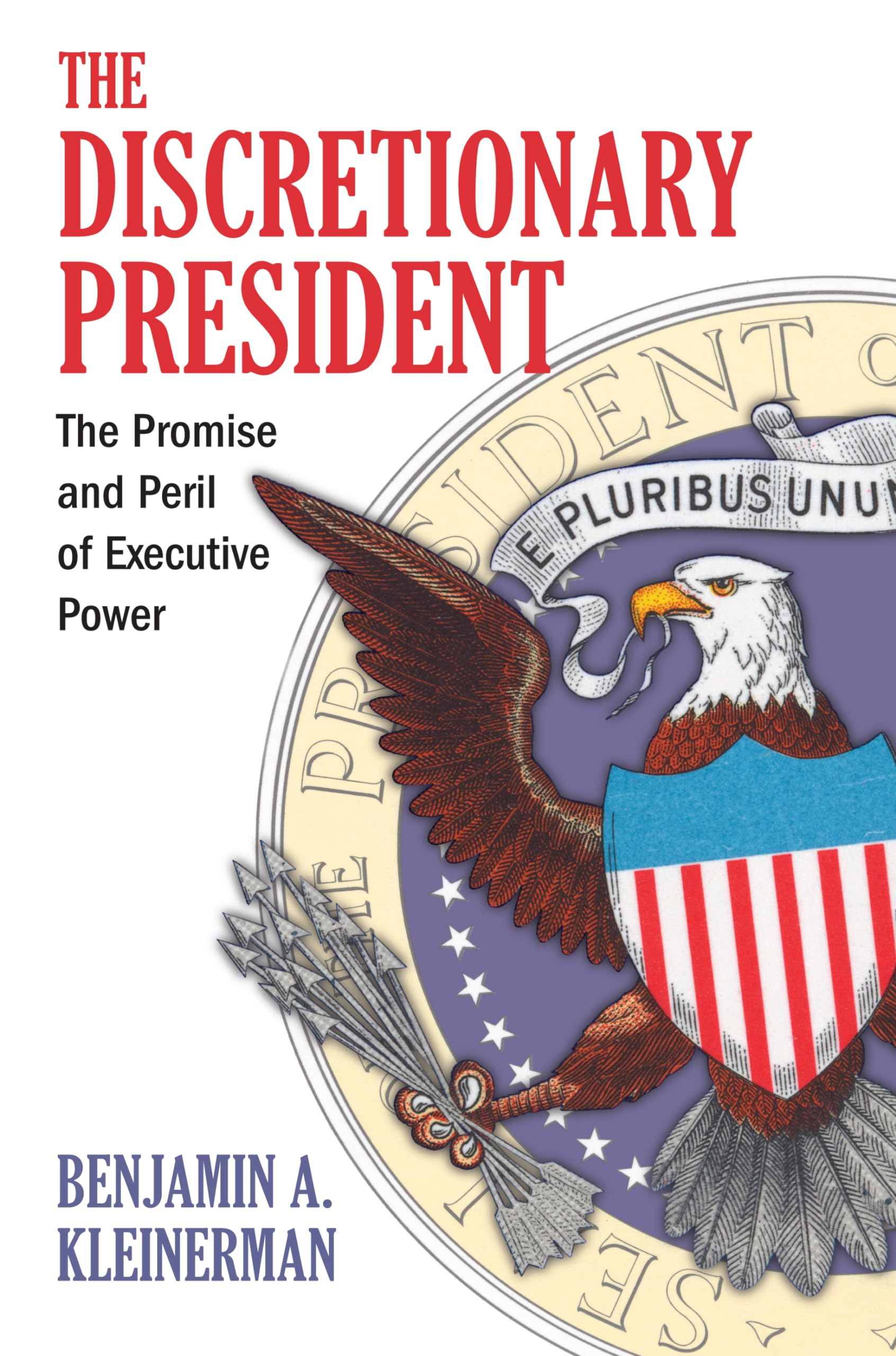
The Discretionary President: The Promise and Peril of Executive Power,Used
Sold by Ergodebooks, an authorized reseller.
Returns accepted within 30 days | support@ergodebooks.com
Shipping Information
- Free Standard Shipping — United States only
- Processing Time: 3–5 business days
- Estimated Delivery: 6–10 business days after dispatch
- Double-boxed, fully insured & discreetly packaged
- Tracking number sent via email once dispatched
Returns & Refund
Returns accepted within 30 days of delivery.
Damaged or Defective Item
Free return shipping + replacement or full refund
Wrong Item Received
Free return shipping + replacement or full refund
Change of Mind
Return shipping at customer's expense · 25% restocking fee applies
Payment Option

George W. Bush's use of the war on terror to justify the creation of a unitary executive, acting outside and even against the law, was a source of praise and blame for his administration. Immediately after 9/11, a constitutionalist would have worried about the peril of executive power, but today he might worry that we ignore its promise and distrust discretionary actions that truly ought to be taken by presidents in times of peril.Benjamin Kleinerman addresses the fundamental question of what role discretionary executive power should play in a constitutional order, reexamining what has become an intractable debate to show that what can destroy our Constitution also has the potential to save it. Kleinerman traces this problem from Hobbes through Lincoln to address one of the central dilemmas of our post9/11 age: how to empower the president to respond to legitimate threats without endangering the constitutional order. He stakes out a middle ground in this highly contentious debate, affirming that a president has the discretionary power to act for the public good without statutory authorizationbut warning that, to remain constitutional, it must be truly discretionary power that could not be legalized.Kleinerman articulates and defends a 'constitutional politics of necessity,' best exemplified by Lincoln, in which opponents should call on presidents to defend the necessity of exceptional actions and explain why they had to be taken outside the existing legal framework, beyond simply being 'for the public good.' He observes that Lincoln acknowledged the illegality of his actions while claiming their necessity but that Bush claimed powers as if they were permanent. He also reexamines separation of powers in light of executive discretion, suggesting that, during times of insecurity, discretionary executive power can be devoted to preservation of the Constitution so long as the other branches remain vigilant.Kleinerman argues for a president sufficiently strong to take actions without which we cannot be secure yet sufficiently circumscribed that such actions do not become the norm. His book delineates the tough distinctions citizens need to make between the necessary exercise of extraordinary powers and the dangerous aggrandizement of unnecessary power.
⚠️ WARNING (California Proposition 65):
This product may contain chemicals known to the State of California to cause cancer, birth defects, or other reproductive harm.
For more information, please visit www.P65Warnings.ca.gov.