
Title
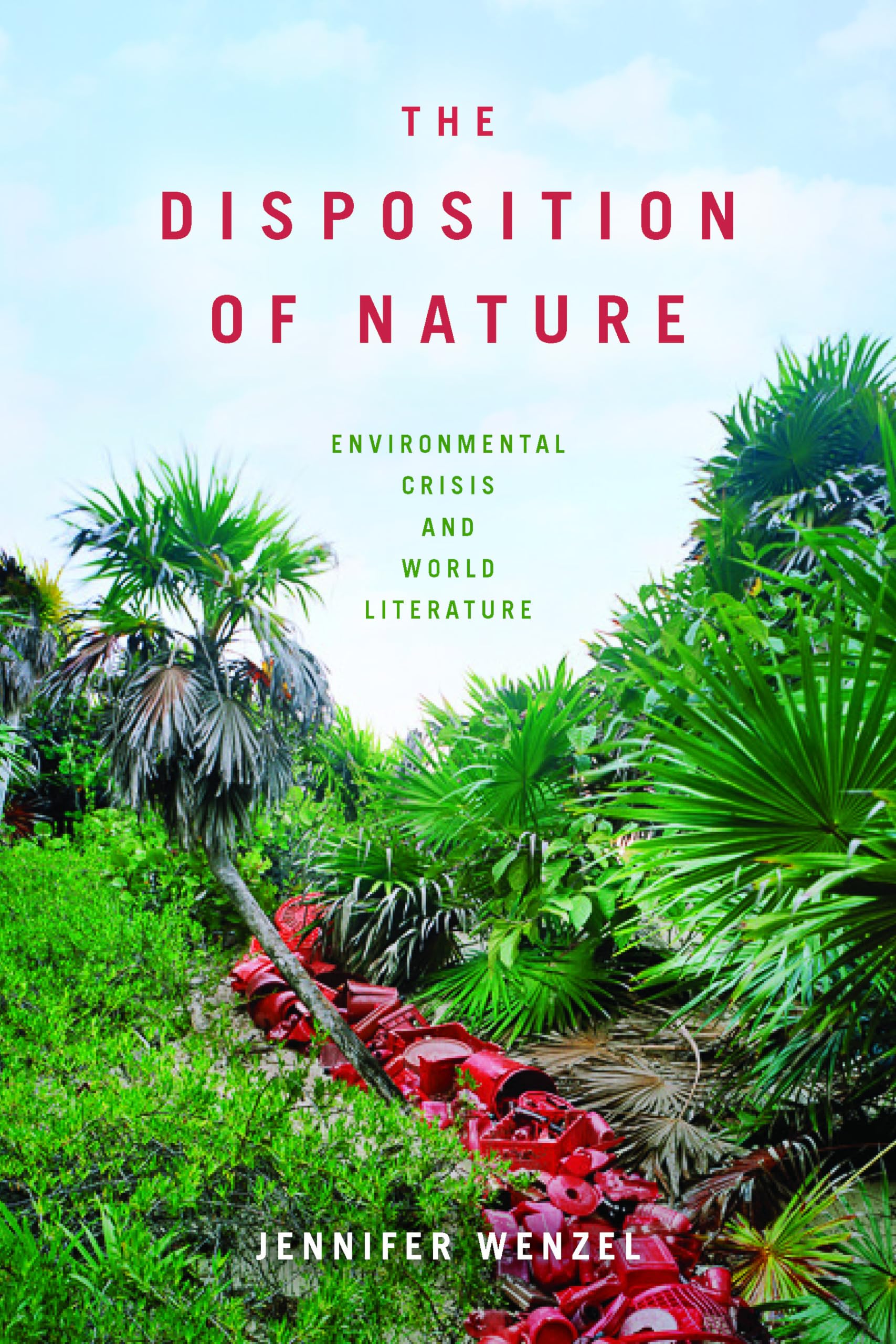
The Disposition of Nature: Environmental Crisis and World Literature,Used
Sold by Ergodebooks, an authorized reseller.
Returns accepted within 30 days | support@ergodebooks.com
Shipping Information
- Free Standard Shipping — United States only
- Processing Time: 3–5 business days
- Estimated Delivery: 6–10 business days after dispatch
- Double-boxed, fully insured & discreetly packaged
- Tracking number sent via email once dispatched
Returns & Refund
Returns accepted within 30 days of delivery.
Damaged or Defective Item
Free return shipping + replacement or full refund
Wrong Item Received
Free return shipping + replacement or full refund
Change of Mind
Return shipping at customer's expense · 25% restocking fee applies
Payment Option

Finalist, 2022 Ecocriticism Book Prize, Association for the Study of Literature and the EnvironmentShortlisted, 2020 Book Prize, Association for the Study of the Arts of the PresentHow do literature and other cultural forms shape how we imagine the planet, for better or worse? In this rich, original, and long awaited book, Jennifer Wenzel tackles the formal innovations, rhetorical appeals, and sociological imbrications of world literature that might help us confront unevenly distributed environmental crises, including global warming.The Disposition of Nature argues that assumptions about what nature is are at stake in conflicts over how it is inhabited or used. Both environmental discourse and world literature scholarship tend to confuse parts and wholes. Working with writing and film from Africa, South Asia, and beyond, Wenzel takes a contrapuntal approach to sites and subjects dispersed across space and time. Reading for the planet, Wenzel shows, means reading from near to there: across experiential divides, between specific sites, at more than one scale.Impressive in its disciplinary breadth, Wenzels book fuses insights from political ecology, geography, anthropology, history, and law, while drawing on active debates between postcolonial theory and world literature, as well as scholarship on the Anthropocene and the material turn. In doing so, the book shows the importance of the literary to environmental thought and practice, elaborating how a supple understanding of cultural imagination and narrative logics can foster more robust accounts of global inequality and energize movements for justice and livable futures.
⚠️ WARNING (California Proposition 65):
This product may contain chemicals known to the State of California to cause cancer, birth defects, or other reproductive harm.
For more information, please visit www.P65Warnings.ca.gov.