
Title
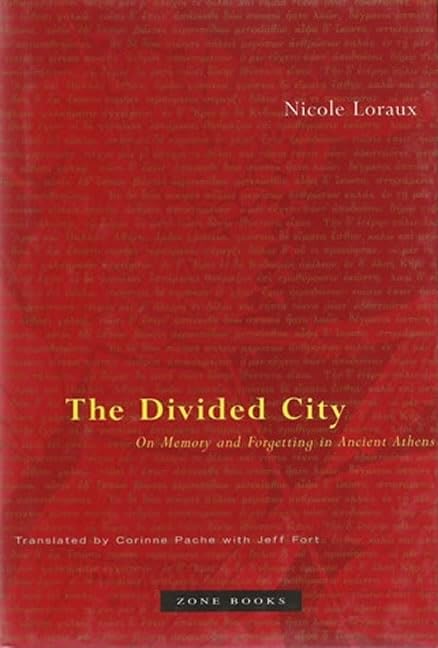
The Divided City: On Memory And Forgetting In Ancient Athens
Sold by Ergodebooks, an authorized reseller.
Returns accepted within 30 days | support@ergodebooks.com
Shipping Information
- Free Standard Shipping — United States only
- Processing Time: 3–5 business days
- Estimated Delivery: 6–10 business days after dispatch
- Double-boxed, fully insured & discreetly packaged
- Tracking number sent via email once dispatched
Returns & Refund
Returns accepted within 30 days of delivery.
Damaged or Defective Item
Free return shipping + replacement or full refund
Wrong Item Received
Free return shipping + replacement or full refund
Change of Mind
Return shipping at customer's expense · 25% restocking fee applies
Payment Option

Athens, 403 Bce. The End Of The Bloody Oligarchic Dictatorship Of The Thirty. The Democrats Return To The City Victorious. Renouncing Vengeance, In An Act Of Amnesia, Citizens Call For If Not Invent Amnesty. They Agree To Forget The Unforgettable, The Past Misfortunes Of Civil Strife, Stasis. More Precisely, What Must Be Denied Is That Stasis Simultaneously Partisanship, Faction, And Sedition Is At The Heart Of Greek Politics.This Crucial Moment Of Athenian Political History, Nicole Loraux Argues In The Divided City, Must Be Interpreted As Constitutive Of, Not A Threat To, Politics And Political Life. Divided From Within And Against Itself, The City Is Formed By That Which It Refuses. Conflict, The Calamity Of Civil War, Is The Other, Dark Side Of The Beautiful, Unitary City Of Athens. Beneath The Greek City Erected In Totality And Ideality, Loraux Rediscovers The Discord Affecting The Entire City, The Stasis Manifesting The Fundamental Conflictual Ambivalence Of The Civic Order. The City, By Definition, Is Doomed To Divide Itself In Two.In A Brilliant Analysis Of The Greek Word For Voting, Diaphora, Loraux Underscores The Conflictual And Dynamic Motion Of Democratic Life: Voting Appears As The Process Of Dividing Up, Of Disagreement, In Short, Of Agreeing To Divide Up And Choose Between. Not Only Does Loraux Reconceptualize The Definition Of Ancient Greek Democracy, But She Ultimately Allows The Contemporary Reader To Rethink The Functioning Of Modern Democracies In Its Critical Moments Of Dissension And Divide, Of Internal Stasis.
⚠️ WARNING (California Proposition 65):
This product may contain chemicals known to the State of California to cause cancer, birth defects, or other reproductive harm.
For more information, please visit www.P65Warnings.ca.gov.
- Q: How many pages are in The Divided City? A: This book contains three hundred sixty pages. It offers a comprehensive exploration of ancient Athenian politics and memory.
- Q: What are the dimensions of The Divided City? A: The book measures six inches in length, one point one inches in width, and eight point nine inches in height. This size makes it portable and easy to handle.
- Q: What type of binding does The Divided City have? A: The book is published in paperback binding. This makes it lightweight and flexible for easy reading.
- Q: Who is the author of The Divided City? A: The author of this book is Corinne Pache. She explores critical themes in ancient Greek politics and memory.
- Q: What is the main theme of The Divided City? A: The primary theme revolves around memory and forgetting in ancient Athens. It examines how political strife shaped the city’s democratic life.
- Q: Is The Divided City suitable for all readers? A: Yes, the book is suitable for readers interested in history and political theory. It provides insights into ancient Athenian democracy.
- Q: How should I read The Divided City for better understanding? A: To understand the themes, consider reading it in context with other historical texts. This book encourages critical thinking about democracy.
- Q: Can I use The Divided City for academic research? A: Yes, this book is a valuable resource for academic research. It provides in-depth analysis and interpretations of Athenian politics.
- Q: How should I store The Divided City? A: Store the book in a cool, dry place away from direct sunlight. This will help preserve its condition over time.
- Q: Is there a specific way to handle The Divided City to keep it in good condition? A: Yes, handle the book gently to avoid damaging the spine. Avoid bending the pages to maintain its integrity.
- Q: What if my copy of The Divided City arrives damaged? A: If your copy arrives damaged, contact the seller for a return or exchange. Most sellers have policies in place for such issues.
- Q: Can I find similar books to The Divided City? A: Yes, you can find similar books focusing on ancient Greek history and political theory. Look for titles by the same publisher or author.
- Q: Is The Divided City a good choice for someone new to Greek history? A: Yes, it is a good introduction to Greek history. The themes are relatable and provoke thought about contemporary political issues.
- Q: Does The Divided City offer insights into modern democracy? A: Yes, the book allows contemporary readers to reflect on modern democratic processes. It draws parallels between ancient and modern political conflicts.
- Q: Is The Divided City an adult-only book? A: No, The Divided City is suitable for a general audience. It discusses historical events in a scholarly yet accessible manner.
- Q: What condition is The Divided City in if it's labeled as used? A: The book is in good condition if labeled as used. It may show minor signs of wear but is still readable and intact.