If you have any questions, you are always welcome to contact us. We'll get back to you as soon as possible, withing 24 hours on weekdays.
Customer service
All questions about your order, return and delivery must be sent to our customer service team by e-mail at yourstore@yourdomain.com
Sale & Press
If you are interested in selling our products, need more information about our brand or wish to make a collaboration, please contact us at press@yourdomain.com
Help
If you have any questions, you are always welcome to contact us. We'll get back to you as soon as possible, withing 24 hours on weekdays.
Customer service
All questions about your order, return and delivery must be sent to our customer service team by e-mail at yourstore@yourdomain.com
Sale & Press
If you are interested in selling our products, need more information about our brand or wish to make a collaboration, please contact us at press@yourdomain.com
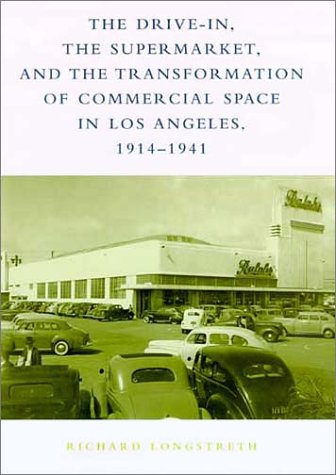
Longstreth explores the early development of two kinds of retail space that have become ubiquitous in the United States in the second half of the twentieth century.Richard Longstreth is one of the few historians to focus on ordinary commercial buildingsbuildings usually associated with commercial builders and real estate developers rather than architects and thus generally overlooked by historians of high architecture.Here Longstreth explores the early development of two kinds of retail space that have become ubiquitous in the United States in the second half of the twentieth century. One, external, is devoted to the circulation and parking of automobiles on retail premises. Longstreth analyzes the origins of this development in the 1910s and 1920s, with the super service station and then the drivein market. The other type of space, internal, was introduced soon thereafter with the singlestory supermarket. The most innovative aspect of the supermarket was how its interior was designed for highvolume turnover of a large selection of goods with a minimum of staff assistance. Longstreth focuses on Los Angeles, the principal center for the development of both kinds of space, during the period from the mid1910s to the early 1940s. This richly illustrated study integrates architectural, cultural, economic, and urban factors to describe the evolution of retailing and how it has affected the urban landscape.
⚠️ WARNING (California Proposition 65):
This product may contain chemicals known to the State of California to cause cancer,
birth defects, or other reproductive harm.
For MAP (Minimum Advertised Price) violations and Intellectual Property (IP) or Trademark concerns, please contact:
support@ergodebooks.com
⚠️ California Proposition 65 Warning: Some products sold on this website may expose you to chemicals known to the State of California to cause cancer, birth defects, or other reproductive harm. For more information, visit www.P65Warnings.ca.gov.