
Title
The Dynamics Of Rules: Change In Written Organizational Codes,Used
Sold by Ergodebooks, an authorized reseller.
Returns accepted within 30 days | support@ergodebooks.com
Shipping Information
- Free Standard Shipping — United States only
- Processing Time: 3–5 business days
- Estimated Delivery: 6–10 business days after dispatch
- Double-boxed, fully insured & discreetly packaged
- Tracking number sent via email once dispatched
Returns & Refund
Returns accepted within 30 days of delivery.
Damaged or Defective Item
Free return shipping + replacement or full refund
Wrong Item Received
Free return shipping + replacement or full refund
Change of Mind
Return shipping at customer's expense · 25% restocking fee applies
Payment Option

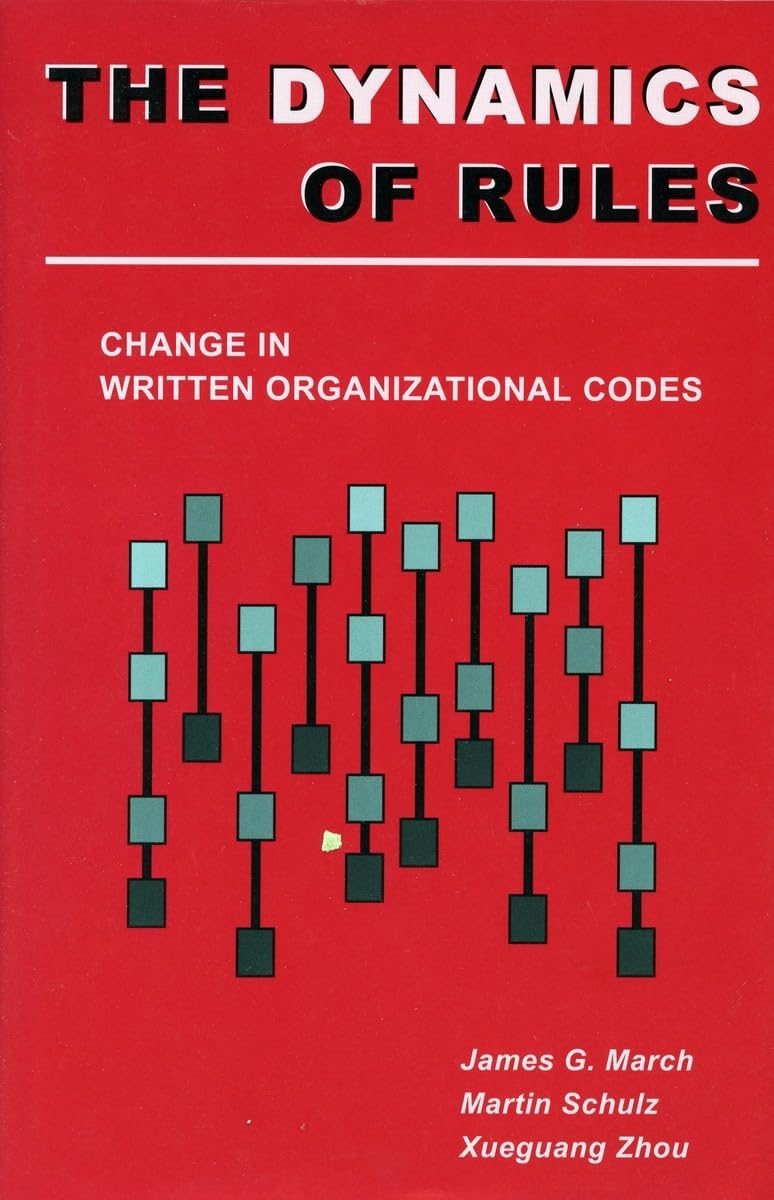
Written rules in formal organizations are distinctive elements of organizational history; they shape organizational change and are in turn shaped by it. These rules are created, revised, and eliminated in ways that leave historical traces, and they have a visibility and durability that elude nonwritten rules. They thus provide rich data for an empirical probe into the dynamics of organizational history.This study uses qualitative and quantitative data from the history of a specific organization, Stanford University, to develop speculations about the ways in which written rules change. It contributes both to a theory of rules and to theories of organizational decisionmaking, change, and learning. Organizations respond to problems and react to internal or external pressures by focusing attention on existing and potential rules. The creation, modification, or elimination of a rule, then, is a response to events in the outside environment (such as new government regulations) or to events within the organization (such as alterations in internal government structures).The authors elaborate a simple set of ideas about written rules and their dynamics, emphasizing the interplay among periodic major shocks to the system from outside, experiences with individual rules as they age and are revised, and the spread of effects through an interconnected set of rules. It is a story in which changes introduced in one part of a rule system create adjustments in other parts, including the same rule later in time, as the consequences of the changes are experienced and as rulemaking attention is mobilized, satiated, and redirected. These processes involve the full panoply of political negotiation, symbolic competition, discussion, and problem solving that are typical of organizational decision making.
⚠️ WARNING (California Proposition 65):
This product may contain chemicals known to the State of California to cause cancer, birth defects, or other reproductive harm.
For more information, please visit www.P65Warnings.ca.gov.