
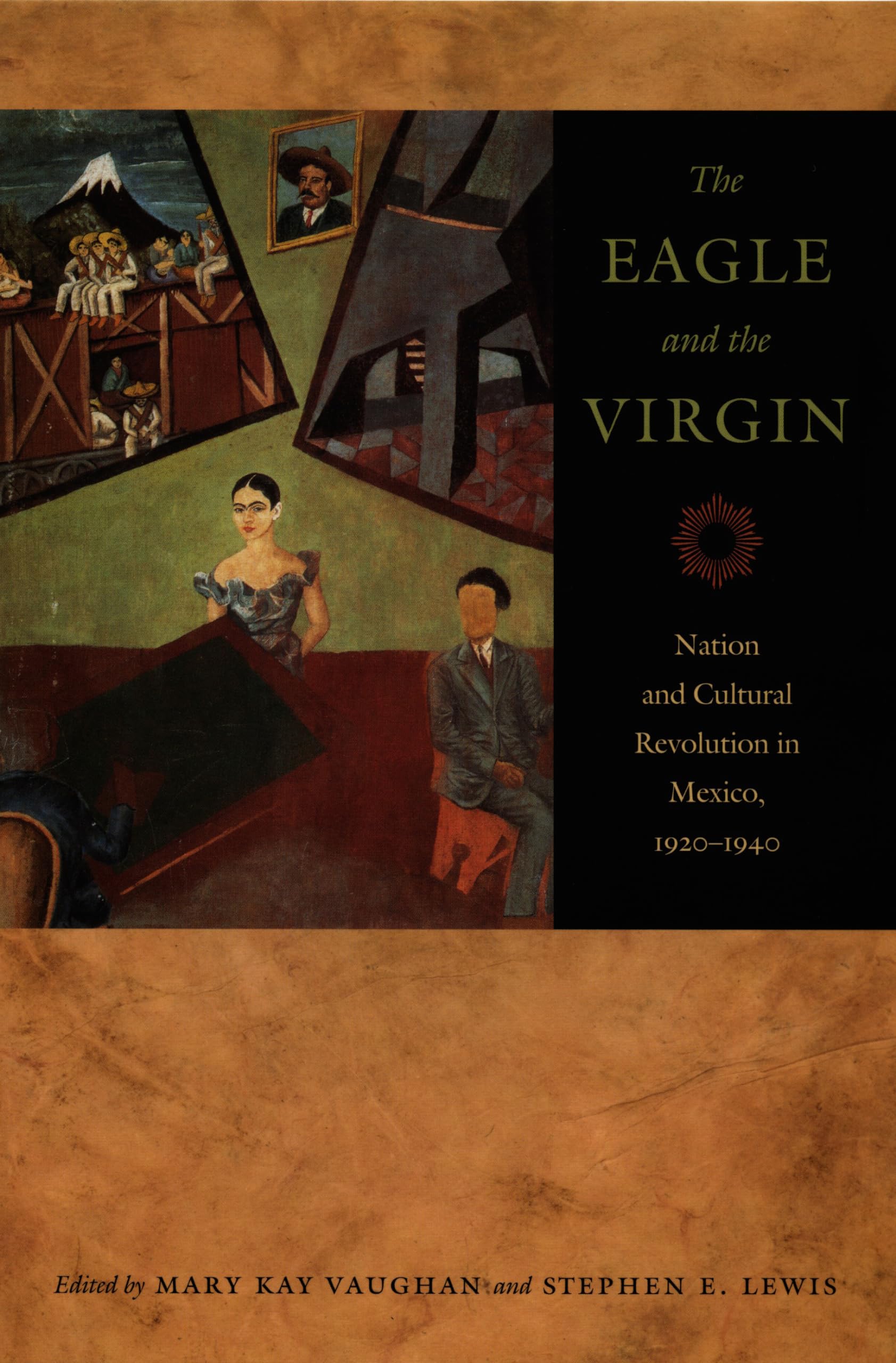
Title
The Eagle And The Virgin: Nation And Cultural Revolution In Mexico, 19201940,Used
Sold by Ergodebooks, an authorized reseller.
Returns accepted within 30 days | support@ergodebooks.com
Shipping Information
- Free Standard Shipping — United States only
- Processing Time: 3–5 business days
- Estimated Delivery: 6–10 business days after dispatch
- Double-boxed, fully insured & discreetly packaged
- Tracking number sent via email once dispatched
Returns & Refund
Returns accepted within 30 days of delivery.
Damaged or Defective Item
Free return shipping + replacement or full refund
Wrong Item Received
Free return shipping + replacement or full refund
Change of Mind
Return shipping at customer's expense · 25% restocking fee applies
Payment Option

When The Fighting Of The Mexican Revolution Died Down In 1920, The National Government Faced The Daunting Task Of Building A Cohesive Nation. It Had To Establish Control Over A Disparate And Needy Population And Prepare The Country For Global Economic Competition. As Part Of This Effort, The Government Enlisted The Energy Of Artists And Intellectuals In Cultivating A Distinctly Mexican Identity. It Devised A Project For The Incorporation Of Indigenous Peoples And Oversaw A Vast, Innovative Program In The Arts. The Eagle And The Virgin Examines The Massive Nationbuilding Project Mexico Undertook Between 1920 And 1940.Contributors Explore The Nationbuilding Efforts Of The Government, Artists, Entrepreneurs, And Social Movements; Their Contradictory, Often Conflicting Intersection; And Their Inevitably Transnational Nature. Scholars Of Political And Social History, Communications, And Art History Describe The Creation Of National Symbols, Myths, Histories, And Heroes To Inspire Patriotism And Transform Workers And Peasants Into Efficient, Productive, Gendered Subjects. They Analyze The Aesthetics Of Nation Building Made Visible In Murals, Music, And Architecture; Investigate State Projects To Promote Health, Anticlericalism, And Education; And Consider The Role Of Mass Communications, Such As Cinema And Radio, And The Impact Of Road Building. They Discuss How National Identity Was Forged Among Social Groups, Specifically Political Catholics, Industrial Workers, Middleclass Women, And Indigenous Communities. Most Important, The Volume Weighs In On Debates About The Tension Between The Eagle (The Modernizing Secular State) And The Virgin Of Guadalupe (The Catholic Defense Of Faith And Morality). It Argues That Despite Bitter, Violent Conflict, The Symbolic Repertoire Created To Promote National Identity And Memory Making Eventually Proved Capacious Enough To Allow The Eagle And The Virgin To Coexist Peacefully.Contributors. Adrian Bantjes, Katherine Bliss, Mara Teresa Fernndez, Joy Elizabeth Hayes, Joanne Hershfield, Stephen E. Lewis, Claudio Lomnitz, Rick A. Lpez, Sarah M. Lowe, Jean Meyer, James Oles, Patrice Olsen, Desmond Rochfort, Michael Snodgrass, Mary Kay Vaughan, Marco Velzquez, Wendy Waters, Adriana Zavala
⚠️ WARNING (California Proposition 65):
This product may contain chemicals known to the State of California to cause cancer, birth defects, or other reproductive harm.
For more information, please visit www.P65Warnings.ca.gov.
- Q: How many pages does the book have? A: The book has three hundred ninety-six pages. It provides a comprehensive exploration of nation-building in Mexico from nineteen twenty to nineteen forty.
- Q: What is the binding type of this book? A: The book is a paperback binding. This makes it lightweight and easy to handle for readers.
- Q: What are the dimensions of the book? A: The dimensions are six point two six inches in length, one point two six inches in width, and nine point two five inches in height. These measurements make it a standard-sized book.
- Q: Who is the author of this book? A: The author is Mary Kay Vaughan. She is known for her expertise in Mexican history and cultural studies.
- Q: What topics does this book cover? A: The book covers nation-building, identity, and cultural revolution in Mexico. It examines the intersection of art, politics, and social movements in that era.
- Q: Is this book suitable for academic use? A: Yes, it is suitable for academic use. It includes contributions from various scholars in political, social, and art history.
- Q: How should I store this book? A: Store the book upright in a cool, dry place. Avoid direct sunlight to prevent fading of the cover and pages.
- Q: Does this book contain illustrations? A: Yes, the book includes thirty-six illustrations. These visuals enhance the understanding of the content discussed.
- Q: Is there a warranty or return policy for this book? A: Typically, there is a return policy for books in good condition. Check the seller's return policy for specific details.
- Q: How do I handle this book to prevent damage? A: Handle the book with clean hands and avoid bending the spine. Use a bookmark to prevent page damage.
- Q: What makes this book unique? A: This book uniquely combines historical analysis with artistic perspectives on nation-building in Mexico. It explores both government efforts and grassroots movements.
- Q: Can this book be a good resource for understanding Mexican history? A: Yes, it is an excellent resource for understanding Mexican history. It provides in-depth insights into the cultural and political landscape of the time.
- Q: Is this book appropriate for high school students? A: Yes, it is appropriate for high school students interested in history. The content is accessible but offers depth suitable for advanced learners.
- Q: Does the book address the role of indigenous communities? A: Yes, it addresses the role of indigenous communities in nation-building. It highlights their integration and representation within Mexican identity.
- Q: What is the publisher of this book? A: The publisher is Duke University Press. They are known for academic and scholarly works.
- Q: Are there any notable contributors to this book? A: Yes, there are several notable contributors, including scholars like Claudio Lomnitz and Jean Meyer. Their expertise adds depth to the discussions.