If you have any questions, you are always welcome to contact us. We'll get back to you as soon as possible, withing 24 hours on weekdays.
Customer service
All questions about your order, return and delivery must be sent to our customer service team by e-mail at yourstore@yourdomain.com
Sale & Press
If you are interested in selling our products, need more information about our brand or wish to make a collaboration, please contact us at press@yourdomain.com
Help
If you have any questions, you are always welcome to contact us. We'll get back to you as soon as possible, withing 24 hours on weekdays.
Customer service
All questions about your order, return and delivery must be sent to our customer service team by e-mail at yourstore@yourdomain.com
Sale & Press
If you are interested in selling our products, need more information about our brand or wish to make a collaboration, please contact us at press@yourdomain.com
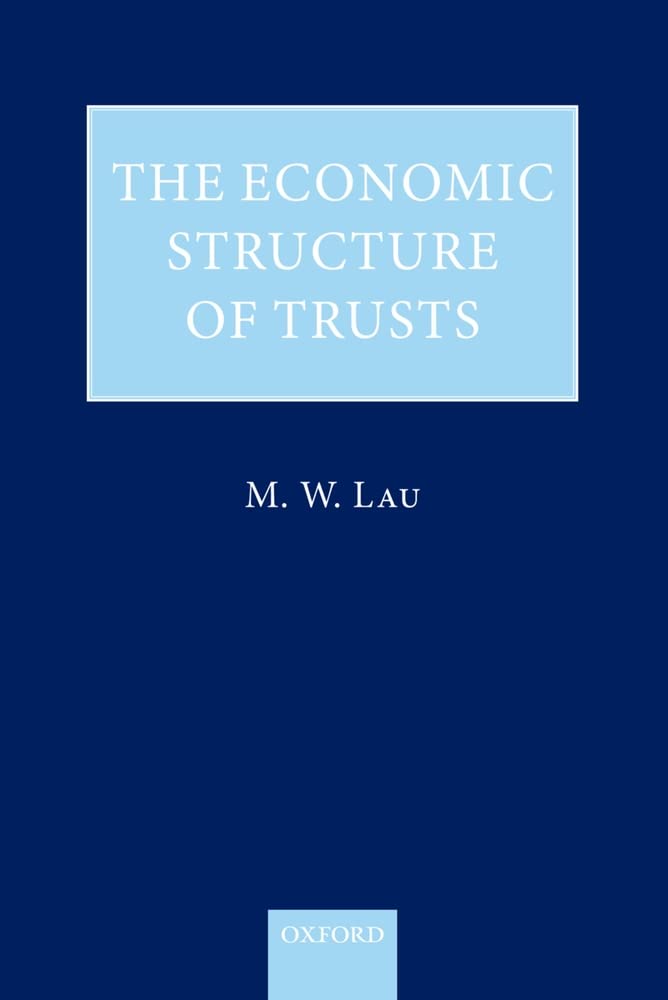
This book provides an economic account of why trusts exist and how trust law should be shaped. The trust is a key legal institution in the common law world but it has been neglected by the law and economics community until recently. Borrowing theories and doctrines from corporate law and economics, scholars have variously analyzed and described the trust as a tripartite contract, a nexus of contracts, and even a legal entity. These obligational approaches overlook the unique features of trusts for which corporate legal theories have no explanation. Most importantly, they fail to account for the nature of the beneficiary's interest in the trust property.This book presents an original analysis of the common law of trusts, arguing that trust law is about the trust property and the principal parties' relationships with it. At the same time it questions recent trends in trust law, especially those in offshore jurisdictions. Exotic developments such as noncharitable purpose trusts, settlorretention of wide powers, and generous trustee exemption clauses have become the new normal and, coincidentally, draw analytical support from obligational accounts. It develops an analysis of trusts from a proprietary perspective, and applies the propertybased approach to the economic analysis of trusts explaining the economic benefits of trusts as an extension of the law of property. It also demonstrates how, once trusts are properly understood as property, it becomes obvious why these novel developments can only be for the worse, and should be reversed.
⚠️ WARNING (California Proposition 65):
This product may contain chemicals known to the State of California to cause cancer,
birth defects, or other reproductive harm.
For MAP (Minimum Advertised Price) violations and Intellectual Property (IP) or Trademark concerns, please contact:
support@ergodebooks.com
⚠️ California Proposition 65 Warning: Some products sold on this website may expose you to chemicals known to the State of California to cause cancer, birth defects, or other reproductive harm. For more information, visit www.P65Warnings.ca.gov.