
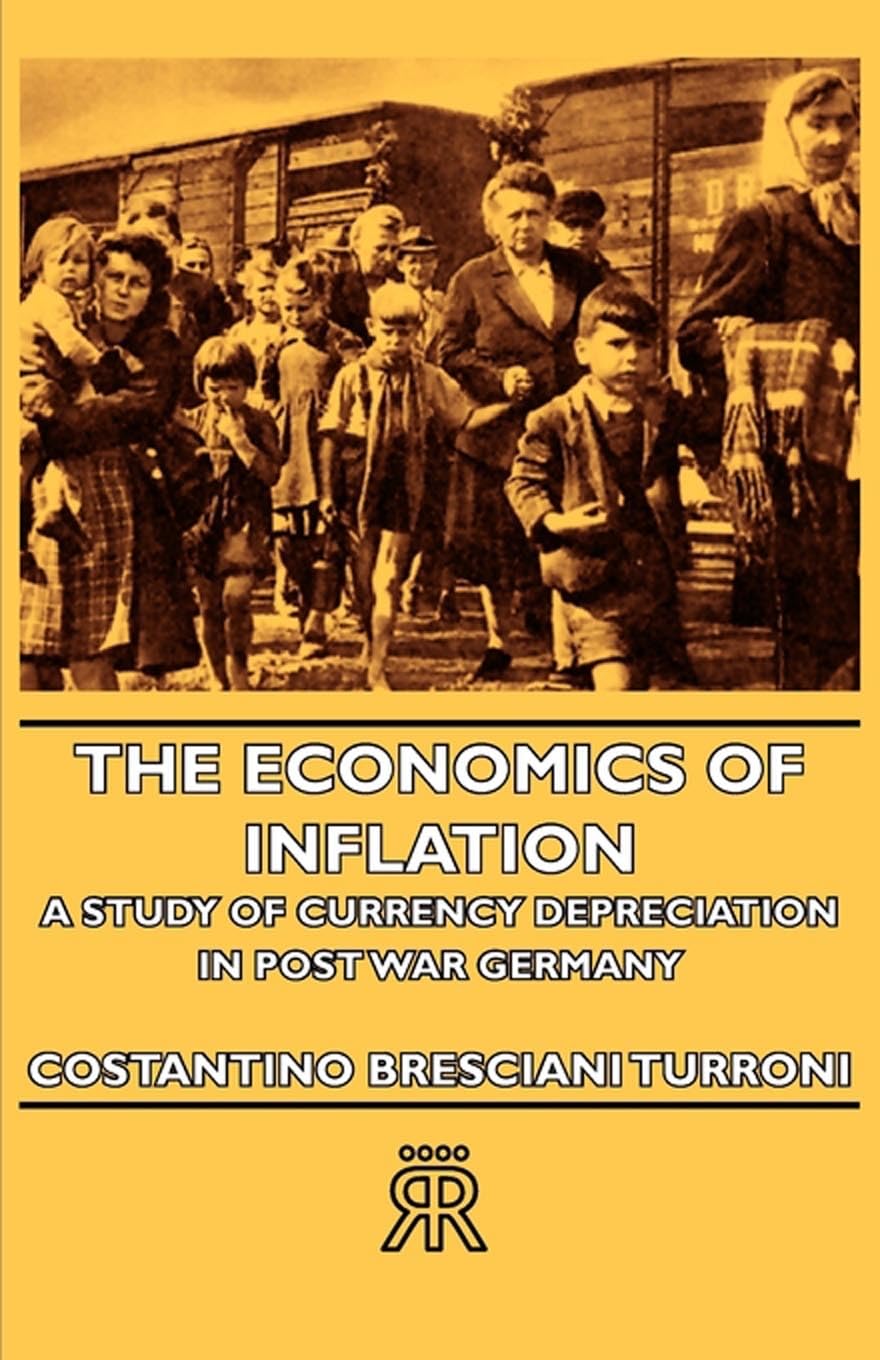
Title
The Economics Of Inflation A Study Of Currency Depreciation In Post War Germany
Sold by Ergodebooks, an authorized reseller.
Returns accepted within 30 days | support@ergodebooks.com
Shipping Information
- Free Standard Shipping — United States only
- Processing Time: 3–5 business days
- Estimated Delivery: 6–10 business days after dispatch
- Double-boxed, fully insured & discreetly packaged
- Tracking number sent via email once dispatched
Returns & Refund
Returns accepted within 30 days of delivery.
Damaged or Defective Item
Free return shipping + replacement or full refund
Wrong Item Received
Free return shipping + replacement or full refund
Change of Mind
Return shipping at customer's expense · 25% restocking fee applies
Payment Option

The Depreciation Of The Mark Of 191423, Which Is The Subject Of This Work, Is One Of The Outstanding Episodes In The History Of The Twentieth Century. Not Only By Reason Of Its Magnitude But Also By Reason Of Its Effects, It Looms Large On Our Horizon. It Was The Most Colossal Thing Of Its Kind In History: And, Next Probably To The Great War Itself, It Must Bear Responsibility For Many Of The Political And Economic Difficulties Of Our Generation. It Destroyed The Wealth Of The More Solid Elements In German Society: And It Left Behind A Moral And Economic Disequilibrium, Apt Breeding Ground For The Disasters Which Have Followed. Hitler Is The Fosterchild Of The Inflation. The Financial Convulsions Of The Great Depression Were, In Part At Least, The Product Of The Distortions Of The System Of International Borrowing And Lending To Which Its Ravages Had Given Rise. If We Are To Understand Correctly The Present Position Of Europe, We Must Not Neglect The Study Of The Great German Inflation. If We Are To Plan For Greater Stability In The Future, We Must Learn To Avoid The Mistakes From Which It Sprang. There Is Another Reason Why The History Of This Episode Is Peculiarly Significant To Students Of The Social Sciences. Accidents To The Body Politic, Like Accidents To The Physical Body, Often Permit Observations Of A Kind Which Would Not Be Possible Under Normal Conditions. In Peaceful Times We May Speculate Concerning The Consequences Of Violent Change. But We Are Naturally Precluded From Verifying Our Conclusions: We Cannot Upset The Smooth Current Of Things For The Advancement Of Abstract Knowledge. But When Disturbance Takes Place, It Is Sometimes Possible To Snatch Good From Evil And To Obtain Insight Into The Working Of Processes Which Are Normally Concealed. No Doubt There Are Dangers Here. We Must Not Ignore The Possibility That The Processes Thus Revealed Are Themselves Abnormal: We Must Not Infer, For Instance, That Propositions Which Apply To Large Inflations Necessarily Apply, Without Modification, To Small Inflations. But The Dangers Are Clear: It Is Net Difficult To Keep Them In Mind And To Guard Against Them. And The Opportunities Of Fruitful Research Are Enormous. In This Matter Of The Depreciation Of The Mark, There Is Hardly Any Branch Of The Theory Of Economic Dynamics Which Is Not Illuminated By Examination Of Its Grim Events. For Both These Reasons, Therefore, I Hope That This Book Will Obtain A Wide Circulation Among The Englishspeaking Public.
⚠️ WARNING (California Proposition 65):
This product may contain chemicals known to the State of California to cause cancer, birth defects, or other reproductive harm.
For more information, please visit www.P65Warnings.ca.gov.
- Q: What is the page count of this book? A: This book contains four hundred sixty-eight pages. It provides an in-depth study of the economic dynamics during the inflation of post-war Germany.
- Q: What are the dimensions of the book? A: The book measures five point five one inches in length, one point zero four inches in width, and eight point five inches in height. These dimensions make it a convenient size for reading.
- Q: What type of binding does this book have? A: This book features a paperback binding. This type of binding is typically flexible and lightweight, making it easy to handle.
- Q: Who is the author of this book? A: The author of this book is Costantino Bresciani-Turroni. He provides valuable insights into the economic history of Germany.
- Q: What category does this book fall under? A: This book is categorized under Economic History. It explores significant economic events and their impacts on society.
- Q: How do I read and understand this book? A: You can read this book at your own pace, focusing on the historical context and economic theories presented. It's suitable for anyone interested in economic history.
- Q: Is this book suitable for beginners in economics? A: Yes, this book is suitable for beginners. It provides clear insights into complex economic topics, making it accessible to a wider audience.
- Q: What themes are explored in this book? A: This book explores themes of currency depreciation, economic instability, and the social consequences of inflation. These themes are relevant to understanding modern economic issues.
- Q: How should I care for this book? A: To keep this book in good condition, store it in a cool, dry place and avoid exposure to direct sunlight. Handle it gently to prevent wear and tear.
- Q: Can I clean the book if it gets dirty? A: Yes, you can clean the book gently. Use a soft, dry cloth to wipe the cover and avoid using any liquids that could damage the pages.
- Q: What if the book arrives damaged? A: If the book arrives damaged, you should contact the seller for a return or exchange. Most sellers have policies in place for damaged items.
- Q: Is there a warranty for this book? A: No, there is typically no warranty for books. However, most retailers offer return policies to address any issues you may encounter.
- Q: How does this book compare to other economic history books? A: This book provides a unique focus on the inflation of post-war Germany, making it distinct from other economic history books that may cover broader topics.
- Q: Is this book recommended for academic study? A: Yes, this book is highly recommended for academic study. It provides valuable insights that can enhance understanding of economic dynamics.
- Q: What makes this book significant in economic studies? A: This book is significant because it examines a major historical event that has shaped contemporary economic theories and policies, offering lessons for the future.