
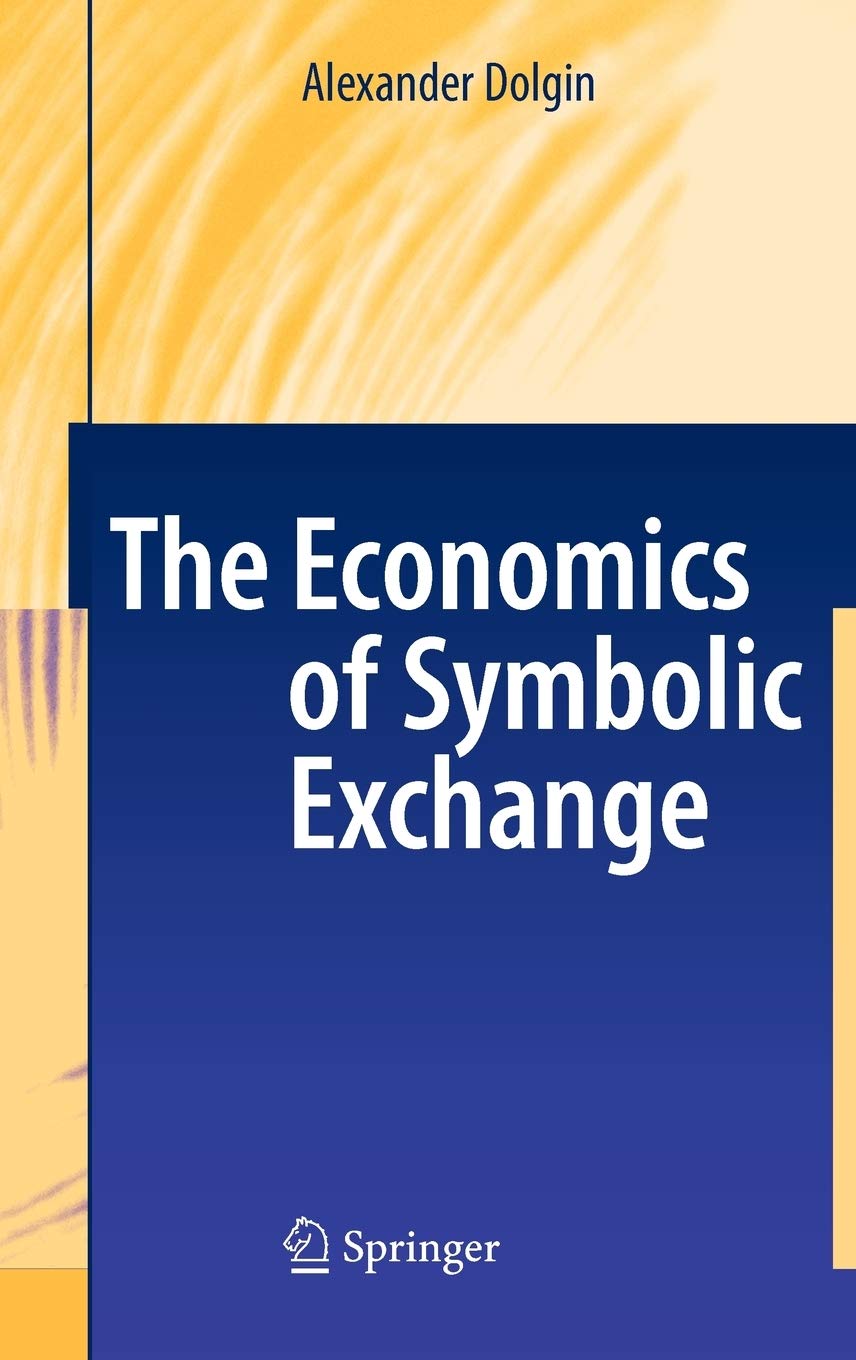
Title
The Economics of Symbolic Exchange,Used
Sold by Ergodebooks, an authorized reseller.
Returns accepted within 30 days | support@ergodebooks.com
Shipping Information
- Free Standard Shipping — United States only
- Processing Time: 3–5 business days
- Estimated Delivery: 6–10 business days after dispatch
- Double-boxed, fully insured & discreetly packaged
- Tracking number sent via email once dispatched
Returns & Refund
Returns accepted within 30 days of delivery.
Damaged or Defective Item
Free return shipping + replacement or full refund
Wrong Item Received
Free return shipping + replacement or full refund
Change of Mind
Return shipping at customer's expense · 25% restocking fee applies
Payment Option

Alexander Dolgins Economics of Symbolic Exchange is in reality not one but three books, and although these semantic layers are interlinked, the reader will need to choose between the different vectors and modalities. One clearly evident dimension is research. Certain authors introduce quite new intellectual approaches into scienti?c debate. This requires a special frame of mind and a searching curiosity about social reality. Carl Gustav Jung identi?ed a p nomenon which he called systematic blindness: when a science reaches a stage of maturity and equilibrium, it categorically refuses, from a sense of selfpreservation, to note certain facts and phenomena which it ?nds inconvenient. In Alexander D gins book whole complexes of such noncanonical material are to be found. Here are just a few examples: ?le exchange networks, through which digital works of art are spread through the Internet; bargain sales of fashionable clothing; the paradox of equal pricing of cultural goods of varying quality; and a discussion of whether tronage or business has the more productive in?uence on creativity. Obviously, not all the issues Volginraises are totally new, but brought togetherand examinedwithin an elegant logical framework of informational economics, they pose a challenge to scienti?c thinking. Such challenges are by no means immediately or, in some cases, ever acclaimed bythescienti?cestablishment. J. K. Galbraith,forexample,agreatAmericaneco mist, whose works are read throughout the world, who introduced a whole range of crucially important concepts, the director of John F.
⚠️ WARNING (California Proposition 65):
This product may contain chemicals known to the State of California to cause cancer, birth defects, or other reproductive harm.
For more information, please visit www.P65Warnings.ca.gov.