
Title
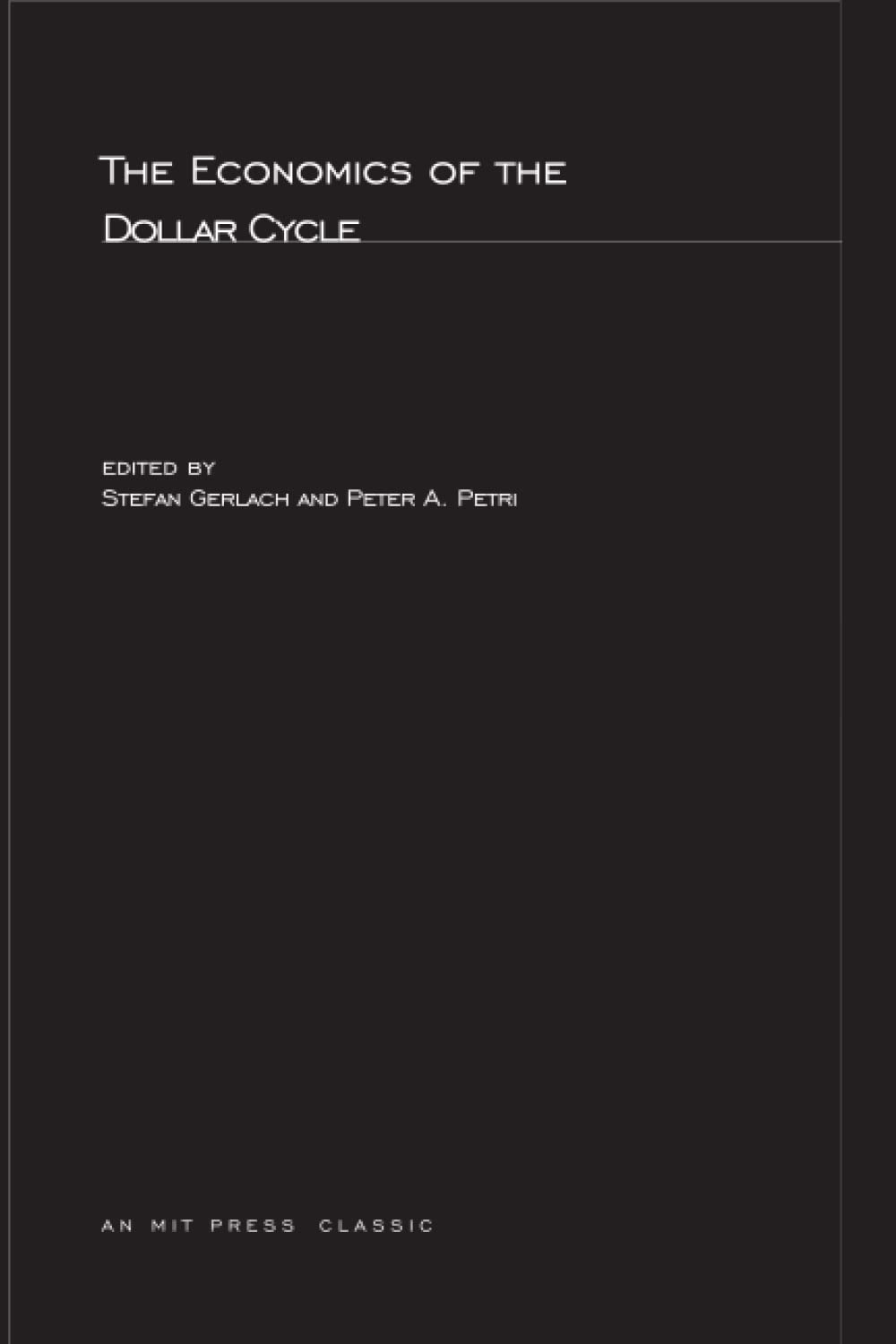
The Economics Of The Dollar Cycle (Mit Press)
Sold by Ergodebooks, an authorized reseller.
Returns accepted within 30 days | support@ergodebooks.com
Shipping Information
- Free Standard Shipping — United States only
- Processing Time: 3–5 business days
- Estimated Delivery: 6–10 business days after dispatch
- Double-boxed, fully insured & discreetly packaged
- Tracking number sent via email once dispatched
Returns & Refund
Returns accepted within 30 days of delivery.
Damaged or Defective Item
Free return shipping + replacement or full refund
Wrong Item Received
Free return shipping + replacement or full refund
Change of Mind
Return shipping at customer's expense · 25% restocking fee applies
Payment Option

The paradoxical behavior of the dollar since 1980 poses a challenge to standard models of open economy macroeconomics. Using the dollar as a fulcrum, the original essays in this book discuss the causes of the dramatic shifts in the dollar's exchange value during the past decade and the effect of these fluctuations on the economies of the United States, Japan, Europe, and the developing nations, as well as its impact on theories of international economics. Stefan Gerlach and Peter Petri address the causes of the dollar's extreme rise and sudden fall in the 1980s and speculate on how the cycle changed theories of trade, exchange rate determination, and international capital markets. James Tobin's debunking of myths about the dollar has important implications for the future course of U.S. economic policy, while Rachel McCulloch provides an overview of the remarkable events of the past decade. Paul Krugman points out how the experience highlights the bankruptcy of current theories of integration of goods and financial markets. Peter Garber urges caution in interpreting the fluctuations in the dollar as due to a speculative bubble. Several contributors offer exciting new ideas to be formalized and tested. These include structural breaks, asymmetries, and ratchets, addressed by Richard Baldwin and Charles Kindleberger, and the corporate response to the dollar, analyzed by Robert Aliber and by Ruyhei Wakasugi. Charles Wyplosz discusses the impact of the dollar on Europe, and Stefen Gerlach reviews the relationship between the dollar and its fundamentals. In the book's final essay, Peter Petri describes the impacts of the dollar cycle on the developing countries.
⚠️ WARNING (California Proposition 65):
This product may contain chemicals known to the State of California to cause cancer, birth defects, or other reproductive harm.
For more information, please visit www.P65Warnings.ca.gov.