
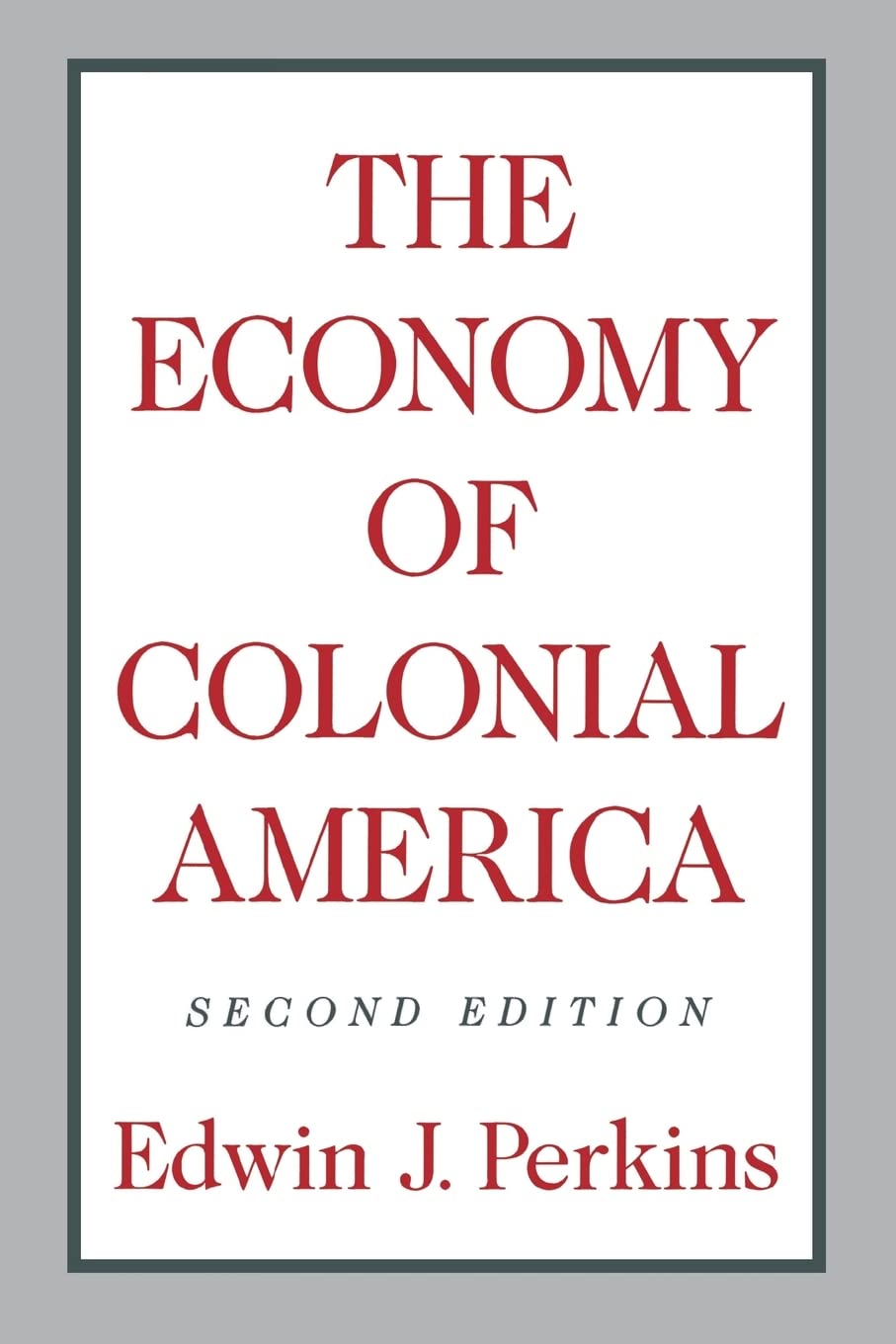
Title
The Economy of Colonial America,New
Sold by Ergodebooks, an authorized reseller.
Returns accepted within 30 days | support@ergodebooks.com
Shipping Information
- Free Standard Shipping — United States only
- Processing Time: 3–5 business days
- Estimated Delivery: 6–10 business days after dispatch
- Double-boxed, fully insured & discreetly packaged
- Tracking number sent via email once dispatched
Returns & Refund
Returns accepted within 30 days of delivery.
Damaged or Defective Item
Free return shipping + replacement or full refund
Wrong Item Received
Free return shipping + replacement or full refund
Change of Mind
Return shipping at customer's expense · 25% restocking fee applies
Payment Option

The colonial era is especially appealing in regard to economic history because it represents a study in contrasts. The economy was exceptionally dynamic in terms of population growth and geographical expansion. No major famines, epidemics, or extended wars intervened to reverse, or even slow down appreciably, the tide of vigorous economic growth. Despite this broad expansion, however, the fundamental patterns of economic behavior remained fairly constant. The members of the main occupational groups farmers, planters, merchants, artisans, indentured servants, and slaves performed similar functions throughout the period. In comparison with the vast number of institutional innovations in the nineteenth and twentieth centuries, structural change in the colonial economy evolved gradually. With the exception of the adoption of the pernicious system of black slavery, few new economic institutions and no revolutionary new technologies emerged to disrupt the stability of this remarkably affluent commercialagricultural society. Living standards rose slowly but fairly steadily at a rate of 3 to 5 percent a decade after 1650. (Monetary sums are converted into 1980 dollars so that the figures will be relevant to modern readers.) For the most part, this book describes the economic life styles of free white society. The term 'colonists' is virtually synonymous here with inhabitants of European origin. Thus, statements about very high living standards and the benefits of land ownership pertain only to whites. One chapter does focus exclusively, however, on indentured servants and slaves. This book represents the author's best judgment about the most important features of the colonial economy and their relationship to the general society and to the movement for independence. It should be a good starting point for all undergraduate to scholar interested in learning more about the seventeenth and eighteenth centuries.
⚠️ WARNING (California Proposition 65):
This product may contain chemicals known to the State of California to cause cancer, birth defects, or other reproductive harm.
For more information, please visit www.P65Warnings.ca.gov.