If you have any questions, you are always welcome to contact us. We'll get back to you as soon as possible, withing 24 hours on weekdays.
Customer service
All questions about your order, return and delivery must be sent to our customer service team by e-mail at yourstore@yourdomain.com
Sale & Press
If you are interested in selling our products, need more information about our brand or wish to make a collaboration, please contact us at press@yourdomain.com
Help
If you have any questions, you are always welcome to contact us. We'll get back to you as soon as possible, withing 24 hours on weekdays.
Customer service
All questions about your order, return and delivery must be sent to our customer service team by e-mail at yourstore@yourdomain.com
Sale & Press
If you are interested in selling our products, need more information about our brand or wish to make a collaboration, please contact us at press@yourdomain.com
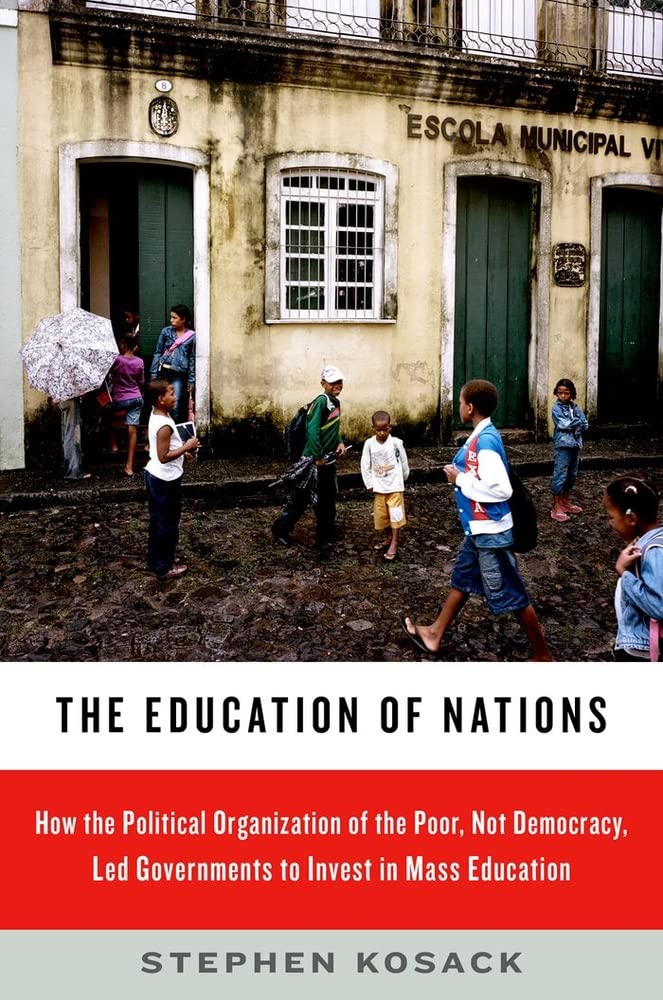
Mass education is vital to sustainable development, particularly in the information age. In The Education of Nations, Stephen Kosack provides a framework for understanding when a government will invest in quality mass education or concentrate on higher education restricted to elites. Drawing on detailed evidence from more than five decades in Taiwan, Ghana, and Brazil three countries with little in common Kosack demonstrates that two conditions lead developing nations to invest in mass education. The first of these is an economy in which employers face a shortage of skilled labor that they cannot meet with outsourcing or by hiring foreign workers; the second, and more common, is a government engaging in "political entrepreneurship of the poor" developing organizational structures that allow poor citizens to act collectively to support the government. In bringing these conditions to light, The Education of Nations provides a method to explain not only how governments try to distribute educational opportunity, but also the implications for a range of key features of actual education systems, from the relative conditions of schools to the availability of financial aid. In an era when much of a country's success depends on its education, this book explains why governments adopt particular education policies and the political and economic changes that would lead to different ones.
⚠️ WARNING (California Proposition 65):
This product may contain chemicals known to the State of California to cause cancer,
birth defects, or other reproductive harm.
For MAP (Minimum Advertised Price) violations and Intellectual Property (IP) or Trademark concerns, please contact:
support@ergodebooks.com
⚠️ California Proposition 65 Warning: Some products sold on this website may expose you to chemicals known to the State of California to cause cancer, birth defects, or other reproductive harm. For more information, visit www.P65Warnings.ca.gov.