If you have any questions, you are always welcome to contact us. We'll get back to you as soon as possible, withing 24 hours on weekdays.
Customer service
All questions about your order, return and delivery must be sent to our customer service team by e-mail at yourstore@yourdomain.com
Sale & Press
If you are interested in selling our products, need more information about our brand or wish to make a collaboration, please contact us at press@yourdomain.com
Help
If you have any questions, you are always welcome to contact us. We'll get back to you as soon as possible, withing 24 hours on weekdays.
Customer service
All questions about your order, return and delivery must be sent to our customer service team by e-mail at yourstore@yourdomain.com
Sale & Press
If you are interested in selling our products, need more information about our brand or wish to make a collaboration, please contact us at press@yourdomain.com
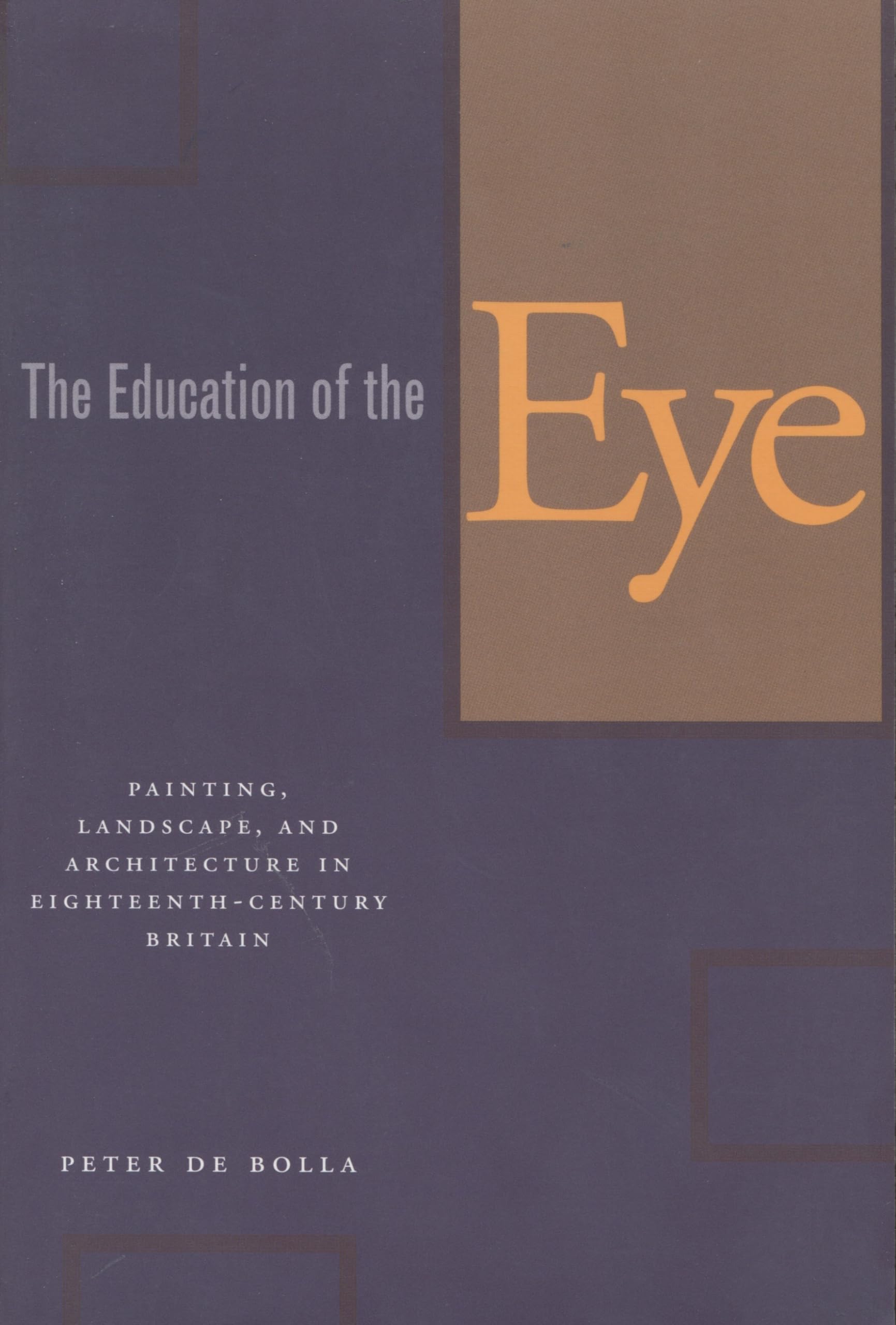
The Education of the Eye examines the origins of visual culture in eighteenthcentury Britain. It claims that at the moment when works of visual art were first displayed and contemplated as aesthetic objects two competing descriptions of the viewer or spectator promoted two very different accounts of culture. The first was constructed on knowledge, on what one already knew, while the second was grounded in the eye itself. Though the first was most likely to lead to a socially and politically elite form for visual culture, the second, it was held, would almost certainly end up in the chaos of the mob. But there was another route through these conflicting accounts of the visual that preserved the education of the eye while at the same time allowing the eye freedom to enter into the realm of culture. This third route, that of the sentimental look, is explored in a series of contexts: the gallery, the pleasure garden, the landscape park, and the country house. The Education of the Eye sets out to reclaim visual culture for the democracy of the eye and to explain how aesthetic contemplation may, once more, be open to all who have eyes to look. The book will interest historians of eighteenthcentury British culture and historians of architecture, art, and landscape, as well as readers generally curious about the origins of our current visual culture.
⚠️ WARNING (California Proposition 65):
This product may contain chemicals known to the State of California to cause cancer,
birth defects, or other reproductive harm.
For MAP (Minimum Advertised Price) violations and Intellectual Property (IP) or Trademark concerns, please contact:
support@ergodebooks.com
⚠️ California Proposition 65 Warning: Some products sold on this website may expose you to chemicals known to the State of California to cause cancer, birth defects, or other reproductive harm. For more information, visit www.P65Warnings.ca.gov.