If you have any questions, you are always welcome to contact us. We'll get back to you as soon as possible, withing 24 hours on weekdays.
Customer service
All questions about your order, return and delivery must be sent to our customer service team by e-mail at yourstore@yourdomain.com
Sale & Press
If you are interested in selling our products, need more information about our brand or wish to make a collaboration, please contact us at press@yourdomain.com
Help
If you have any questions, you are always welcome to contact us. We'll get back to you as soon as possible, withing 24 hours on weekdays.
Customer service
All questions about your order, return and delivery must be sent to our customer service team by e-mail at yourstore@yourdomain.com
Sale & Press
If you are interested in selling our products, need more information about our brand or wish to make a collaboration, please contact us at press@yourdomain.com
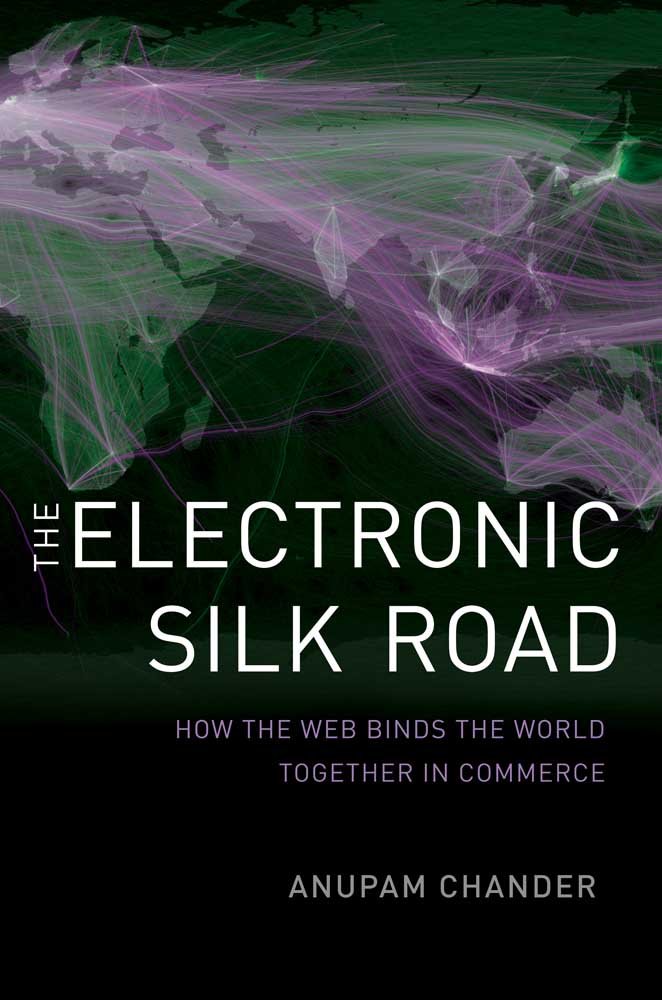
From China to Facebookistan, the Internet has transformed global commerce. A cyberlaw expert argues that we must free Internet trade while simultaneously protecting consumers.On the ancient Silk Road, treasureladen caravans made their arduous way through deserts and mountain passes, establishing trade between Asia and the civilizations of Europe and the Mediterranean. Todays electronic Silk Roads ferry information across continents, enabling individuals and corporations anywhere to provide or receive services without obtaining a visa. But the legal infrastructure for such trade is yet rudimentary and uncertain. If an event in cyberspace occurs at once everywhere and nowhere, what law applies? How can consumers be protected when engaging with companies across the world? In this accessible book, cyberlaw expert Anupam Chander provides the first thorough discussion of the law that relates to global Internet commerce. Addressing uptotheminute examples, such as Googles struggles with China, the Pirate Bays skirmishes with Hollywood, and the outsourcing of services to India, the author insightfully analyzes the difficulties of regulating Internet trade. Chander then lays out a framework for future policies, showing how countries can dismantle barriers while still protecting consumer interests.
⚠️ WARNING (California Proposition 65):
This product may contain chemicals known to the State of California to cause cancer,
birth defects, or other reproductive harm.
For MAP (Minimum Advertised Price) violations and Intellectual Property (IP) or Trademark concerns, please contact:
support@ergodebooks.com
⚠️ California Proposition 65 Warning: Some products sold on this website may expose you to chemicals known to the State of California to cause cancer, birth defects, or other reproductive harm. For more information, visit www.P65Warnings.ca.gov.