
Title
The Electronics Of Radio
Sold by Ergodebooks, an authorized reseller.
Returns accepted within 30 days | support@ergodebooks.com
Shipping Information
- Free Standard Shipping — United States only
- Processing Time: 3–5 business days
- Estimated Delivery: 6–10 business days after dispatch
- Double-boxed, fully insured & discreetly packaged
- Tracking number sent via email once dispatched
Returns & Refund
Returns accepted within 30 days of delivery.
Damaged or Defective Item
Free return shipping + replacement or full refund
Wrong Item Received
Free return shipping + replacement or full refund
Change of Mind
Return shipping at customer's expense · 25% restocking fee applies
Payment Option

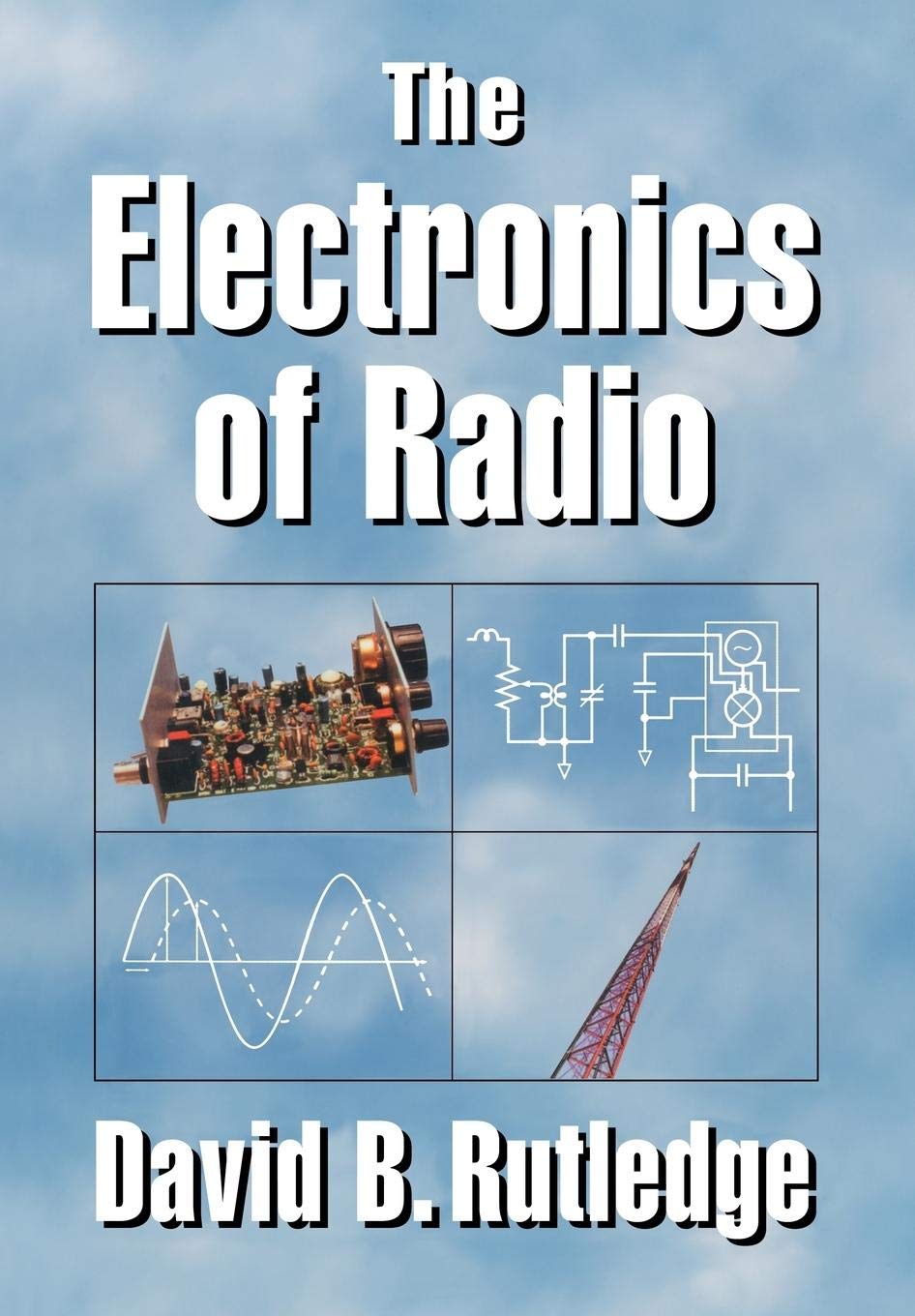
This Innovative Book Provides A Stimulating Introduction To Analog Electronics By Analyzing The Design And Construction Of A Radio Transceiver. The Author Provides Essential Theoretical Background At Each Step, Along With Carefully Designed Laboratory And Homework Exercises. This Structured Approach Ensures A Good Grasp Of Basic Electronics As Well As An Excellent Foundation In Wireless Communications Systems. The Author Begins With A Thorough Description Of Basic Electronic Components And Simple Circuits. He Then Describes The Key Elements Of Radio Electronics, Including Filters, Amplifiers, Oscillators, Mixers, And Antennas. In The Laboratory Exercises, He Leads The Reader Through The Design, Construction, And Testing Of A Popular Radio Transceiver (The Norcal 40A), Thereby Illustrating And Reinforcing The Theoretical Material. A Diskette Containing The Widely Known Circuit Simulation Software, Puff, Is Included In The Book. This Book, The First To Deal With Elementary Electronics In The Context Of Radio, Can Be Used As A Textbook For Introductory Analog Electronics Courses, Or For More Advanced Undergraduate Classes On Radiofrequency Electronics. It Will Also Be Of Great Interest To Electronics Hobbyists And Radio Enthusiasts.
⚠️ WARNING (California Proposition 65):
This product may contain chemicals known to the State of California to cause cancer, birth defects, or other reproductive harm.
For more information, please visit www.P65Warnings.ca.gov.
- Q: How many pages does the book have? A: The book contains four hundred fifty-two pages. This length provides a comprehensive exploration of analog electronics and radio transceiver design.
- Q: What is the binding type of this book? A: This book is available in paperback binding. This makes it lightweight and portable for readers and students.
- Q: What are the dimensions of the book? A: The book measures six point six nine inches in length, one point zero two inches in width, and nine point six one inches in height. These dimensions make it easy to handle and store.
- Q: Who is the author of 'The Electronics of Radio'? A: The author is David Rutledge. He offers a structured approach to understanding electronics within the context of radio.
- Q: What is the main topic covered in this book? A: The book focuses on analog electronics and radio transceiver design. It includes theoretical background along with practical laboratory exercises.
- Q: Can this book be used as a textbook? A: Yes, it can be used as a textbook for introductory analog electronics courses. It's also suitable for advanced undergraduate classes on radio-frequency electronics.
- Q: What kind of exercises does the book include? A: The book includes carefully designed laboratory and homework exercises. These exercises reinforce the theoretical concepts discussed throughout the text.
- Q: Is the book suitable for beginners in electronics? A: Yes, the book is suitable for beginners. It provides a stimulating introduction to basic electronics and radio systems.
- Q: Does the book come with any additional materials? A: Yes, the book includes a diskette containing the circuit simulation software, Puff. This software aids in understanding electronic design.
- Q: What is the condition of the book? A: The book is classified as a used book in good condition. It has been well-maintained for continued use.
- Q: Is this book appropriate for electronics hobbyists? A: Yes, the book is of great interest to electronics hobbyists and radio enthusiasts. It covers practical applications and theoretical concepts.
- Q: What is the publisher of this book? A: The book is published by Cambridge University Press. This reputable publisher is known for high-quality academic and educational materials.
- Q: Are there any illustrations in the book? A: Yes, the book contains illustrations and tables. These visual aids help clarify concepts and enhance understanding.
- Q: What specific topics in radio electronics are covered? A: The book covers topics like filters, amplifiers, oscillators, mixers, and antennas. These elements are crucial for understanding radio electronics.
- Q: Is there a focus on hands-on learning in the book? A: Yes, hands-on learning is emphasized through laboratory exercises. Readers design and construct a popular radio transceiver.
- Q: Can this book help in learning wireless communication systems? A: Yes, it provides an excellent foundation in wireless communications systems. The structured approach enhances comprehension of complex topics.