
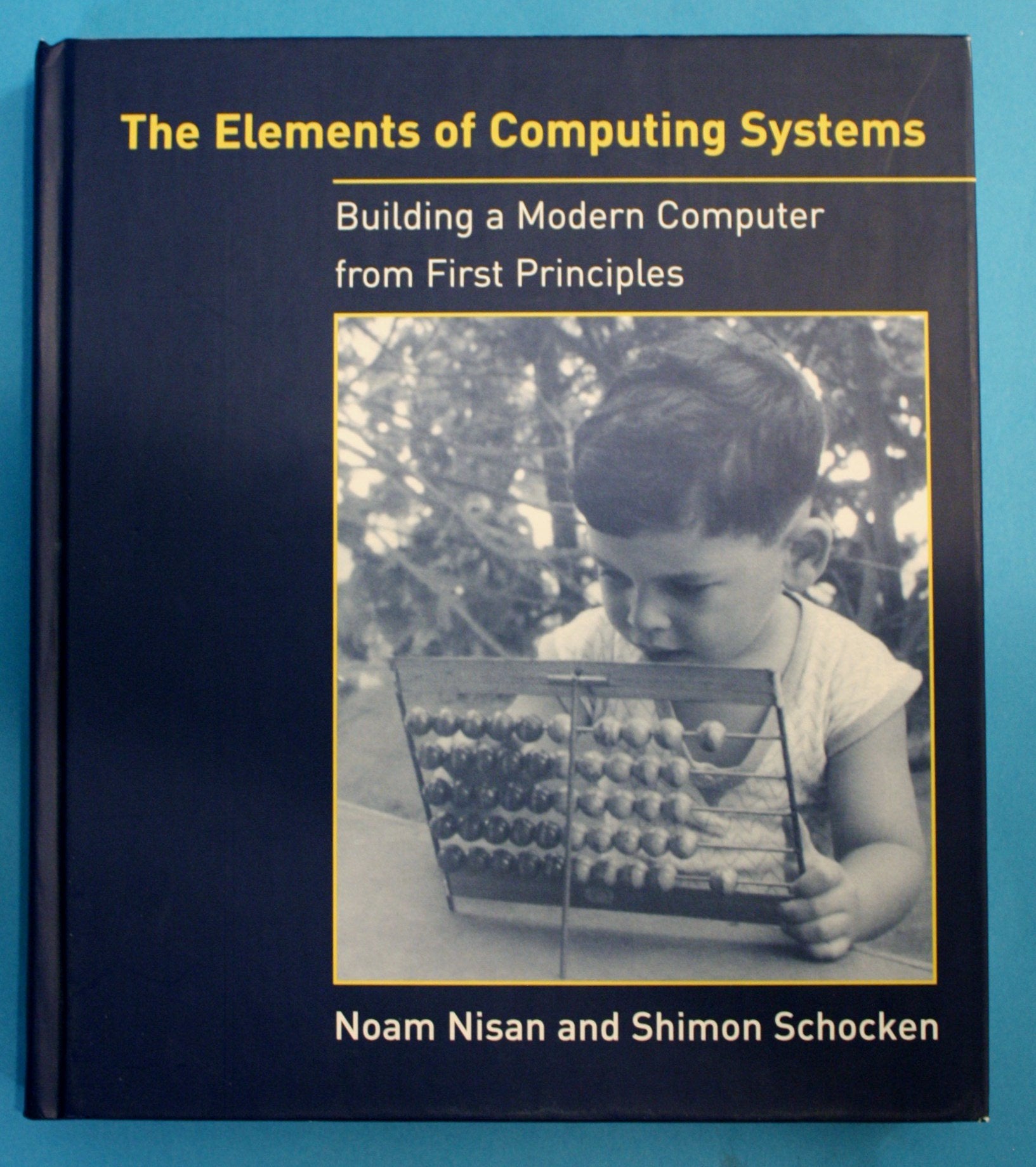
Title
The Elements Of Computing Systems: Building A Modern Computer From First Principles
Sold by Ergodebooks, an authorized reseller.
Returns accepted within 30 days | support@ergodebooks.com
Shipping Information
- Free Standard Shipping — United States only
- Processing Time: 3–5 business days
- Estimated Delivery: 6–10 business days after dispatch
- Double-boxed, fully insured & discreetly packaged
- Tracking number sent via email once dispatched
Returns & Refund
Returns accepted within 30 days of delivery.
Damaged or Defective Item
Free return shipping + replacement or full refund
Wrong Item Received
Free return shipping + replacement or full refund
Change of Mind
Return shipping at customer's expense · 25% restocking fee applies
Payment Option

In The Early Days Of Computer Science, The Interactions Of Hardware, Software, Compilers, And Operating System Were Simple Enough To Allow Students To See An Overall Picture Of How Computers Worked. With The Increasing Complexity Of Computer Technology And The Resulting Specialization Of Knowledge, Such Clarity Is Often Lost. Unlike Other Texts That Cover Only One Aspect Of The Field, The Elements Of Computing Systems Gives Students An Integrated And Rigorous Picture Of Applied Computer Science, As Its Comes To Play In The Construction Of A Simple Yet Powerful Computer System.Indeed, The Best Way To Understand How Computers Work Is To Build One From Scratch, And This Textbook Leads Students Through Twelve Chapters And Projects That Gradually Build A Basic Hardware Platform And A Modern Software Hierarchy From The Ground Up. In The Process, The Students Gain Handson Knowledge Of Hardware Architecture, Operating Systems, Programming Languages, Compilers, Data Structures, Algorithms, And Software Engineering. Using This Constructive Approach, The Book Exposes A Significant Body Of Computer Science Knowledge And Demonstrates How Theoretical And Applied Techniques Taught In Other Courses Fit Into The Overall Picture.Designed To Support One Or Twosemester Courses, The Book Is Based On An Abstractionimplementation Paradigm; Each Chapter Presents A Key Hardware Or Software Abstraction, A Proposed Implementation That Makes It Concrete, And An Actual Project. The Emerging Computer System Can Be Built By Following The Chapters, Although This Is Only One Option, Since The Projects Are Selfcontained And Can Be Done Or Skipped In Any Order. All The Computer Science Knowledge Necessary For Completing The Projects Is Embedded In The Book, The Only Prerequisite Being A Programming Experience.The Book'S Web Site Provides All Tools And Materials Necessary To Build All The Hardware And Software Systems Described In The Text, Including Two Hundred Test Programs For The Twelve Projects. The Projects And Systems Can Be Modified To Meet Various Teaching Needs, And All The Supplied Software Is Opensource.
⚠️ WARNING (California Proposition 65):
This product may contain chemicals known to the State of California to cause cancer, birth defects, or other reproductive harm.
For more information, please visit www.P65Warnings.ca.gov.
- Q: What is the page count of this book? A: This book contains three hundred twenty-five pages. It offers a comprehensive overview of computer science concepts.
- Q: What are the dimensions of this book? A: The book measures eight point twenty-seven inches in length, one inch in width, and nine point twenty-five inches in height. These dimensions make it a standard size for textbooks.
- Q: What type of binding does this book have? A: This book features a hardcover binding. The hardcover provides durability and is suitable for extensive use.
- Q: How do I use this book for learning? A: To use this book effectively, follow the structured chapters and complete the projects outlined. Each chapter builds on previous knowledge and includes hands-on projects.
- Q: Is this book suitable for beginners? A: Yes, this book is suitable for beginners with programming experience. It is designed to be accessible while also providing depth for advanced learners.
- Q: Can I skip chapters while using this book? A: Yes, you can skip chapters as the projects are self-contained. However, following the chapters sequentially is beneficial for comprehensive understanding.
- Q: How should I store this book to keep it in good condition? A: Store this book in a cool, dry place away from direct sunlight. Keeping it upright on a shelf will help maintain its shape.
- Q: Is this book safe for all ages? A: Yes, this book is appropriate for all ages with programming experience. It is educational and does not contain harmful content.
- Q: How do I clean the book if it gets dirty? A: To clean this book, gently wipe the cover with a damp cloth. Avoid using harsh chemicals that could damage the cover.
- Q: What if the book arrives damaged? A: If the book arrives damaged, contact customer support for a return or exchange. Ensure to report any issues within the specified return period.
- Q: What topics does this book cover? A: The book covers topics such as hardware architecture, operating systems, programming languages, and software engineering. It provides a holistic view of computer science.
- Q: Who is the author of this book? A: The author of this book is Noam Nisan. He is known for his contributions to computer science education.
- Q: Is there an online resource for this book? A: Yes, the book has a dedicated website that provides tools and materials for the projects. It includes two hundred test programs for practical learning.
- Q: How is this book structured? A: This book is structured into twelve chapters, each focusing on a key hardware or software concept. Each chapter includes a project that reinforces the material.
- Q: What should I know before starting this book? A: Before starting this book, a basic programming experience is recommended. This foundation will help you engage with the material effectively.