If you have any questions, you are always welcome to contact us. We'll get back to you as soon as possible, withing 24 hours on weekdays.
Customer service
All questions about your order, return and delivery must be sent to our customer service team by e-mail at yourstore@yourdomain.com
Sale & Press
If you are interested in selling our products, need more information about our brand or wish to make a collaboration, please contact us at press@yourdomain.com
Help
If you have any questions, you are always welcome to contact us. We'll get back to you as soon as possible, withing 24 hours on weekdays.
Customer service
All questions about your order, return and delivery must be sent to our customer service team by e-mail at yourstore@yourdomain.com
Sale & Press
If you are interested in selling our products, need more information about our brand or wish to make a collaboration, please contact us at press@yourdomain.com
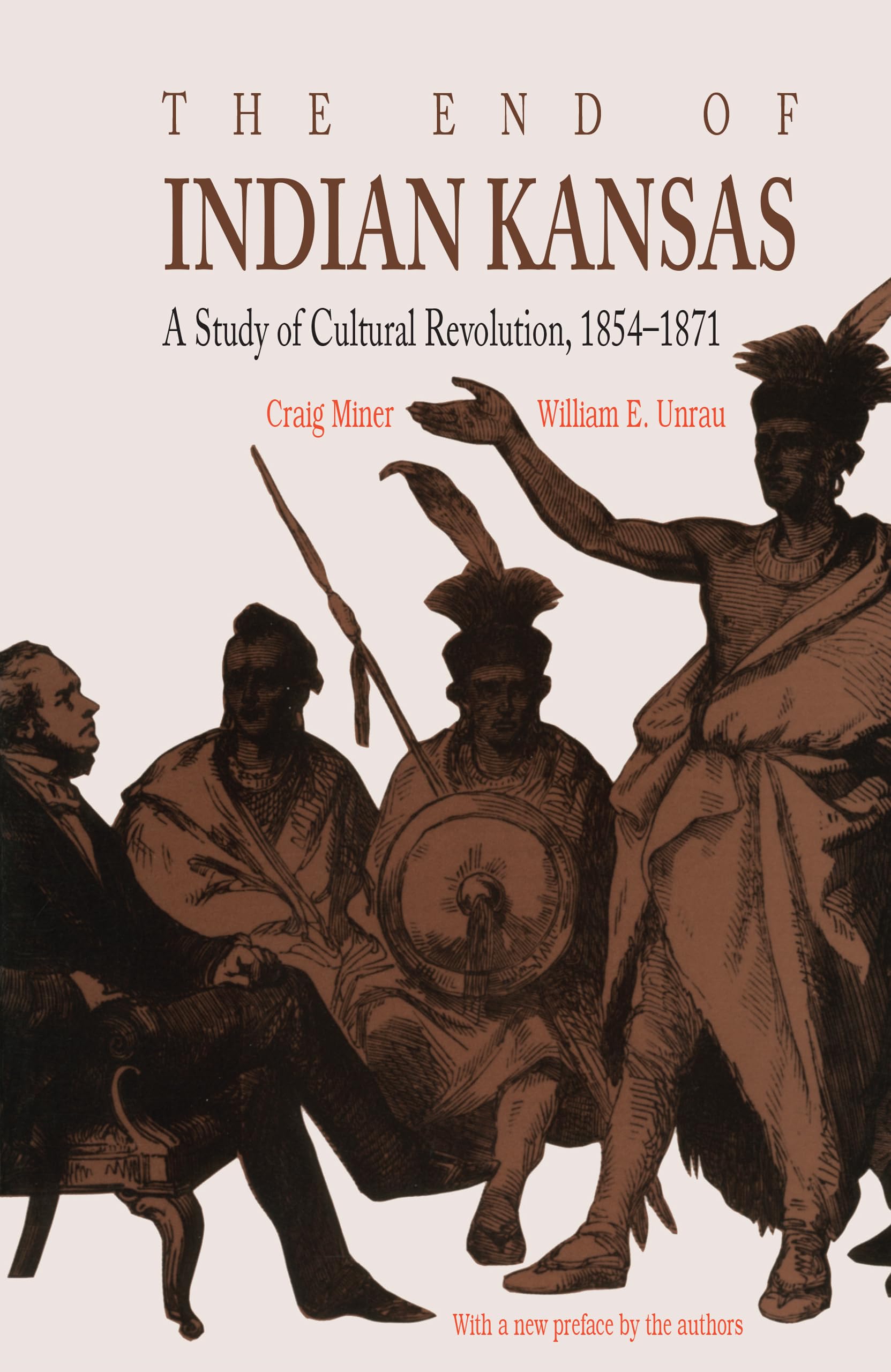
When Kansas became a U.S. territory in 1854 literally all of its land area was guaranteed by treaty to Indians. More than 10,000 Kickapoos, Delawares, Sacs, Foxes, Shawnees, Potawatomis, Kansas, Ottawas, Wyandots, and Osages, not to mention a number of smaller tribes, inhabited Kansas. By 1875 there were only a couple of bands left.The forced removal of thousands of Indians from eastern Kansas between 1854 and 1871 affected more Indians and occupied more government time than the celebrated exploits of the military against the more warlike western tribes. In this volume Miner and Unrau show Kansas at midcentury to be a moral testing ground where the drama of Indian disinheritance was played out. They relate how railroad men, land speculators, and timber operations came to be firmly entrenched on Indian land in territorial Kansas. They examine remarkable incongruities in Indian policy, land policy, law, and administration, pointing to specific cases in which legal maneuvers by the federal governmentwithin the framework of treaties, statutes, and executive pronouncementshelped to insure the pattern of tribal destruction.Separate chapters deal with internal factionalism in the Indian tribes, the practice of government chiefmaking, and the 'Indian Ring'the sub rosa alliances influencing the treaty or sale process. The authors also include revealing portraits of the individuals, from territorial governors to railroad officials, who helped engineer the end of Indian Kansas.'The reader's perception of those brave, hardworking sodhouse settlers may never be the same after reading this book.'American West.
⚠️ WARNING (California Proposition 65):
This product may contain chemicals known to the State of California to cause cancer,
birth defects, or other reproductive harm.
For MAP (Minimum Advertised Price) violations and Intellectual Property (IP) or Trademark concerns, please contact:
support@ergodebooks.com
⚠️ California Proposition 65 Warning: Some products sold on this website may expose you to chemicals known to the State of California to cause cancer, birth defects, or other reproductive harm. For more information, visit www.P65Warnings.ca.gov.