
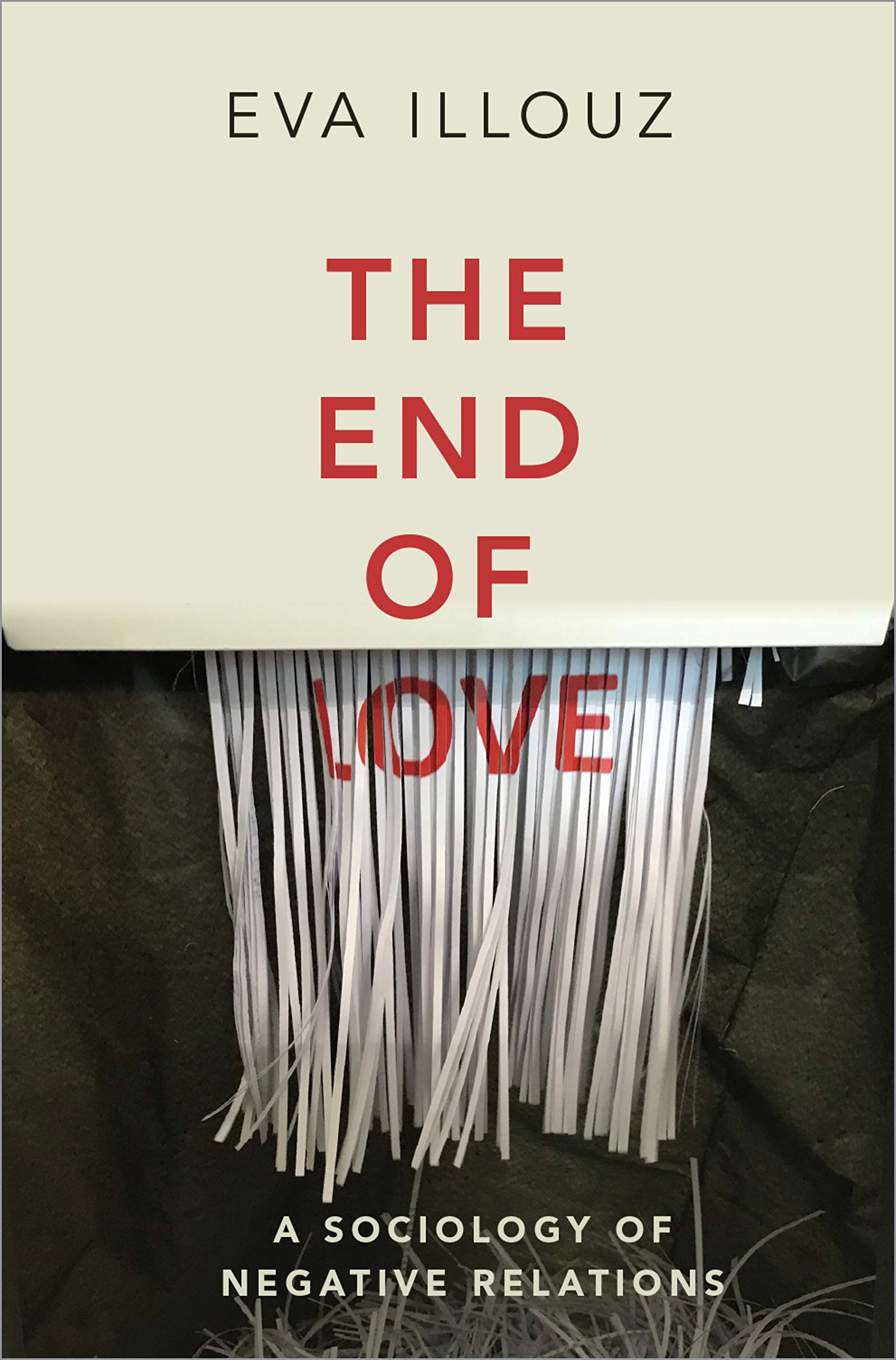
Title
The End Of Love: A Sociology Of Negative Relations
Sold by Ergodebooks, an authorized reseller.
Returns accepted within 30 days | support@ergodebooks.com
Shipping Information
- Free Standard Shipping — United States only
- Processing Time: 3–5 business days
- Estimated Delivery: 6–10 business days after dispatch
- Double-boxed, fully insured & discreetly packaged
- Tracking number sent via email once dispatched
Returns & Refund
Returns accepted within 30 days of delivery.
Damaged or Defective Item
Free return shipping + replacement or full refund
Wrong Item Received
Free return shipping + replacement or full refund
Change of Mind
Return shipping at customer's expense · 25% restocking fee applies
Payment Option

Western Culture Has Endlessly Represented The Ways In Which Love Miraculously Erupts In Peoples Lives, The Mythical Moment In Which One Knows Someone Is Destined For Us, The Feverish Waiting For A Phone Call Or An Email, The Thrill That Runs Down Our Spine At The Mere Thought Of Him Or Her. Yet, A Culture That Has So Much To Say About Love Is Virtually Silent On The No Less Mysterious Moments When We Avoid Falling In Love, Where We Fall Out Of Love, When The One Who Kept Us Awake At Night Now Leaves Us Indifferent, Or When We Hurry Away From Those Who Excited Us A Few Months Or Even A Few Hours Before.In The End Of Love, Eva Illouz Documents The Multifarious Ways In Which Relationships End. She Argues That If Modern Love Was Once Marked By The Freedom To Enter Sexual And Emotional Bonds According To Ones Will And Choice, Contemporary Love Has Now Become Characterized By Practices Of Nonchoice, The Freedom To Withdraw From Relationships. Illouz Dubs This Process By Which Relationships Fade, Evaporate, Dissolve, And Break Down Unloving. While Sociology Has Classically Focused On The Formation Of Social Bonds, The End Of Love Makes A Powerful Case For Studying Why And How Social Bonds Collapse And Dissolve.Particularly Striking Is The Role That Capitalism Plays In Practices Of Nonchoice And Unloving. The Unmaking Of Social Bonds, She Argues, Is Connected To Contemporary Capitalism Which Is Characterized By Practices Of Noncommitment And Nonchoice, Practices That Enable The Quick Withdrawal From A Transaction And The Quick Realignment Of Prices And The Breaking Of Loyalties. Unloving And Nonchoice Have In Turn A Profound Impact On Society And Economics As They Explain Why People May Be Having Fewer Children, Increasingly Living Alone, And Having Less Sex.The End Of Love Presents A Profound And Original Analysis Of The Effects Of Capitalism And Consumer Culture On Personal Relationships And Of What The Dissolution Of Personal Relationships Means For Capitalism.
⚠️ WARNING (California Proposition 65):
This product may contain chemicals known to the State of California to cause cancer, birth defects, or other reproductive harm.
For more information, please visit www.P65Warnings.ca.gov.
- Q: How many pages does 'The End of Love' have? A: This book has three hundred twenty pages. It provides an in-depth exploration of modern relationships and their complexities.
- Q: What is the binding type of 'The End of Love'? A: The book is available in paperback binding. This makes it both lightweight and easy to handle.
- Q: Who is the author of 'The End of Love'? A: The author is Eva Illouz. She is known for her work in sociology and her analysis of emotional relationships.
- Q: What is the genre of 'The End of Love'? A: The genre is sociology, specifically focusing on negative relations in love. It examines the societal impacts of love and relationships.
- Q: What are the dimensions of 'The End of Love'? A: The book measures six inches in length, one inch in width, and nine point zero two inches in height. It is a standard size for a paperback.
- Q: Is 'The End of Love' suitable for academic study? A: Yes, it is suitable for academic study. The book offers a unique perspective on relationships through a sociological lens.
- Q: How does 'The End of Love' address modern relationships? A: The book explores how relationships end and the societal factors influencing this process. It highlights the impact of capitalism on personal connections.
- Q: Is 'The End of Love' appropriate for all ages? A: Yes, the book is appropriate for mature readers. While it discusses adult themes, it does so in a sociological context.
- Q: What can I learn from 'The End of Love'? A: You can learn about the dynamics of love and how societal changes affect personal relationships. It provides insights into the phenomenon of 'unloving'.
- Q: How does the author connect capitalism to relationships? A: Eva Illouz argues that capitalism fosters non-commitment and quick withdrawals from relationships, affecting social bonds.
- Q: What themes are explored in 'The End of Love'? A: The book explores themes of emotional withdrawal, societal expectations, and the dissolution of relationships in contemporary culture.
- Q: Does 'The End of Love' include personal anecdotes? A: No, the book primarily focuses on sociological analysis rather than personal anecdotes. It relies on research and theoretical frameworks.
- Q: What is the main argument of 'The End of Love'? A: The main argument is that modern love is characterized by practices of non-choice, leading to the breakdown of social bonds.
- Q: Can 'The End of Love' help with personal relationship issues? A: While it may provide insights, it is not a self-help book. It offers a sociological perspective rather than personal advice.
- Q: What makes 'The End of Love' unique? A: Its unique approach lies in analyzing the sociological implications of love's dissolution, particularly in relation to capitalism.
- Q: Is there a specific audience for 'The End of Love'? A: Yes, it targets readers interested in sociology, psychology, and those examining modern relationship dynamics.