
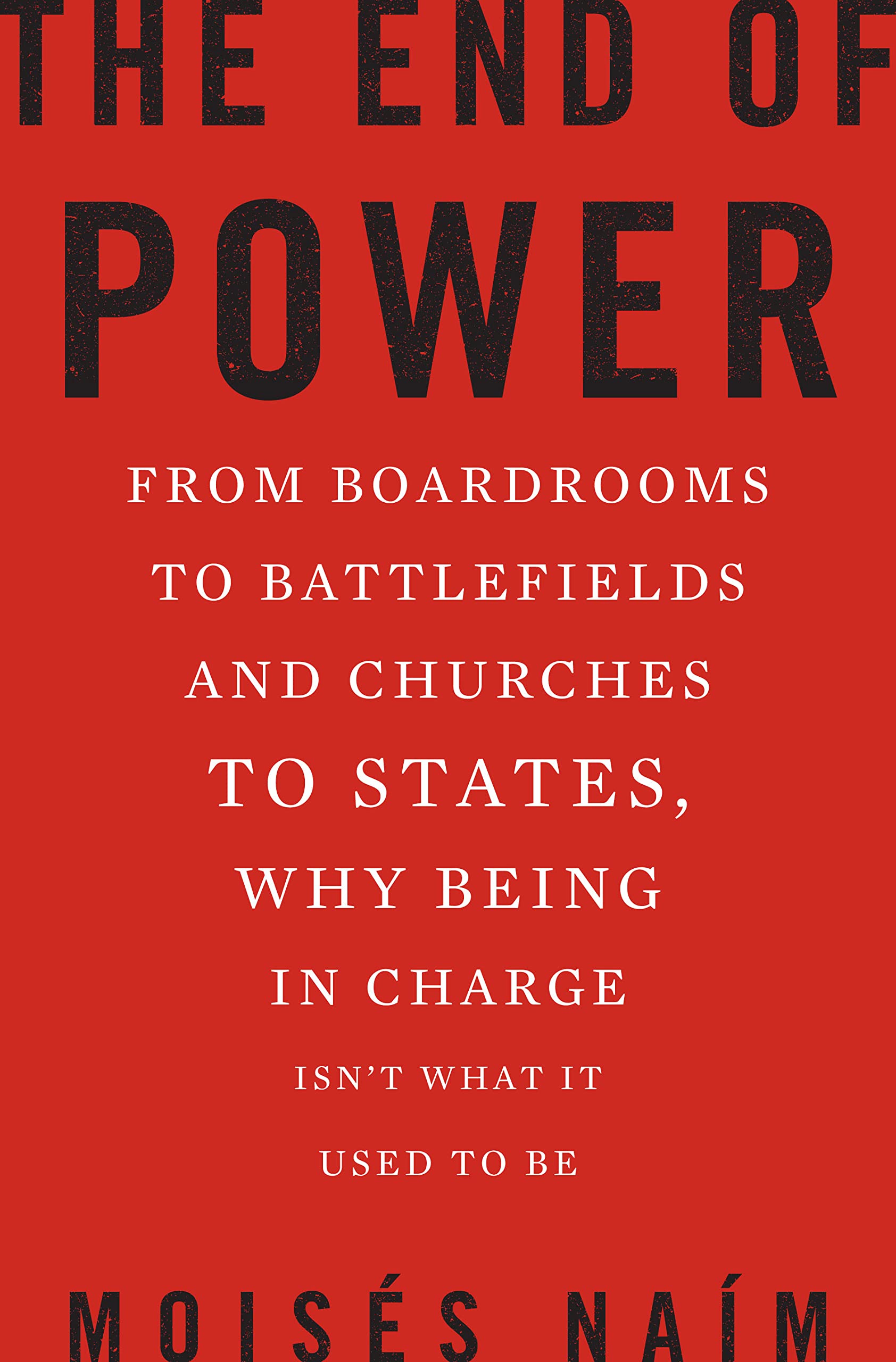
Title
The End Of Power: From Boardrooms To Battlefields And Churches To States, Why Being In Charge Isn T What It Used To Be,New
Sold by Ergodebooks, an authorized reseller.
Returns accepted within 30 days | support@ergodebooks.com
Shipping Information
- Free Standard Shipping — United States only
- Processing Time: 3–5 business days
- Estimated Delivery: 6–10 business days after dispatch
- Double-boxed, fully insured & discreetly packaged
- Tracking number sent via email once dispatched
Returns & Refund
Returns accepted within 30 days of delivery.
Damaged or Defective Item
Free return shipping + replacement or full refund
Wrong Item Received
Free return shipping + replacement or full refund
Change of Mind
Return shipping at customer's expense · 25% restocking fee applies
Payment Option

We Know That Power Is Shifting: From West To East And North To South, From Presidential Palaces To Public Squares, From Once Formidable Corporate Behemoths To Nimble Startups And, Slowly But Surely, From Men To Women. But Power Is Not Merely Shifting And Dispersing. It Is Also Decaying. Those In Power Today Are More Constrained In What They Can Do With It And More At Risk Of Losing It Than Ever Before.In The End Of Power, Awardwinning Columnist And Former Foreign Policy Editor Moiss Nam Illuminates The Struggle Between Oncedominant Megaplayers And The New Micropowers Challenging Them In Every Field Of Human Endeavor. Drawing On Provocative, Original Research, Nam Shows How The Antiestablishment Drive Of Micropowers Can Topple Tyrants, Dislodge Monopolies, And Open Remarkable New Opportunities, But It Can Also Lead To Chaos And Paralysis. Nam Deftly Covers The Seismic Changes Underway In Business, Religion, Education, Within Families, And In All Matters Of War And Peace. Examples Abound In All Walks Of Life: In 1977, Eightynine Countries Were Ruled By Autocrats While Today More Than Half The World'S Population Lives In Democracies. Ceo'S Are More Constrained And Have Shorter Tenures Than Their Predecessors. Modern Tools Of War, Cheaper And More Accessible, Make It Possible For Groups Like Hezbollah To Afford Their Own Drones. In The Second Half Of 2010, The Top Ten Hedge Funds Earned More Than The World'S Largest Six Banks Combined.Those In Power Retain It By Erecting Powerful Barriers To Keep Challengers At Bay. Today, Insurgent Forces Dismantle Those Barriers More Quickly And Easily Than Ever, Only To Find That They Themselves Become Vulnerable In The Process. Accessible And Captivating, Nam Offers A Revolutionary Look At The Inevitable End Of Powerand How It Will Change Your World.
⚠️ WARNING (California Proposition 65):
This product may contain chemicals known to the State of California to cause cancer, birth defects, or other reproductive harm.
For more information, please visit www.P65Warnings.ca.gov.
- Q: What is the page count of 'The End of Power'? A: The book contains three hundred twenty pages. This length allows for an in-depth exploration of the themes presented by the author.
- Q: What is the binding type of this book? A: The book is available in hardcover binding. This provides durability and a premium feel, making it suitable for long-term use.
- Q: What are the dimensions of 'The End of Power'? A: The dimensions are six point five inches in length, one inch in width, and nine point five inches in height. These measurements make it convenient for reading and storage.
- Q: How do I read 'The End of Power'? A: You can read it like any other book, starting from the first page to the last. It is suitable for adults and older teens interested in economic history and power dynamics.
- Q: Is this book suitable for young readers? A: No, this book is not specifically aimed at children. It discusses complex themes about power and societal changes that are better suited for adults.
- Q: What themes are explored in 'The End of Power'? A: The book explores themes of power dynamics, the shift from traditional authority to newer forms of influence, and the impact of micropowers on society. It is insightful for those studying economic history.
- Q: How should I store 'The End of Power'? A: Store the book in a cool, dry place, standing upright on a shelf. Avoid exposing it to direct sunlight to preserve the cover and pages.
- Q: Can I clean the book's cover? A: Yes, you can wipe the hardcover with a dry cloth to remove dust. Avoid using water or cleaning solutions to prevent damage.
- Q: What if the book arrives damaged? A: If the book arrives damaged, contact the seller for return or replacement options. Most sellers have policies in place for defective items.
- Q: Does 'The End of Power' come with a warranty? A: No, books typically do not come with a warranty. However, check with the seller for their specific return and exchange policies.
- Q: How does this book compare to other economic history titles? A: This book offers a unique perspective on the decay of traditional power structures, making it distinct from other titles that may focus solely on economic trends.
- Q: Is this book suitable for beginners in economic history? A: Yes, it is accessible and captivating, making it suitable for beginners. The author's engaging writing style helps convey complex ideas effectively.
- Q: What genre does 'The End of Power' fall under? A: The book falls under the genre of economic history. It discusses the shifts in power dynamics throughout various sectors of society.
- Q: Are there any notable authors referenced in the book? A: Yes, the author, Moisés Naím, references numerous scholars and historical figures to support his arguments about the evolution of power.
- Q: What is the main argument of 'The End of Power'? A: The main argument is that power is shifting and decaying, impacting various sectors like business, politics, and society at large. Naím illustrates how this change opens new opportunities and challenges.