
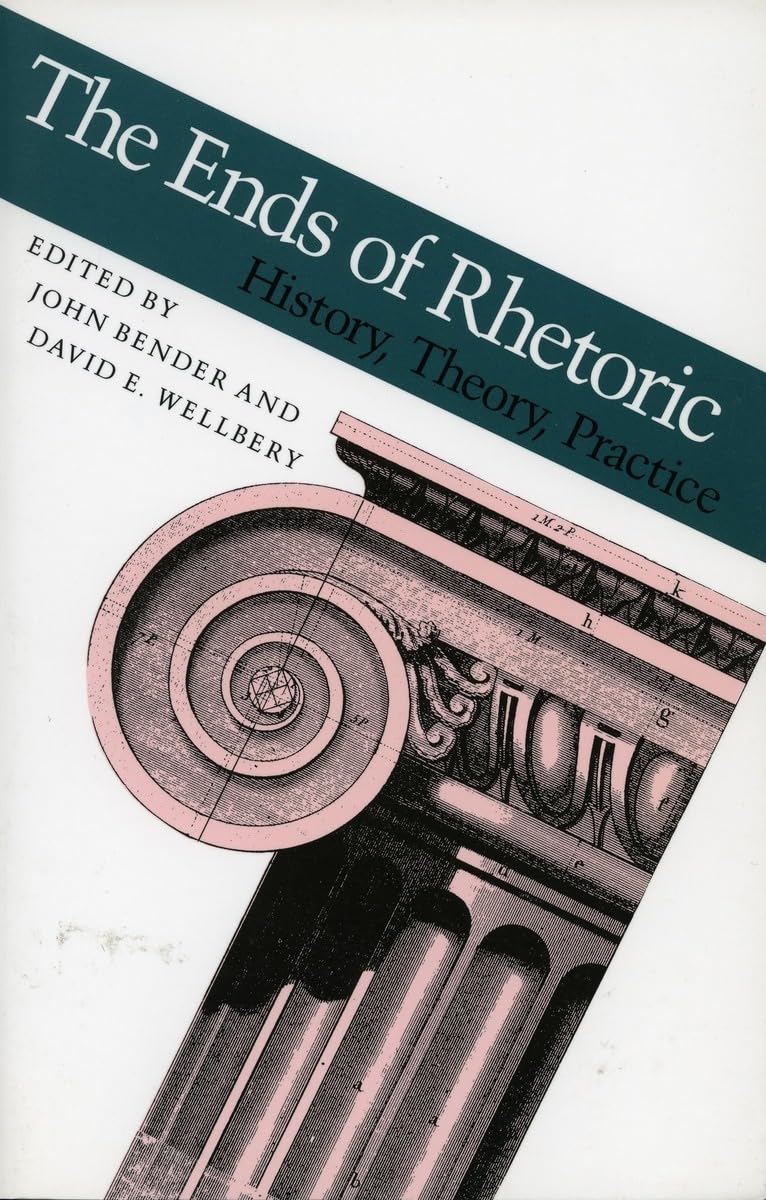
Title
The Ends Of Rhetoric: History, Theory, Practice,New
Sold by Ergodebooks, an authorized reseller.
Returns accepted within 30 days | support@ergodebooks.com
Shipping Information
- Free Standard Shipping — United States only
- Processing Time: 3–5 business days
- Estimated Delivery: 6–10 business days after dispatch
- Double-boxed, fully insured & discreetly packaged
- Tracking number sent via email once dispatched
Returns & Refund
Returns accepted within 30 days of delivery.
Damaged or Defective Item
Free return shipping + replacement or full refund
Wrong Item Received
Free return shipping + replacement or full refund
Change of Mind
Return shipping at customer's expense · 25% restocking fee applies
Payment Option

The discipline of rhetoricadapted through a wide range of reformulations to the specific requirements of Greek, Roman, Medieval, and Renaissance societiesdominated European education and discourse, whether public or private, for more than two thousand years. The end of classical rhetoric's domination was brought about by a combination of social and cultural transformations that occurred between the seventeenth and ninteenth centuries.Concurrent with the 'theory boom' of recent decades, rhetoric has reappeared as a center of discussion in the humanities and social sciences. Rhetorical inquiry, as it is thought and practiced today, occurs in an interdisciplinary matrix that touches on philosophy, linguistics, communication studies, psychoanalysis, cognitive science, sociology, anthropology, and political theory. Rhetoric is now an area of study without accepted certainties, a territory not yet parceled into topical subdivisions, a mode of discourse that adheres to no fixed protocols. It is a noisy field in the cybernetic sense of the term: a fertile ground for creative innovation.This volume embodies the interdisciplinary character of rhetoric. The essays draw on wideranging conceptual resources, and combine historical, theoretical, and practical points of view. The contributors develop a variety of perspectives on the central concepts of rhetorical theory, on the work of some of its major proponents, and on the breaks and continuities of its history. The spectrum of thematic concern is broad, extending from the Greek polis to the multiethnic city of modern America, from Aristotle to poststructuralism, from questions of figural language to problems of persuasion and interaction. But a common interdisciplinary interest runs through all the essays: the effort to rethink rhetoric within the contemporary epistemological situation. In this sense, the book opens new possiblities for research within the human sciences.
⚠️ WARNING (California Proposition 65):
This product may contain chemicals known to the State of California to cause cancer, birth defects, or other reproductive harm.
For more information, please visit www.P65Warnings.ca.gov.