
Title
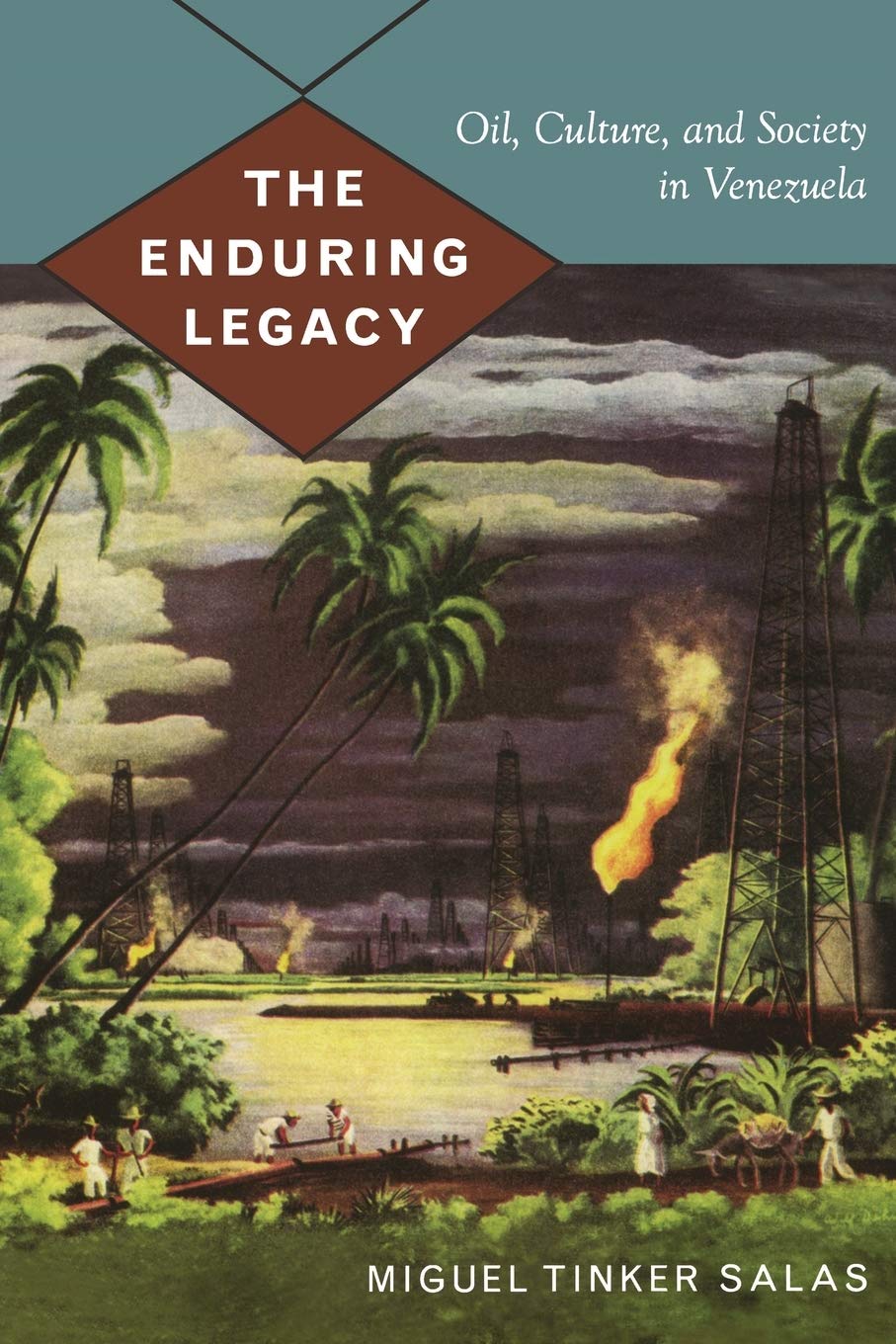
The Enduring Legacy: Oil, Culture, and Society in Venezuela (American Encounters/Global Interactions),Used
Sold by Ergodebooks, an authorized reseller.
Returns accepted within 30 days | support@ergodebooks.com
Shipping Information
- Free Standard Shipping — United States only
- Processing Time: 3–5 business days
- Estimated Delivery: 6–10 business days after dispatch
- Double-boxed, fully insured & discreetly packaged
- Tracking number sent via email once dispatched
Returns & Refund
Returns accepted within 30 days of delivery.
Damaged or Defective Item
Free return shipping + replacement or full refund
Wrong Item Received
Free return shipping + replacement or full refund
Change of Mind
Return shipping at customer's expense · 25% restocking fee applies
Payment Option

Oil has played a major role in Venezuelas economy since the first gusher was discovered along Lake Maracaibo in 1922. As Miguel Tinker Salas demonstrates, oil has also transformed the countrys social, cultural, and political landscapes. In The Enduring Legacy, Tinker Salas traces the history of the oil industrys rise in Venezuela from the beginning of the twentieth century, paying particular attention to the experiences and perceptions of industry employees, both foreign and Venezuelan. He reveals how class ambitions and corporate interests combined to reshape many Venezuelans ideas of citizenship. Middleclass Venezuelans embraced the oil industry from the start, anticipating that it would transform the country by introducing modern technology, sparking economic development, and breaking the landed elites stranglehold. Eventually Venezuelan employees of the industry found that their benefits, including relatively high salaries, fueled loyalty to the oil companies. That loyalty sometimes trumped allegiance to the nationstate.North American and British petroleum companies, seeking to maintain their stakes in Venezuela, promoted the idea that their interests were synonymous with national development. They set up oil campsresidential communities to house their workersthat brought Venezuelan employees together with workers from the United States and Britain, and eventually with Chinese, West Indian, and Mexican migrants as well. Through the camps, the companies offered not just housing but also schooling, leisure activities, and acculturation into a structured, corporate way of life. Tinker Salas contends that these practices shaped the heart and soul of generations of Venezuelans whom the industry provided with access to a middleclass lifestyle. His interest in how oil suffused the consciousness of Venezuela is personal: Tinker Salas was born and raised in one of its oil camps.
⚠️ WARNING (California Proposition 65):
This product may contain chemicals known to the State of California to cause cancer, birth defects, or other reproductive harm.
For more information, please visit www.P65Warnings.ca.gov.