
Title
The Escape of the Mind,Used
Sold by Ergodebooks, an authorized reseller.
Returns accepted within 30 days | support@ergodebooks.com
Shipping Information
- Free Standard Shipping — United States only
- Processing Time: 3–5 business days
- Estimated Delivery: 6–10 business days after dispatch
- Double-boxed, fully insured & discreetly packaged
- Tracking number sent via email once dispatched
Returns & Refund
Returns accepted within 30 days of delivery.
Damaged or Defective Item
Free return shipping + replacement or full refund
Wrong Item Received
Free return shipping + replacement or full refund
Change of Mind
Return shipping at customer's expense · 25% restocking fee applies
Payment Option

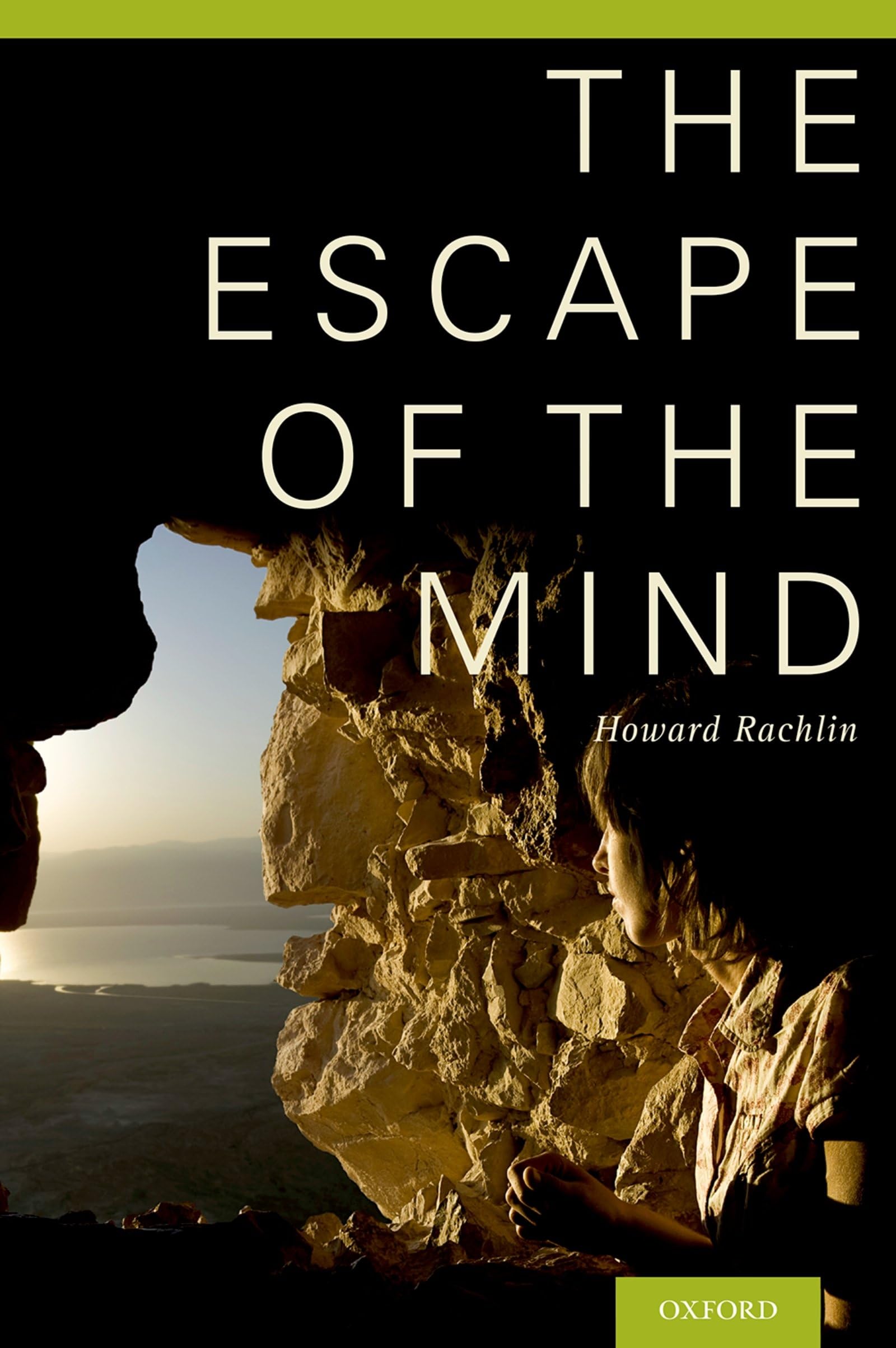
The Escape of the Mind is part of a current movement in psychology and philosophy of mind that calls into question what is perhaps our most basic, most cherished, and universally accepted beliefthat our minds are inside of our bodies. Howard Rachlin adopts the counterintuitive position that our minds, conscious and unconscious, lie not where our firmest (yet unsupported) introspections tell us they are, but in how we actually behave over the long run. Perhaps paradoxically, the book argues that our introspections, no matter how positive we are about them, tell us absolutely nothing about our minds. The name of the present version of this approach to the mind is "teleological behaviorism."The approaches of teleological behaviorism will be useful in the science of individual behavior for developing methods of selfcontrol and in the science of social behavior for developing social cooperation. Without in any way denigrating the many contributions of neuroscience to human welfare, The Escape of the Mind argues that neuroscience, like introspection, is not a royal road to the understanding of the mind. Where then should we look to explain a present act that is clearly caused by the mind? Teleological behaviorism says to look not in the spatial recesses of the nervous system (not to the mechanism underlying the act) but in the temporal recesses of past and future overt behavior (to the pattern of which the act is a part).But scientific usefulness is not the only reason for adopting teleological behaviorism. The final two chapters on IBM's computer, Watson (how it deviates from humanity and how it would have to be altered to make it human), and on shaping a coherent self, provide a framework for a secular morality based on teleological behaviorism.
⚠️ WARNING (California Proposition 65):
This product may contain chemicals known to the State of California to cause cancer, birth defects, or other reproductive harm.
For more information, please visit www.P65Warnings.ca.gov.