
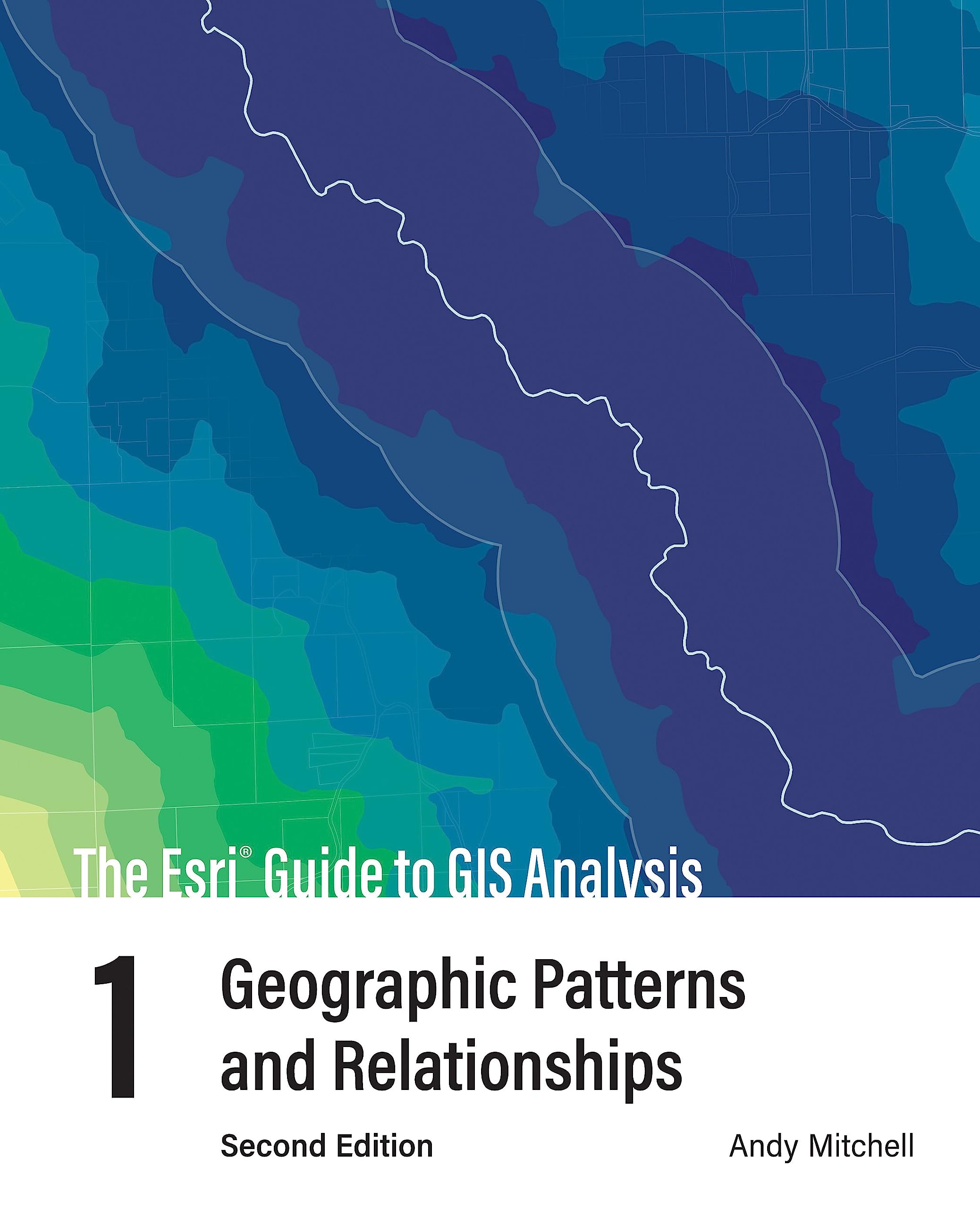
Title
The Esri Guide to GIS Analysis, Volume 1: Geographic Patterns and Relationships (The Esri Guide to GIS Analysis, 1),New
Sold by Ergodebooks, an authorized reseller.
Returns accepted within 30 days | support@ergodebooks.com
Shipping Information
- Free Standard Shipping — United States only
- Processing Time: 3–5 business days
- Estimated Delivery: 6–10 business days after dispatch
- Double-boxed, fully insured & discreetly packaged
- Tracking number sent via email once dispatched
Returns & Refund
Returns accepted within 30 days of delivery.
Damaged or Defective Item
Free return shipping + replacement or full refund
Wrong Item Received
Free return shipping + replacement or full refund
Change of Mind
Return shipping at customer's expense · 25% restocking fee applies
Payment Option

Do more with your GIS and understand the foundation of spatial analysis: geographic patterns and relationships.A geographic information system (GIS) enables so much more than mapping. A GIS inherently enables spatial analysis that can give you a better understanding of your geographic data. GIS analysis reveals answers to questions like: Where is it? Wheres the most and least? How much is where? Whats inside? Whats nearby? Whats changed?But how do you get started? The second edition of The Esri Guide to GIS Analysis, Volume 1 shows you how and more.With easier to read maps and text, The Esri Guide to GIS Analysis, Volume 1, second edition, updates a classic text and teaches foundational spatial analysis patterns that provides geographic insights. Learn the basic concepts of spatial analysis and GIS. Build on that understanding with essential mapbuilding skills to unveil and display patterns and relationships. The Esri Guide to GIS Analysis, Volume 1, second edition, also includes a guide to online lessons that reinforce the concepts and demonstrate GIS application.Written for both new and experienced GIS users using an easy to follow format, the second edition of The Esri Guide to GIS Analysis, Volume 1 helps you build a foundation of the basic tasks needed to handle a wide range of analysis applications and prepares you for more advanced GIS skills.
⚠️ WARNING (California Proposition 65):
This product may contain chemicals known to the State of California to cause cancer, birth defects, or other reproductive harm.
For more information, please visit www.P65Warnings.ca.gov.
- Q: What is the main focus of The Esri Guide to GIS Analysis, Volume 1? A: The main focus of The Esri Guide to GIS Analysis, Volume 1 is to teach foundational concepts in spatial analysis, specifically geographic patterns and relationships within GIS.
- Q: Who is the author of this book? A: The author of The Esri Guide to GIS Analysis, Volume 1 is Andy Mitchell.
- Q: Is this book suitable for beginners in GIS? A: Yes, this book is written for both new and experienced GIS users, making it accessible for beginners.
- Q: What topics are covered in this guide? A: The guide covers essential concepts of spatial analysis, map-building skills, and includes online lessons for practical reinforcement.
- Q: What is the binding type of this book? A: The Esri Guide to GIS Analysis, Volume 1 is available in paperback binding.
- Q: How many pages does this book have? A: This book contains a total of 312 pages.
- Q: When was this edition published? A: The second edition of The Esri Guide to GIS Analysis was published on May 26, 2020.
- Q: Does this book include practical exercises? A: Yes, the book includes a guide to online lessons that demonstrate GIS applications and reinforce the concepts taught.
- Q: What is the condition of the book? A: The book is brand new.
- Q: How does this book help with GIS analysis applications? A: This book helps build foundational skills necessary for a wide range of GIS analysis applications, preparing users for more advanced GIS tasks.