
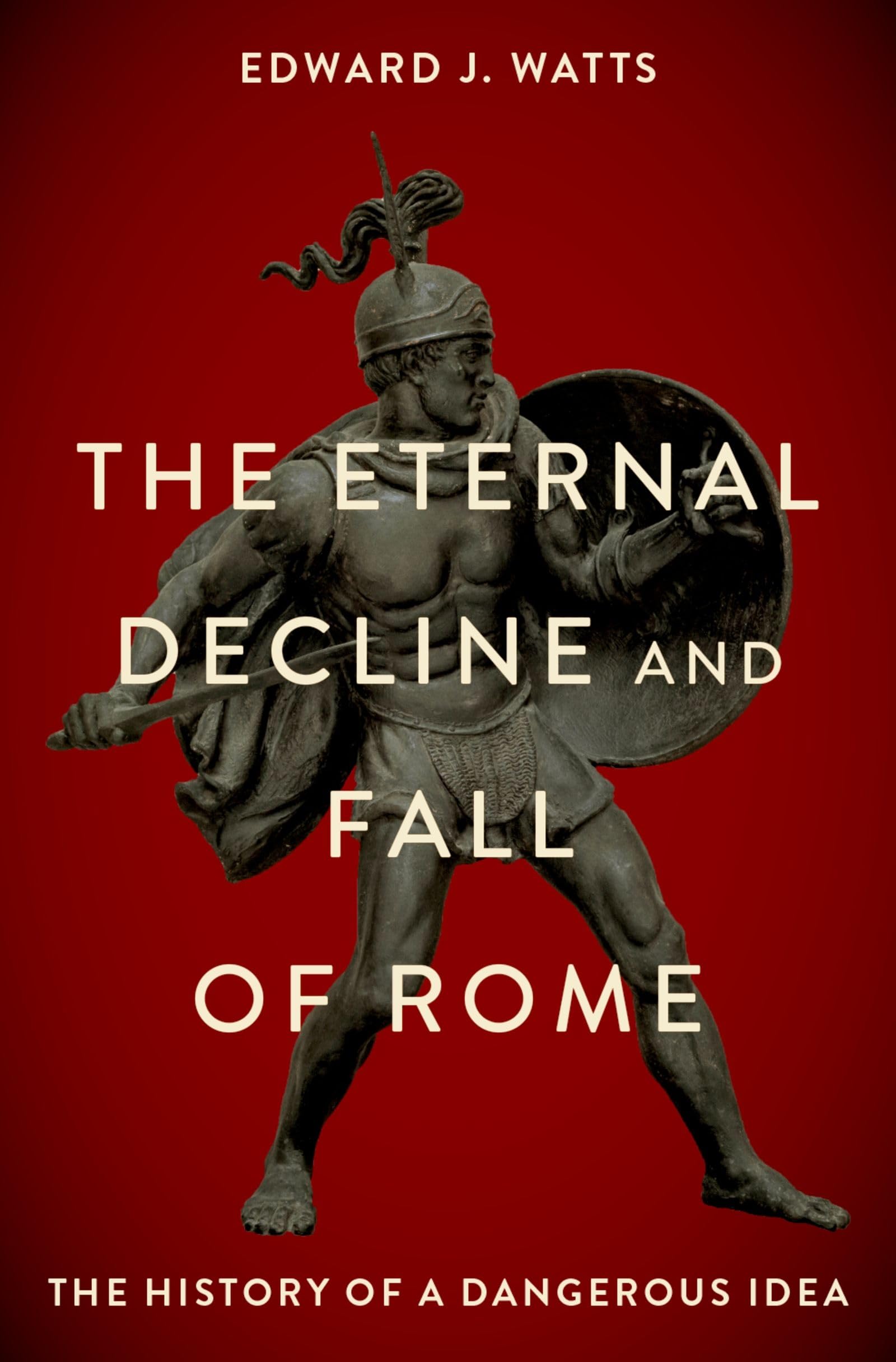
Title
The Eternal Decline and Fall of Rome: The History of a Dangerous Idea,Used
Sold by Ergodebooks, an authorized reseller.
Returns accepted within 30 days | support@ergodebooks.com
Shipping Information
- Free Standard Shipping — United States only
- Processing Time: 3–5 business days
- Estimated Delivery: 6–10 business days after dispatch
- Double-boxed, fully insured & discreetly packaged
- Tracking number sent via email once dispatched
Returns & Refund
Returns accepted within 30 days of delivery.
Damaged or Defective Item
Free return shipping + replacement or full refund
Wrong Item Received
Free return shipping + replacement or full refund
Change of Mind
Return shipping at customer's expense · 25% restocking fee applies
Payment Option

For more than 2000 years, those wishing to rule Rome and leaders inspired by their example have claimed they, and only they, could restore their society's past glory and make it great again. They left millions of victims in their wake. The decline of Rome has been a constant source of discussion for more than 2200 years. Everyone from American journalists in the twentyfirst century AD to Roman politicians at the turn of the third century BC have used it as a tool to illustrate the negative consequences of changes in their world. Because Roman history is so long, it provides a buffet of readymade stories of decline that can help develop the context around any snapshot. And Rome did, in fact, decline and, eventually, fall. An empire that once controlled all or part of more than 40 modern European, Asian, and African countries no longer exists. Roman prophets of decline were, ultimately, proven correcta fact that makes their modern invocations all the more powerful. If it happened then, it could happen now.The Eternal Decline and Fall of Rome tells the stories of the people who built their political and literary careers around promises of Roman renewal as well as those of the victims they blamed for causing Rome's decline. Each chapter offers the historical context necessary to understand a moment or a series of moments in which Romans, aspiring Romans, and nonRomans used ideas of Roman decline and restoration to seize power and remake the world around them. The story begins during the Roman Republic just after 200 BC. It proceeds through the empire of Augustus and his successors, traces the Roman loss of much of western Europe in the fifth century AD, and then follows Roman history as it runs through the Eastern Roman Empire (Byzantium) until its fall in 1453. The final two chapters look at ideas of Roman decline and renewal from the fifteenth century until today. If Rome illustrates the profound danger of the rhetoric of decline, it also demonstrates the rehabilitative potential of a rhetoric that focuses on collaborative restoration, a lesson of great relevance to our world today.
⚠️ WARNING (California Proposition 65):
This product may contain chemicals known to the State of California to cause cancer, birth defects, or other reproductive harm.
For more information, please visit www.P65Warnings.ca.gov.