
Title
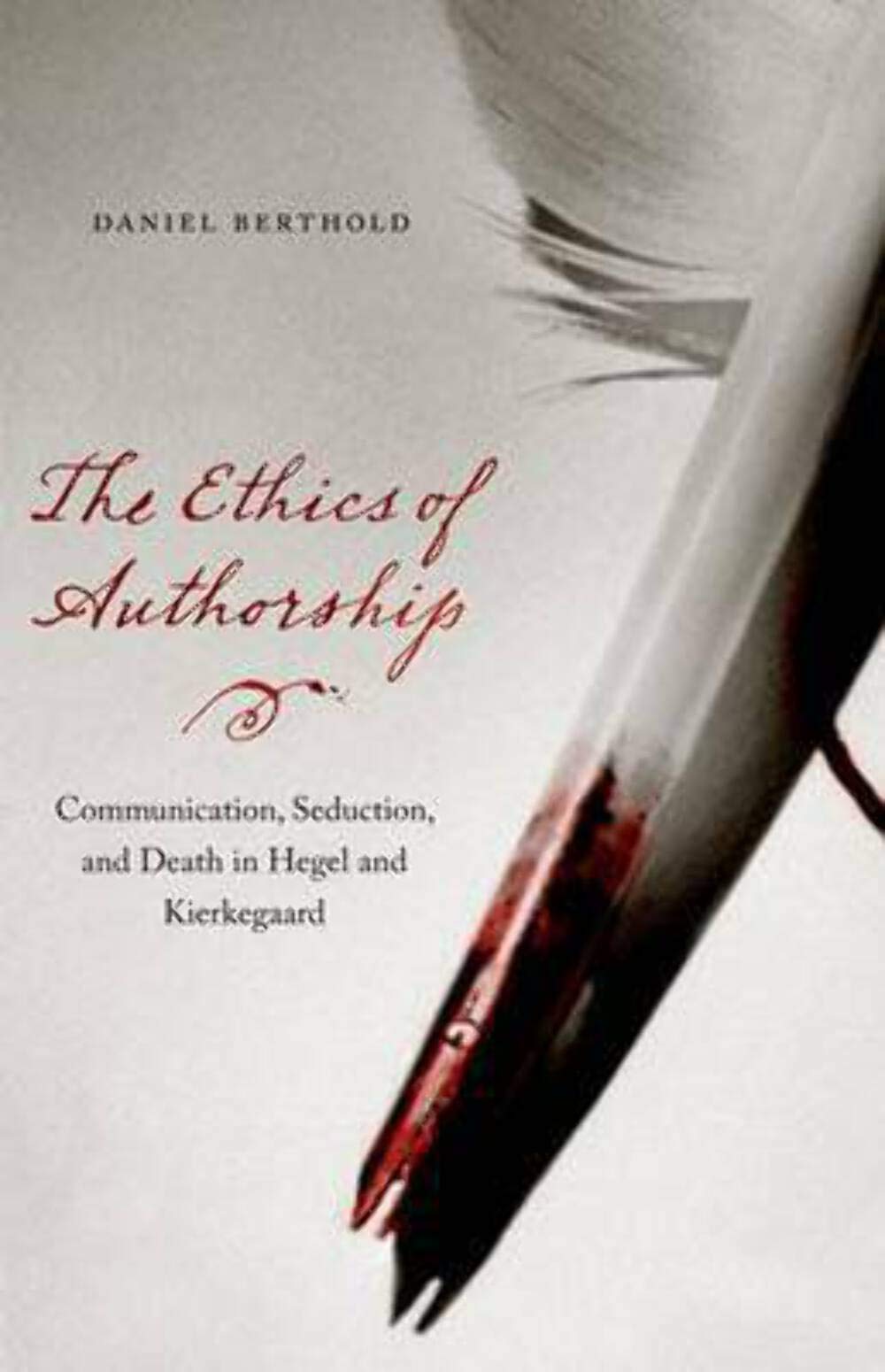
The Ethics of Authorship: Communication, Seduction, and Death in Hegel and Kierkegaard,Used
Sold by Ergodebooks, an authorized reseller.
Returns accepted within 30 days | support@ergodebooks.com
Shipping Information
- Free Standard Shipping — United States only
- Processing Time: 3–5 business days
- Estimated Delivery: 6–10 business days after dispatch
- Double-boxed, fully insured & discreetly packaged
- Tracking number sent via email once dispatched
Returns & Refund
Returns accepted within 30 days of delivery.
Damaged or Defective Item
Free return shipping + replacement or full refund
Wrong Item Received
Free return shipping + replacement or full refund
Change of Mind
Return shipping at customer's expense · 25% restocking fee applies
Payment Option

This is a book about the ethics of authorship. Most directly, it explores different conceptualizations of the responsibilities of the author to the reader. But it also engages the question of what styles of authorship allow these responsibilities to be met. Style itself is an ethical issue, since the relation between the writing subject and the readerand the dynamics of authority and influence, of gift giving and friendship in this relationhave as much to do with how one writes as what one says.The two writers who serve as the main subjects for this work, the German idealist philosopher G. W. F. Hegel and the Danish Christian existentialist Sren Kierkegaard, invite us to confront particularly challenging questions about the ethics of authorship. Each in his own way explores styles of authorship that employ a variety of strategies of seduction in order to entice the reader into his narratives, strategies that at least on the surface appear to be fundamentally manipulative and unethical. Further, both seek to enact their own deaths as authors, effectively disappearing as reliable guides for the reader. That might also seem to be ethically irresponsible, an abandonment of the reader, who has been seduced only to be deserted.This is the first work to undertake a sustained questioning of Kierkegaard's central distinction between his own "indirect" style of communication and the (purportedly) "direct" style of Hegel's philosophy. Hegel was in fact a much more subtle practitioner of style than Kierkegaard represents him as being, indeed, a practitioner whose style is in the service of an ambitious reconceptualization of the ethics of authorship. As for Kierkegaard, his own indirect style raises a whole series of ethical questions about how the reader is imagined in relation to the author.There is finally an either/or between Hegel and Kierkegaard, just not the one Kierkegaard proposes as between an author devoid of ethics and one who makes possible a true ethics of authorship. Rather, the either/or is between two competing practices of authorship, one daunting with the cadences of a highly technical style, the other delightful for its elegance and playfulnessbut both powerful experiments in the ethics of style.
⚠️ WARNING (California Proposition 65):
This product may contain chemicals known to the State of California to cause cancer, birth defects, or other reproductive harm.
For more information, please visit www.P65Warnings.ca.gov.