
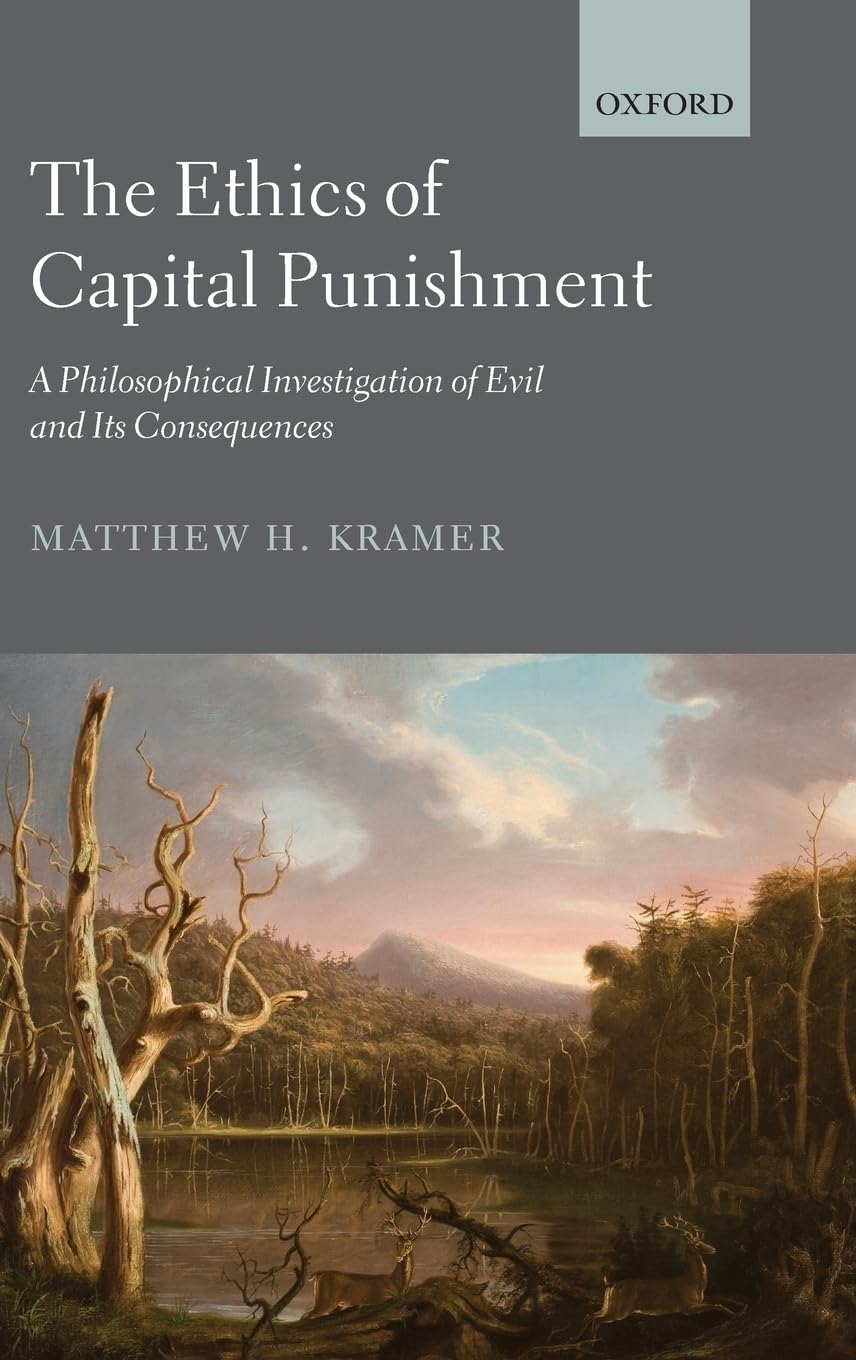
Title
The Ethics of Capital Punishment: A Philosophical Investigation of Evil and its Consequences,Used
Sold by Ergodebooks, an authorized reseller.
Returns accepted within 30 days | support@ergodebooks.com
Shipping Information
- Free Standard Shipping — United States only
- Processing Time: 3–5 business days
- Estimated Delivery: 6–10 business days after dispatch
- Double-boxed, fully insured & discreetly packaged
- Tracking number sent via email once dispatched
Returns & Refund
Returns accepted within 30 days of delivery.
Damaged or Defective Item
Free return shipping + replacement or full refund
Wrong Item Received
Free return shipping + replacement or full refund
Change of Mind
Return shipping at customer's expense · 25% restocking fee applies
Payment Option

Debate has long been waged over the morality of capital punishment, with standard arguments in its favor, grounded in the values of retribution or deterrence, being marshalled against familiar arguments against the practice. In The Ethics of Capital Punishment, Matthew Kramer takes a fresh look at the philosophical arguments on which the system of state execution should stand or fall, and develops a novel, controversial argument in its justification.The book pursues both a project of critical debunking of the familiar rationales for capital punishment and a project of partial vindication. The critical part presents an accessible and engaging critique of major arguments that have been offered from the deterrence of future wrongdoing to the justice of retributory killing arguing that they all fail to justify current practices of state execution. These chapters, suitable for use in teaching courses on the death penalty, offer a valuable restatement of the current debates over the morality capital punishment.The book then presents an original justification for the death penalty, one that is freestanding rather than an aspect or offshoot of a general theory of punishment. Its purgative rationale, which has not heretofore been propounded in any contemporary philosophical and practical debates over the death penalty, derives from a philosophical reconception of the nature of evil and the nature of defilement.As the book contributes to philosophical discussions of those phenomena, it also contributes importantly to general normative ethics with sustained reflections on the differences between consequentialist approaches to punishment and deontological approaches. Above all, the volume contributes to the philosophy of criminal law with a fresh rationale for the use of the death penalty and with probing assessments of all the major theories of punishment that have been broached by jurists and philosophers for centuries. Although the book is a work of philosophy, it is readily accessible to readers who have not studied philosophy. It will stir both philosophers and anyone engaged with the death penalty to reconsider whether the institution of capital punishment can be an appropriate response to extreme evil.
⚠️ WARNING (California Proposition 65):
This product may contain chemicals known to the State of California to cause cancer, birth defects, or other reproductive harm.
For more information, please visit www.P65Warnings.ca.gov.