If you have any questions, you are always welcome to contact us. We'll get back to you as soon as possible, withing 24 hours on weekdays.
Customer service
All questions about your order, return and delivery must be sent to our customer service team by e-mail at yourstore@yourdomain.com
Sale & Press
If you are interested in selling our products, need more information about our brand or wish to make a collaboration, please contact us at press@yourdomain.com
Help
If you have any questions, you are always welcome to contact us. We'll get back to you as soon as possible, withing 24 hours on weekdays.
Customer service
All questions about your order, return and delivery must be sent to our customer service team by e-mail at yourstore@yourdomain.com
Sale & Press
If you are interested in selling our products, need more information about our brand or wish to make a collaboration, please contact us at press@yourdomain.com
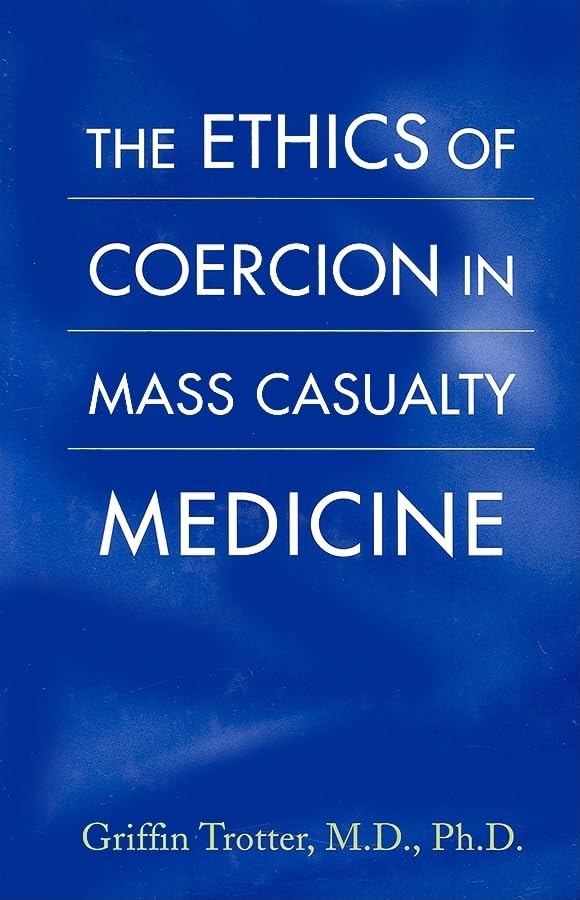
Disasters, both natural and manufactured, provide ample opportunities for official coercion. Authorities may enact quarantines, force evacuations, and commandeer people and suppliesall in the name of the public's health. When might such extreme actions be justified, and how does a democratic society ensure that public officials exercise care and forethought to avoid running roughshod over human rights?In The Ethics of Coercion in Mass Casualty Medicine, Griffin Trotter explores these fundamental questions with skepticism, debunking myths in pursuit of an elusive ethical balance between individual liberties and public security. Through reallife and hypothetical case studies, Trotter discusses when forced compliance is justified and when it is not, how legitimate force should be exercised and implemented, and what societies can do to protect themselves against excessive coercion. The guidelines that emerge are both practical and practicable.Drawing on core concepts from bioethics, political philosophy, public health, sociology, and medicine, this timely book lays the groundwork for a new vision of official disaster response based on preventing and minimizing the need for coercive action.
⚠️ WARNING (California Proposition 65):
This product may contain chemicals known to the State of California to cause cancer,
birth defects, or other reproductive harm.
For MAP (Minimum Advertised Price) violations and Intellectual Property (IP) or Trademark concerns, please contact:
support@ergodebooks.com
⚠️ California Proposition 65 Warning: Some products sold on this website may expose you to chemicals known to the State of California to cause cancer, birth defects, or other reproductive harm. For more information, visit www.P65Warnings.ca.gov.