
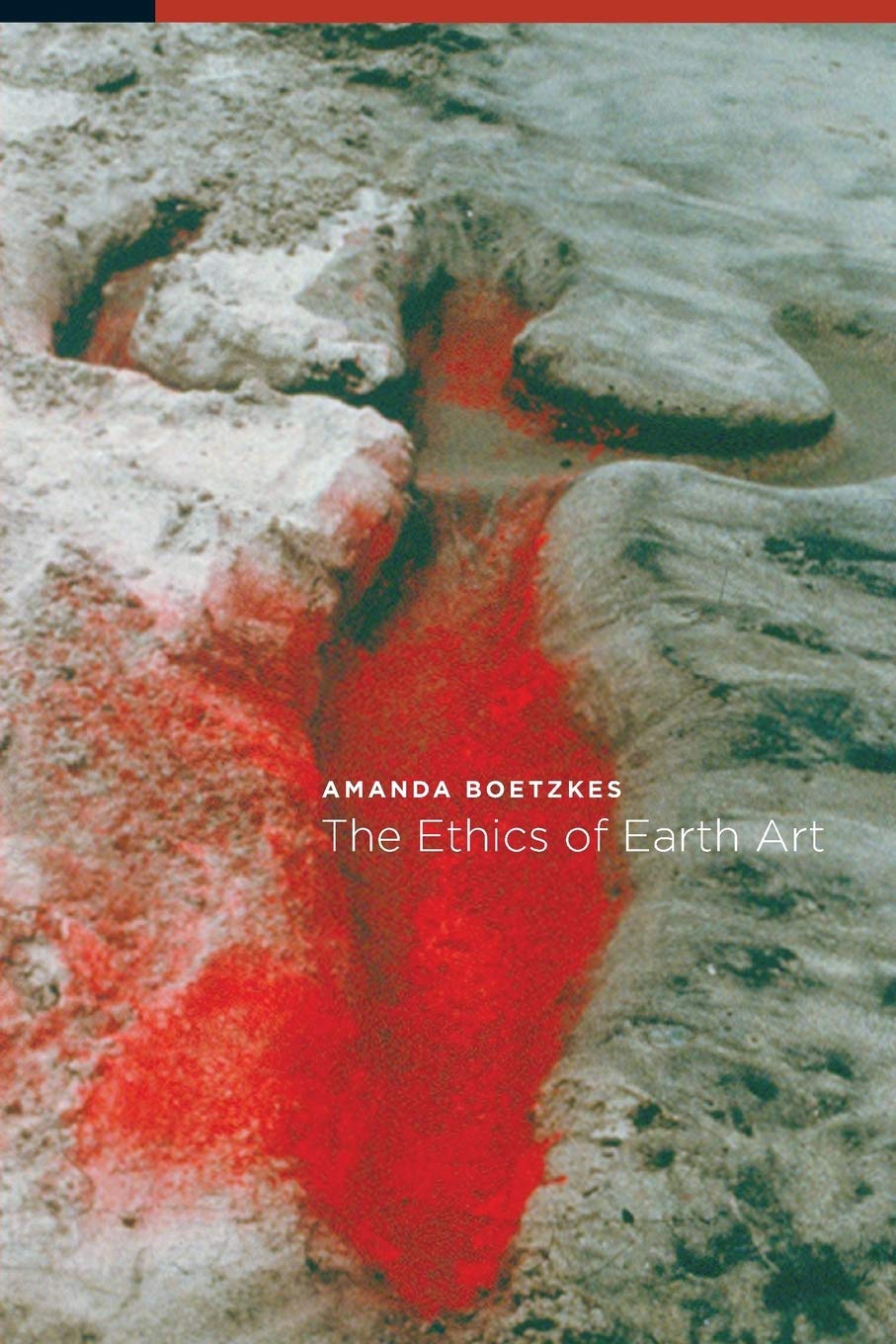
Title
The Ethics Of Earth Art
Sold by Ergodebooks, an authorized reseller.
Returns accepted within 30 days | support@ergodebooks.com
Shipping Information
- Free Standard Shipping — United States only
- Processing Time: 3–5 business days
- Estimated Delivery: 6–10 business days after dispatch
- Double-boxed, fully insured & discreetly packaged
- Tracking number sent via email once dispatched
Returns & Refund
Returns accepted within 30 days of delivery.
Damaged or Defective Item
Free return shipping + replacement or full refund
Wrong Item Received
Free return shipping + replacement or full refund
Change of Mind
Return shipping at customer's expense · 25% restocking fee applies
Payment Option

Since Its Inception In The 1960S, The Earth Art Movement Has Sought To Make Visible The Elusive Presence Of Nature. Though Most Often Associated With Monumental Landbased Sculptures, Earth Art Encompasses A Wide Range Of Media, From Sculpture, Body Art Performances, And Installations To Photographic Interventions, Public Protest Art, And Community Projects.In The Ethics Of Earth Art, Amanda Boetzkes Analyzes The Development Of The Earth Art Movement, Arguing That Such Diverse Artists As Robert Smithson, Ana Mendieta, James Turrell, Jackie Brookner, Olafur Eliasson, Basia Irland, And Ichi Ikeda Are Connected Through Their Elucidation Of The Earth As A Domain Of Ethical Concern. Boetzkes Contends That In Basing Their Works Relationship To The Natural World On Receptivity Rather Than Representation, Earth Artists Take An Ethical Stance That Counters Both The Instrumental View That Seeks To Master Nature And The Romantic View That Posits A Return To A Mythical State Of Unencumbered Continuity With Nature. By Incorporating Receptive Surfaces Into Their Workfilm Footage Of Glaring Sunlight, An Aperture In A Chamber That Opens To The Sky, Or A Porous Armature On Which Vegetation Growsearth Artists Articulate The Dilemma Of Representation That Nature Presents.Revealing The Fundamental Difference Between The Human World And The Earth, Boetzkes Shows That Earth Art Mediates The Sensations Of Nature While Allowing Nature Itself To Remain Irreducible To Human Signification.
⚠️ WARNING (California Proposition 65):
This product may contain chemicals known to the State of California to cause cancer, birth defects, or other reproductive harm.
For more information, please visit www.P65Warnings.ca.gov.
- Q: How many pages does 'The Ethics of Earth Art' have? A: This book contains two hundred forty pages. It offers an in-depth exploration of the earth art movement and its ethical implications.
- Q: What is the binding type of 'The Ethics of Earth Art'? A: The book is available in paperback binding. This makes it lightweight and easy to handle for reading.
- Q: What are the dimensions of 'The Ethics of Earth Art'? A: The dimensions are six inches in length, zero point four inches in width, and eight inches in height. These measurements make it a compact volume.
- Q: Who is the author of 'The Ethics of Earth Art'? A: The author is Amanda Boetzkes. She provides a scholarly analysis of the earth art movement and its connection to ethical concerns.
- Q: What is the main subject of 'The Ethics of Earth Art'? A: The book focuses on the ethics surrounding the earth art movement. It discusses how artists engage with nature through various media.
- Q: Is 'The Ethics of Earth Art' suitable for academic use? A: Yes, the book is suitable for academic use. It provides critical insights into art history and environmental ethics.
- Q: How does one engage with the themes in 'The Ethics of Earth Art'? A: Readers can engage with the themes by reflecting on the ethical implications of art and nature. The text encourages deeper thought on the relationship between humanity and the environment.
- Q: Is 'The Ethics of Earth Art' appropriate for beginners in art history? A: Yes, it is appropriate for beginners. The book is written in an accessible style while still offering complex ideas.
- Q: What is the reading level of 'The Ethics of Earth Art'? A: The reading level is suitable for adults and upper-level students. It presents advanced concepts in a digestible format.
- Q: What kind of maintenance does 'The Ethics of Earth Art' require? A: The book requires no special maintenance. It should be stored in a cool, dry place to keep it in good condition.
- Q: How should 'The Ethics of Earth Art' be stored? A: The book should be stored upright on a shelf. This prevents bending or damage to the spine.
- Q: Can I return 'The Ethics of Earth Art' if I am not satisfied? A: Yes, you can return it if you are not satisfied. Please check the retailer's return policy for specific details.
- Q: What should I do if 'The Ethics of Earth Art' arrives damaged? A: If it arrives damaged, contact the retailer immediately for a replacement. Most retailers have policies in place for damaged items.
- Q: Are there any age restrictions for 'The Ethics of Earth Art'? A: No, there are no age restrictions. The content is suitable for a general audience interested in art and ethics.
- Q: Is 'The Ethics of Earth Art' available in other formats? A: Currently, the book is available in paperback. Check with the publisher for any upcoming digital or hardcover formats.
- Q: What makes 'The Ethics of Earth Art' stand out from other art books? A: It stands out due to its focus on the ethical dimensions of the earth art movement. The insights provided by Amanda Boetzkes are unique and thought-provoking.