If you have any questions, you are always welcome to contact us. We'll get back to you as soon as possible, withing 24 hours on weekdays.
Customer service
All questions about your order, return and delivery must be sent to our customer service team by e-mail at yourstore@yourdomain.com
Sale & Press
If you are interested in selling our products, need more information about our brand or wish to make a collaboration, please contact us at press@yourdomain.com
Help
If you have any questions, you are always welcome to contact us. We'll get back to you as soon as possible, withing 24 hours on weekdays.
Customer service
All questions about your order, return and delivery must be sent to our customer service team by e-mail at yourstore@yourdomain.com
Sale & Press
If you are interested in selling our products, need more information about our brand or wish to make a collaboration, please contact us at press@yourdomain.com
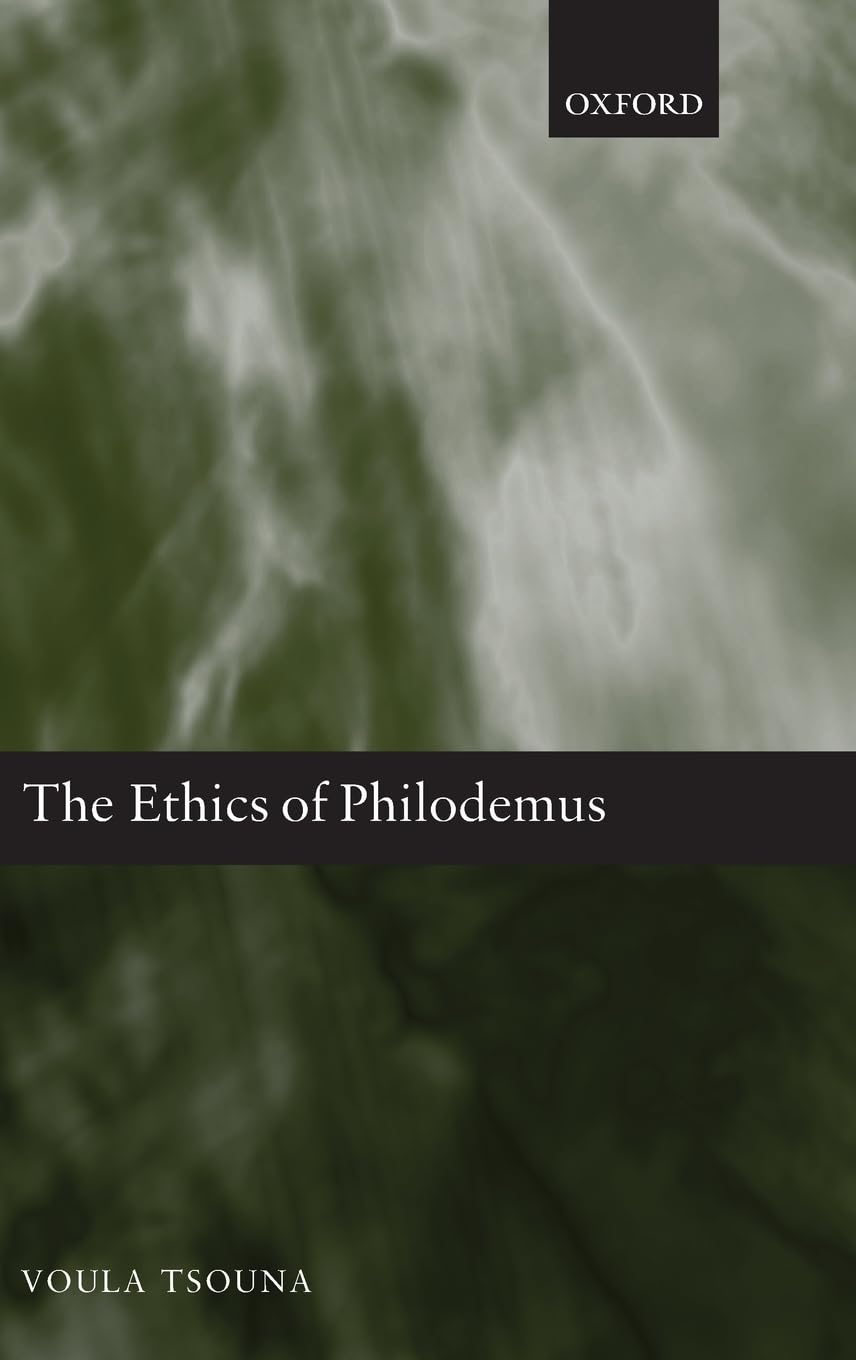
Voula Tsouna presents a comprehensive study of the ethics of the Epicurean philosopher Philodemus, who taught Virgil, influenced Horace, and was praised by Cicero. His works have only recently become available to modern readers, through the decipherment of a papyrus carbonized by the eruption of Vesuvius in 79 AD.Tsouna examines Philodemus' theoretical principles in ethics, his contributions to moral psychology, his method, his conception of therapy, and his therapeutic techniques. Part I begins with an outline of the fundamental principles of Philodemus' ethics in connection with the canonical views of the Epicurean school, and highlights his own original contributions. In addition to examining central features of Philodemus' hedonism, Tsouna analyses central concepts in his moral psychology, notably: his conception of vices, which she compares with that of the virtues; his account of harmful or unacceptable emotions or passions; and his theory of corresponding acceptable emotions or 'bites'. She then turns to an investigation of Philodemus' conception of philosophy as medicine and of the philosopher as a kind of doctor for the soul. By surveying his methods of treatment, Tsouna determines the place that they occupy in the therapeutics of the Hellenistic era. Part II uses the theoretical framework provided in Part I to analyse Philodemus' main ethical writings. The works considered focus on certain vices and harmful emotions, including flattery, arrogance, greed, anger, and fear of death, as well as traits related to the administration of property and wealth.
⚠️ WARNING (California Proposition 65):
This product may contain chemicals known to the State of California to cause cancer,
birth defects, or other reproductive harm.
For MAP (Minimum Advertised Price) violations and Intellectual Property (IP) or Trademark concerns, please contact:
support@ergodebooks.com
⚠️ California Proposition 65 Warning: Some products sold on this website may expose you to chemicals known to the State of California to cause cancer, birth defects, or other reproductive harm. For more information, visit www.P65Warnings.ca.gov.