
Title
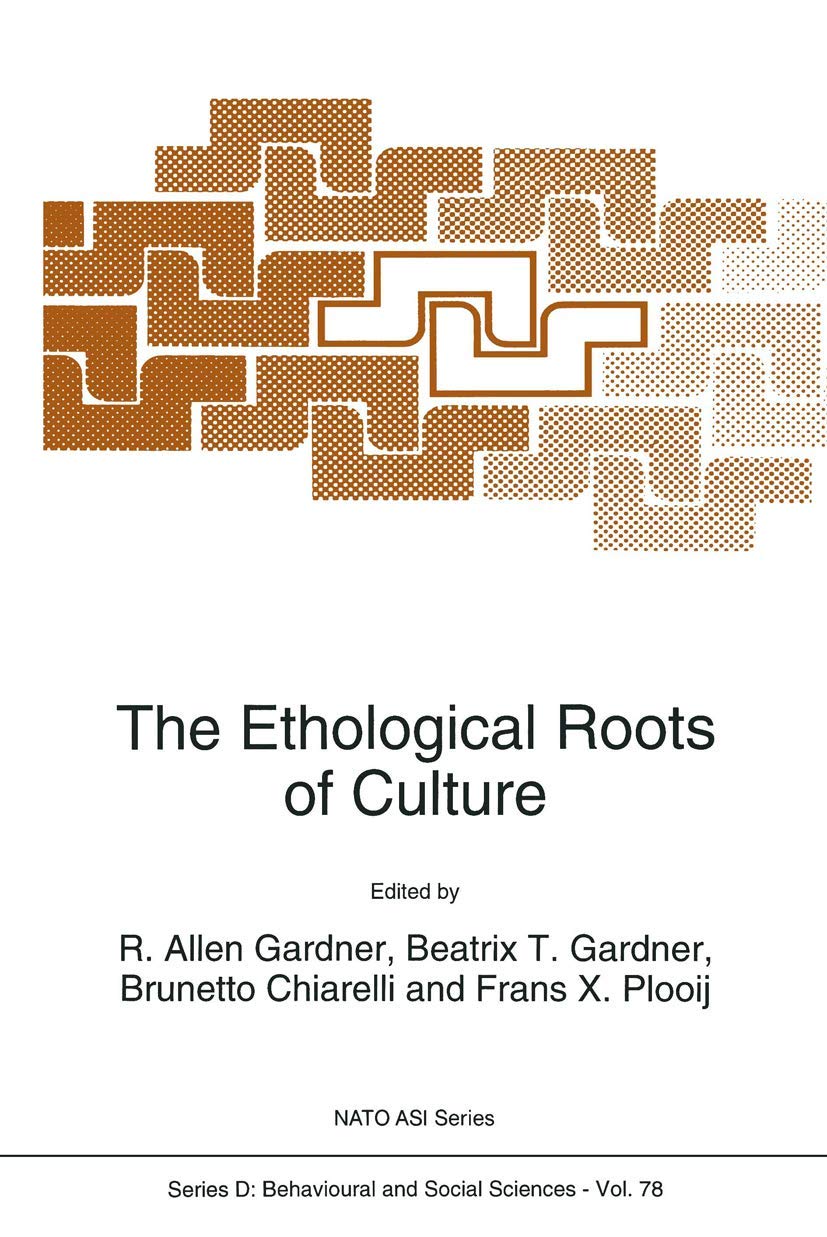
The Ethological Roots of Culture (NATO Science Series D:),Used
Sold by Ergodebooks, an authorized reseller.
Returns accepted within 30 days | support@ergodebooks.com
Shipping Information
- Free Standard Shipping — United States only
- Processing Time: 3–5 business days
- Estimated Delivery: 6–10 business days after dispatch
- Double-boxed, fully insured & discreetly packaged
- Tracking number sent via email once dispatched
Returns & Refund
Returns accepted within 30 days of delivery.
Damaged or Defective Item
Free return shipping + replacement or full refund
Wrong Item Received
Free return shipping + replacement or full refund
Change of Mind
Return shipping at customer's expense · 25% restocking fee applies
Payment Option

Can the concept of culture be applied validly to another species? This paper first reports (as a case study) a kind of grooming shown by wild chimpanzees which seems to be a truly social custom. The example serves to introduce the practical pitfalls and potentials of seeking to answer the question posed. Next, the paper focuses on a type of tooluse, hammerandanvil, which varies across populations and has important archaeological implications. Broadening further, an exhaustive catalogue of habitual tooluse across all known fieldstudies is presented. Finally, the evidence of regional and local patterns of tool use by wild chimpanzees is assessed. The paper then turns to mechanisms of cultural processes, especially innovation, before ending with responses to recent criticisms by the "anticulturalists". If concepts such as culture are to help us understand the behavior of our nearest relations, we must avoid simplistic and sloppy extrapolation. Two longterm field studies of wild chimpanzees have proceeded in parallel in western Tanzania, and most of the published knowledge of the natural behavior of individual chimpanzees comes from these. Goodall's (1986) research group in the Gombe National Park has focussed on the Kasakela community of chimpanzees. The project begun by the African Primate Expedition at Kasoje in the Mahale Mountains, initially under the direction of Itani and later of Nishida (1968, 1990), focussed first on K Group, then later on M Group.
⚠️ WARNING (California Proposition 65):
This product may contain chemicals known to the State of California to cause cancer, birth defects, or other reproductive harm.
For more information, please visit www.P65Warnings.ca.gov.