If you have any questions, you are always welcome to contact us. We'll get back to you as soon as possible, withing 24 hours on weekdays.
Customer service
All questions about your order, return and delivery must be sent to our customer service team by e-mail at yourstore@yourdomain.com
Sale & Press
If you are interested in selling our products, need more information about our brand or wish to make a collaboration, please contact us at press@yourdomain.com
Help
If you have any questions, you are always welcome to contact us. We'll get back to you as soon as possible, withing 24 hours on weekdays.
Customer service
All questions about your order, return and delivery must be sent to our customer service team by e-mail at yourstore@yourdomain.com
Sale & Press
If you are interested in selling our products, need more information about our brand or wish to make a collaboration, please contact us at press@yourdomain.com
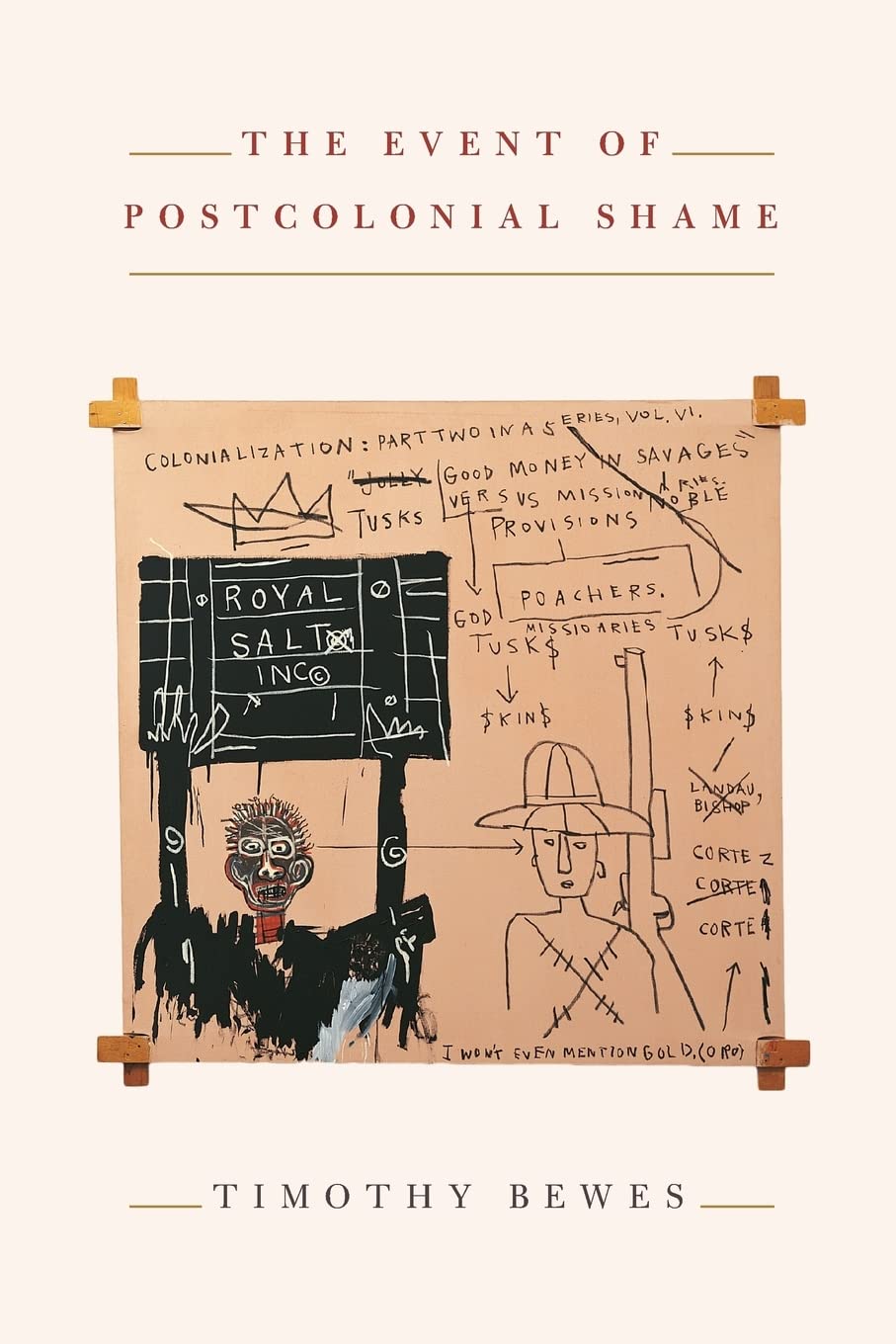
In a postcolonial world, where structures of power, hierarchy, and domination operate on a global scale, writers face an ethical and aesthetic dilemma: How to write without contributing to the inscription of inequality? How to process the colonial past without reverting to a pathology of selfdisgust? Can literature ever be free of the shame of the postcolonial epochever be truly postcolonial? As disparities of power seem only to be increasing, such questions are more urgent than ever. In this book, Timothy Bewes argues that shame is a dominant temperament in twentiethcentury literature, and the key to understanding the ethics and aesthetics of the contemporary world.Drawing on thinkers such as JeanPaul Sartre, Frantz Fanon, Theodor Adorno, and Gilles Deleuze, Bewes argues that in literature there is an 'event' of shame that brings together these ethical and aesthetic tensions. Reading works by J. M. Coetzee, Joseph Conrad, Nadine Gordimer, V. S. Naipaul, Caryl Phillips, Ngugi wa Thiong'o, and Zo Wicomb, Bewes presents a startling theory: the practices of postcolonial literature depend upon and repeat the same structures of thought and perception that made colonialism possible in the first place. As long as those structures remain in place, literature and critical thinking will remain steeped in shame.Offering a new mode of postcolonial reading, The Event of Postcolonial Shame demands a literature and a criticism that acknowledge their own ethical deficiency without seeking absolution from it.
⚠️ WARNING (California Proposition 65):
This product may contain chemicals known to the State of California to cause cancer,
birth defects, or other reproductive harm.
For MAP (Minimum Advertised Price) violations and Intellectual Property (IP) or Trademark concerns, please contact:
support@ergodebooks.com
⚠️ California Proposition 65 Warning: Some products sold on this website may expose you to chemicals known to the State of California to cause cancer, birth defects, or other reproductive harm. For more information, visit www.P65Warnings.ca.gov.