If you have any questions, you are always welcome to contact us. We'll get back to you as soon as possible, withing 24 hours on weekdays.
Customer service
All questions about your order, return and delivery must be sent to our customer service team by e-mail at yourstore@yourdomain.com
Sale & Press
If you are interested in selling our products, need more information about our brand or wish to make a collaboration, please contact us at press@yourdomain.com
Help
If you have any questions, you are always welcome to contact us. We'll get back to you as soon as possible, withing 24 hours on weekdays.
Customer service
All questions about your order, return and delivery must be sent to our customer service team by e-mail at yourstore@yourdomain.com
Sale & Press
If you are interested in selling our products, need more information about our brand or wish to make a collaboration, please contact us at press@yourdomain.com
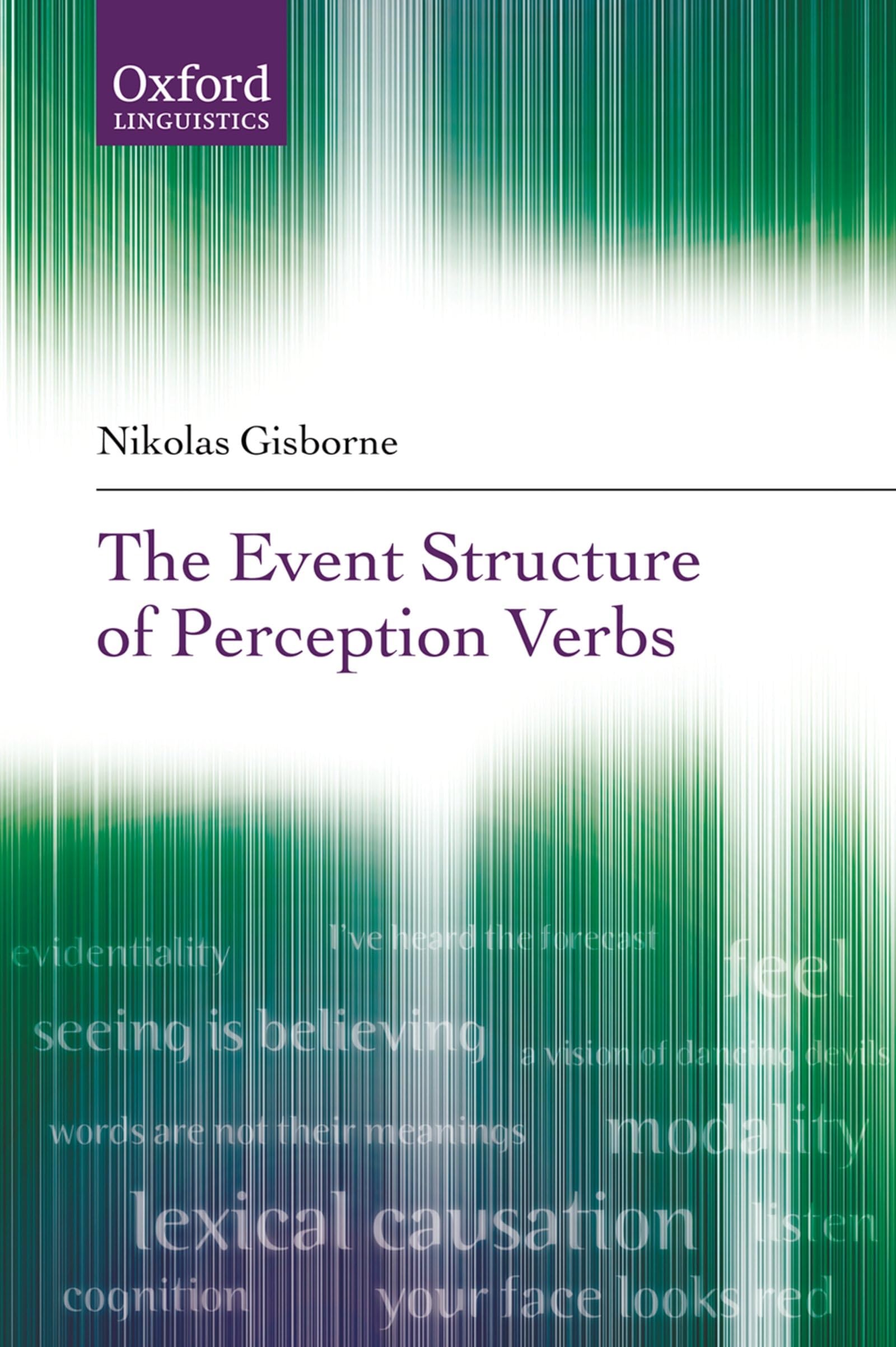
This book makes an original contribution to the understanding of perception verbs and the treatment of argument structure, and offers new insights on lexical causation, evidentiality, and processes of cognition. Perception verbs such as look, see, taste, hear, feel, sound, and listen present unresolved problems for theories of lexical semantics. This book examines the relations between their semantics and syntactic behaviour, the different kinds of polysemy they exhibit, and the role of evidentiality in verbs like seem and sound. In unravelling their complexity Nikolas Gisborne looks closely at their meanings, modality, semantic relatedness, and irregularity. He frames his exposition in Word Grammar, and draws extensively on work in cognitive linguistics and construction grammar.After an opening chapter explaining the nature of the issues, Dr Gisborne presents a concise introduction to Word Grammar. He then considers the implications of his approach for a general theory of event structure. He looks at how the framework may be applied to causation, argument linking, and the modelling of polysemy. He examines the semantic similarities and differences between listen and hearclass verbs, and analyses the cognate patterns of soundclass verbs. He concludes by drawing together his findings and exploring their implications for linguistic theory.Clearly and readably written, with each point of the argument illustrated with wellchosen examples, this book will appeal to linguists of all theoretical persuasions at graduate level and above.
⚠️ WARNING (California Proposition 65):
This product may contain chemicals known to the State of California to cause cancer,
birth defects, or other reproductive harm.
For MAP (Minimum Advertised Price) violations and Intellectual Property (IP) or Trademark concerns, please contact:
support@ergodebooks.com
⚠️ California Proposition 65 Warning: Some products sold on this website may expose you to chemicals known to the State of California to cause cancer, birth defects, or other reproductive harm. For more information, visit www.P65Warnings.ca.gov.