If you have any questions, you are always welcome to contact us. We'll get back to you as soon as possible, withing 24 hours on weekdays.
Customer service
All questions about your order, return and delivery must be sent to our customer service team by e-mail at yourstore@yourdomain.com
Sale & Press
If you are interested in selling our products, need more information about our brand or wish to make a collaboration, please contact us at press@yourdomain.com
Help
If you have any questions, you are always welcome to contact us. We'll get back to you as soon as possible, withing 24 hours on weekdays.
Customer service
All questions about your order, return and delivery must be sent to our customer service team by e-mail at yourstore@yourdomain.com
Sale & Press
If you are interested in selling our products, need more information about our brand or wish to make a collaboration, please contact us at press@yourdomain.com
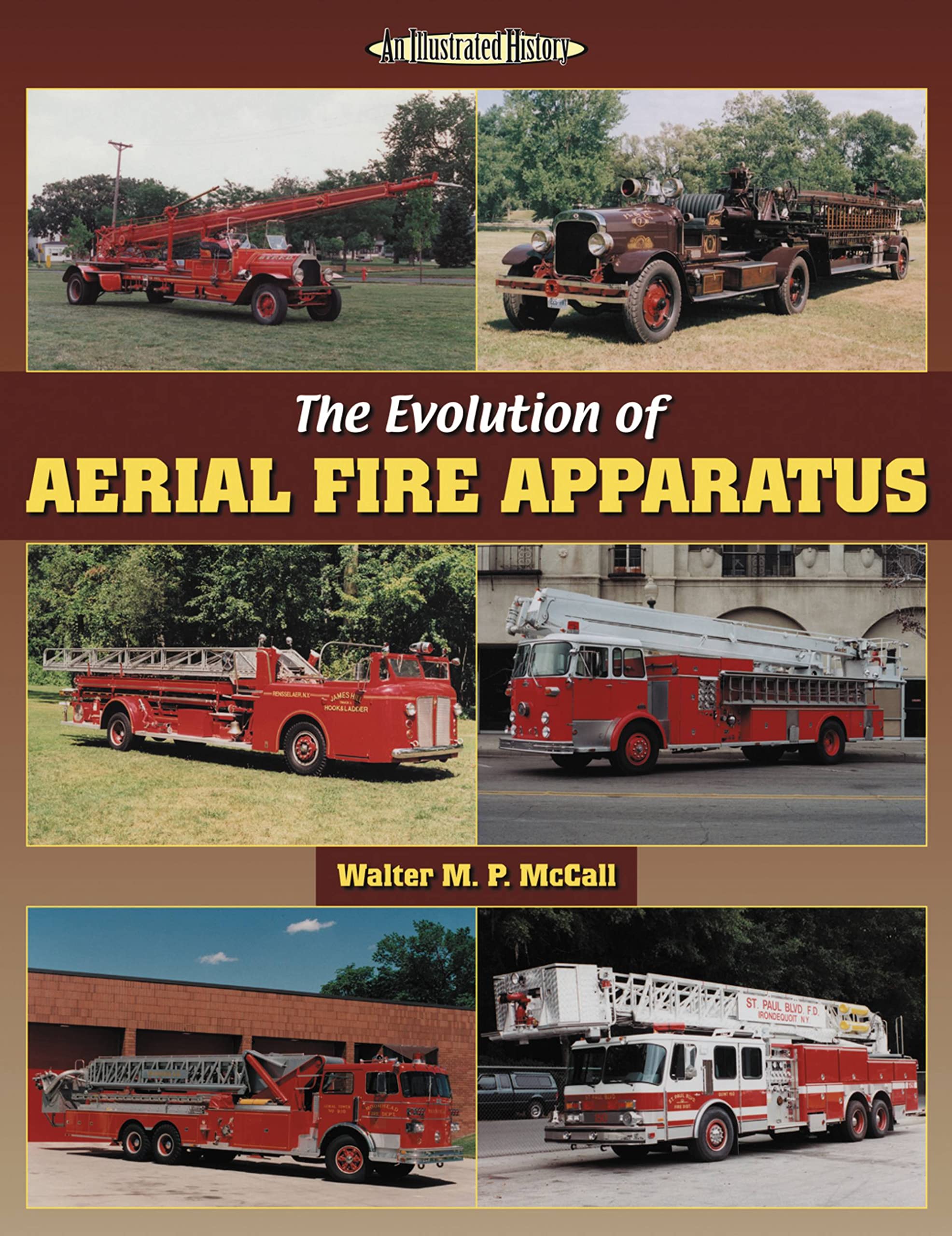
An inventive machinist in the San Francisco Fire Department repair shop, Daniel D. Hayes patented the first successful aerial ladder in America in 1868. At first these heavy ladders were raised by hand, by firefighters furiously turning cranks and handwheels. Early in the new century coil springs took the muscle work out of hoisting the aerial ladder and soon hydraulic power replaced manpower entirely. In the 140 years since they were introduced, aerial ladders have undergone continuous evolution and improvement. In the late 1950s, aerial firefighting in America was revolutionized by the introduction of the elevating platform. Today, firefighters battle major fires with massive aerial towers and telescopic aerial ladders. The only book wholly devoted to the evolution of aerial firefighting, this lavishlyillustrated volume by one of Americas most respected fire apparatus historians and authors covers them all: from long hookandladder trucks drawn by straining threehorse hitches, early aerial ladders and the aerials heavyartillery cousinthe water tower. Included are fourwheel service aerials, glamorous tillered tractortrailer types, compact rearmounts and versatile quintuple combinations.
⚠️ WARNING (California Proposition 65):
This product may contain chemicals known to the State of California to cause cancer,
birth defects, or other reproductive harm.
For MAP (Minimum Advertised Price) violations and Intellectual Property (IP) or Trademark concerns, please contact:
support@ergodebooks.com
⚠️ California Proposition 65 Warning: Some products sold on this website may expose you to chemicals known to the State of California to cause cancer, birth defects, or other reproductive harm. For more information, visit www.P65Warnings.ca.gov.