
Title
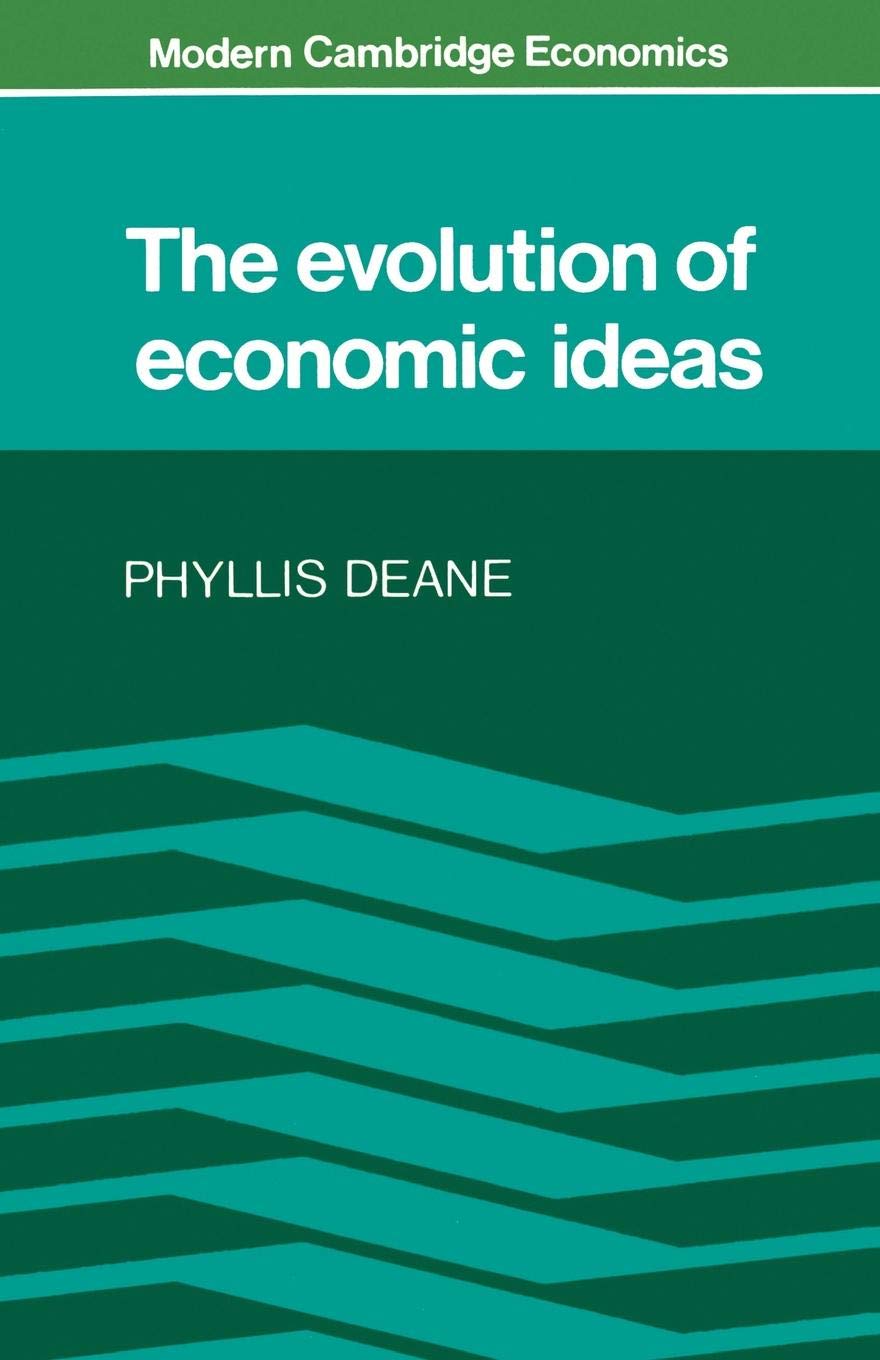
The Evolution of Economic Ideas (Modern Cambridge Economics Series),New
Sold by Ergodebooks, an authorized reseller.
Returns accepted within 30 days | support@ergodebooks.com
Shipping Information
- Free Standard Shipping — United States only
- Processing Time: 3–5 business days
- Estimated Delivery: 6–10 business days after dispatch
- Double-boxed, fully insured & discreetly packaged
- Tracking number sent via email once dispatched
Returns & Refund
Returns accepted within 30 days of delivery.
Damaged or Defective Item
Free return shipping + replacement or full refund
Wrong Item Received
Free return shipping + replacement or full refund
Change of Mind
Return shipping at customer's expense · 25% restocking fee applies
Payment Option

The failure of orthodox economic analysis to provide acceptable answers to the dominant contemporary policy problems has given rise to a widespread feeling of 'methodological crisis' in the discipline. Students find it increasingly hard to relate to a textbookauthenticated paradigm which seems to be in the process of disintegration. The object of this book is to put some of the current theoretical controversies into long term perspective by tracing their historical antecedents. A connected object is to interpret some of the doctrinal divisions in the modern debate by showing that they spring from profound disagreements about what economics is and what questions the economist ought to be trying to answer. It examines the way leading theorists have adapted their theories and concepts to major changes in the problemsituation facing policy makers. The book is in no sense exhaustive (either in the range of theories or in the selection of theorists discussed) but focuses particularly on changes in economists' views on the scope and methodology of economics and on the evolution of strategic ideas in the fields of value theory, monetary theory and growth theory. It raises questions of a sociohistorical kind, such as: when did economics acquire a sufficently coherent and wellattested paradigm to rank as a distinct discipline? What were the distinguishing characteristics of successive paradigms for economics? How revolutionary were the changes attributable to periods of significant theoretical change? How can we explain the success or failure of alternative paradigms in gaining a hold over the minds of a majority of professional economists? All economists will find valuable insights in this book. For undergraduate students it is a compact and readable introduction to the history of economic thought.
⚠️ WARNING (California Proposition 65):
This product may contain chemicals known to the State of California to cause cancer, birth defects, or other reproductive harm.
For more information, please visit www.P65Warnings.ca.gov.