If you have any questions, you are always welcome to contact us. We'll get back to you as soon as possible, withing 24 hours on weekdays.
Customer service
All questions about your order, return and delivery must be sent to our customer service team by e-mail at yourstore@yourdomain.com
Sale & Press
If you are interested in selling our products, need more information about our brand or wish to make a collaboration, please contact us at press@yourdomain.com
Help
If you have any questions, you are always welcome to contact us. We'll get back to you as soon as possible, withing 24 hours on weekdays.
Customer service
All questions about your order, return and delivery must be sent to our customer service team by e-mail at yourstore@yourdomain.com
Sale & Press
If you are interested in selling our products, need more information about our brand or wish to make a collaboration, please contact us at press@yourdomain.com
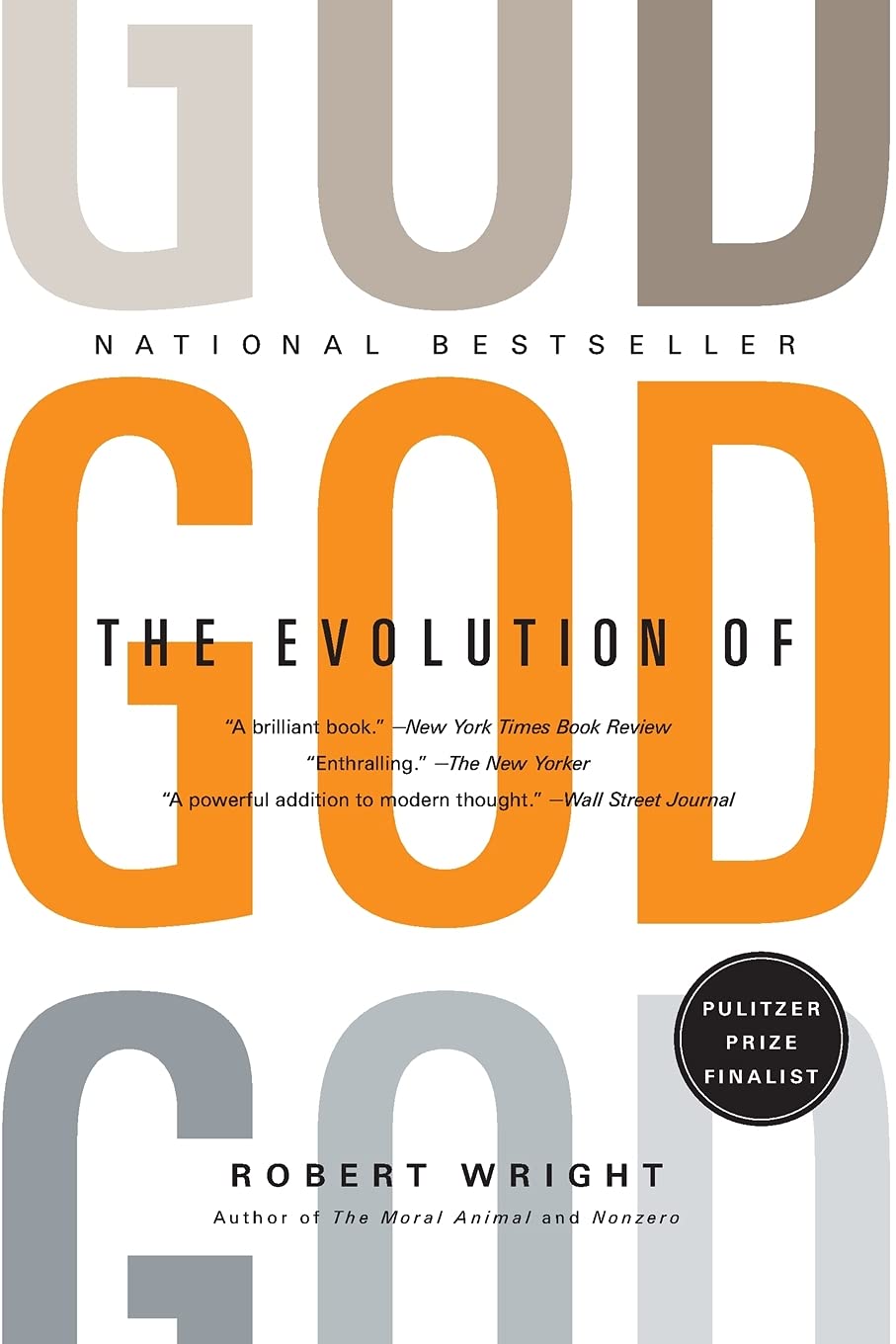
In This Sweeping Narrative That Takes Us From The Stone Age To The Information Age, Robert Wright Unveils An Astonishing Discovery: There Is A Hidden Pattern That The Great Monotheistic Faiths Have Followed As They Have Evolved. Through The Prisms Of Archaeology, Theology, And Evolutionary Psychology, Wright'S Findings Overturn Basic Assumptions About Judaism, Christianity, And Islam, And Are Sure To Cause Controversy. He Explains Why Spirituality Has A Role Today, And Why Science, Contrary To Conventional Wisdom, Affirms The Validity Of The Religious Quest. And This Previously Unrecognized Evolutionary Logic Points Not Toward Continued Religious Extremism, But Future Harmony.Nearly A Decade In The Making, The Evolution Of God Is A Breathtaking Reexamination Of The Past, And A Visionary Look Forward.
⚠️ WARNING (California Proposition 65):
This product may contain chemicals known to the State of California to cause cancer,
birth defects, or other reproductive harm.
Q: How many pages are in The Evolution of God?A: There are five hundred ninety-two pages in The Evolution of God. This extensive length provides a deep exploration of religious evolution.
Q: What is the binding type of this book?A: The binding type is paperback. This makes it lightweight and flexible for easy handling and reading.
Q: What are the dimensions of The Evolution of God?A: The dimensions are five point five one inches in length, one point five inches in width, and eight point two seven inches in height. These measurements make it a standard size for books.
Q: Who is the author of The Evolution of God?A: The author is Robert Wright. He is known for his insightful discussions on religion and philosophy.
Q: What genre does The Evolution of God fall under?A: The Evolution of God is categorized as General nonfiction. It combines elements of archaeology, theology, and psychology.
Q: Is The Evolution of God suitable for young readers?A: The book is generally targeted at adult readers. Its themes may not be appropriate for children due to complex discussions on religion.
Q: How can I best read The Evolution of God?A: You can enjoy The Evolution of God by reading it at your own pace. It offers a narrative style that engages readers in its historical and philosophical insights.
Q: Is there a recommended age for readers of The Evolution of God?A: The recommended age is sixteen and up. Its content involves mature themes and complex ideas about religion.
Q: How should I care for The Evolution of God?A: To care for the book, keep it in a dry place and avoid placing heavy objects on it. This will help preserve its condition.
Q: Can I store The Evolution of God on a bookshelf?A: Yes, it can be stored on a bookshelf. Ensure it's upright and supported by other books to prevent bending.
Q: What if The Evolution of God arrives damaged?A: If it arrives damaged, you should contact the seller for a replacement or return. Most retailers have a return policy for damaged items.
Q: Is there a warranty for The Evolution of God?A: Typically, there is no warranty for books like The Evolution of God. However, check with the retailer for their specific policies.
Q: How does The Evolution of God compare to other religious books?A: The Evolution of God offers a unique perspective by linking religion and evolution. It differs from traditional religious texts by analyzing their historical development.
Q: Is The Evolution of God a good choice for someone interested in philosophy?A: Yes, it is an excellent choice for philosophy enthusiasts. The book explores the intersection of religion, philosophy, and human psychology.
Q: Are there any notable themes in The Evolution of God?A: Yes, notable themes include the evolution of monotheism, the relationship between science and spirituality, and the potential for future religious harmony.
For MAP (Minimum Advertised Price) violations and Intellectual Property (IP) or Trademark concerns, please contact:
support@ergodebooks.com
⚠️ California Proposition 65 Warning: Some products sold on this website may expose you to chemicals known to the State of California to cause cancer, birth defects, or other reproductive harm. For more information, visit www.P65Warnings.ca.gov.