
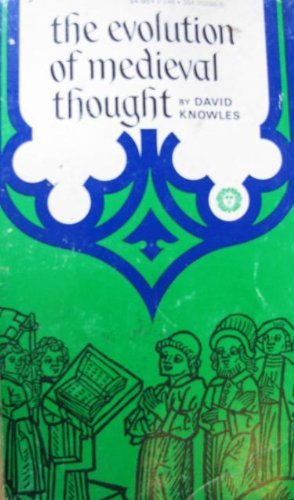
Title
The Evolution Of Medieval Thought
Sold by Ergodebooks, an authorized reseller.
Returns accepted within 30 days | support@ergodebooks.com
Shipping Information
- Free Standard Shipping — United States only
- Processing Time: 3–5 business days
- Estimated Delivery: 6–10 business days after dispatch
- Double-boxed, fully insured & discreetly packaged
- Tracking number sent via email once dispatched
Returns & Refund
Returns accepted within 30 days of delivery.
Damaged or Defective Item
Free return shipping + replacement or full refund
Wrong Item Received
Free return shipping + replacement or full refund
Change of Mind
Return shipping at customer's expense · 25% restocking fee applies
Payment Option

Preface To The 1St Edition Vii Preface To The 2Nd Edition Viii Introduction To The 2Nd Edition Xi Part 1 The Legacy Of The Ancient World 1 Plato &Amp; Aristotle 3 2 The Later Platonists &Amp; Plotinus 15 3 St Augustine 29 4 Boethius &Amp; Dionysius 46 5 Education In The Ancient World 53 Part 2 The Renaissance Of The 11Th &Amp; 12Th Centuries 6 The Rebirth Of The Schools 65 7 The Awakening Of Western Europe 72 8 The Revival Of Dialectic: Berengar, Lanfranc &Amp; Anselm 85 9 The Question Of Universals 98 10 Peter Abelard 106 11 The School Of Chartres &Amp; John Of Salisbury 120 12 The School Of St Victor &Amp; St Bernard 129 Part 3 The New Universitiesthe Rediscovery Of Aristotle 13 The Origins Of The Universities 139 14 Studies, Degrees &Amp; Textbooks 156 15 The Rediscovery Of Aristotle 167 16 Arabian &Amp; Jewish Philosophy 175 17 The Problems Of The Soul &Amp; The Process Of Cognition 187 Part 4 The Achievement Of The 13Th Century 18 The Philosophical Revolution Of The 13Th Century 201 19 The Franciscan School At Paris 213 20 Albert The Great 226 21 St Thomas Aquinas 231 22 Siger Of Brabant &Amp; The Faculty Of Arts 244 23 England In The 13Th Century 252 Part 5 The Breakdown Of The Medieval Synthesis 24 The Aftermath Of Aristotle 265 25 Henry Of Ghent &Amp; Duns Scotus 274 26 The Breakdown Of The Synthesis 283 27 William Of Ockham 290 28 The Harvest Of Nominalism 298 Epilogue 307 Suggestions For Further Reading 311 Index
⚠️ WARNING (California Proposition 65):
This product may contain chemicals known to the State of California to cause cancer, birth defects, or other reproductive harm.
For more information, please visit www.P65Warnings.ca.gov.
- Q: What is the page count of 'The Evolution of Medieval Thought'? A: The book has three hundred fifty-six pages. This makes it a comprehensive resource for those interested in medieval philosophy.
- Q: What is the binding type of this book? A: The binding type is paperback. This provides flexibility and makes it a lightweight option for readers.
- Q: What are the dimensions of 'The Evolution of Medieval Thought'? A: The book measures seven point zero one inches in length, four point two nine inches in width, and zero point nine one inches in height. These dimensions make it portable and easy to handle.
- Q: Who is the author of this book? A: The author is David Knowles. He is known for his scholarly contributions to the study of medieval philosophy.
- Q: What is the genre of 'The Evolution of Medieval Thought'? A: The genre is medieval thought. It explores key philosophical developments from ancient to medieval times.
- Q: Is this book suitable for beginners in philosophy? A: Yes, it is suitable for beginners. The content is structured to guide readers through complex ideas in a digestible manner.
- Q: How can I apply the knowledge from this book? A: You can apply the knowledge by exploring themes in medieval philosophy and relating them to modern thought. It's also useful for academic study.
- Q: Is this book appropriate for academic research? A: Yes, it is appropriate for academic research. It includes thorough discussions and references that can support scholarly work.
- Q: How should I care for this paperback book? A: To care for the book, keep it in a dry place and avoid exposing it to direct sunlight. This will help preserve its condition.
- Q: Can I store this book on a shelf? A: Yes, you can store it on a shelf. Ensure that it is upright to prevent bending or damage to the spine.
- Q: What if the book arrives damaged? A: If the book arrives damaged, you should contact customer support for a return or replacement. They typically have a customer-friendly return policy.
- Q: Does this book include an index? A: Yes, it includes an index. This feature allows readers to quickly locate specific topics or references within the text.
- Q: What themes does 'The Evolution of Medieval Thought' cover? A: It covers themes such as the legacy of ancient philosophy, the renaissance of the eleventh and twelfth centuries, and the achievements of the thirteenth century. These themes provide a comprehensive view of the evolution of thought.
- Q: Is there further reading suggested in this book? A: Yes, there is a section for suggestions for further reading. This can guide readers to additional resources for deeper exploration of the topics.
- Q: What kind of illustrations or visuals are included? A: The book does not specifically mention illustrations. It focuses more on textual analysis and philosophical discussions.
- Q: Who published 'The Evolution of Medieval Thought'? A: The book is published by Vintage. They are known for producing quality academic and literary works.