If you have any questions, you are always welcome to contact us. We'll get back to you as soon as possible, withing 24 hours on weekdays.
Customer service
All questions about your order, return and delivery must be sent to our customer service team by e-mail at yourstore@yourdomain.com
Sale & Press
If you are interested in selling our products, need more information about our brand or wish to make a collaboration, please contact us at press@yourdomain.com
Help
If you have any questions, you are always welcome to contact us. We'll get back to you as soon as possible, withing 24 hours on weekdays.
Customer service
All questions about your order, return and delivery must be sent to our customer service team by e-mail at yourstore@yourdomain.com
Sale & Press
If you are interested in selling our products, need more information about our brand or wish to make a collaboration, please contact us at press@yourdomain.com
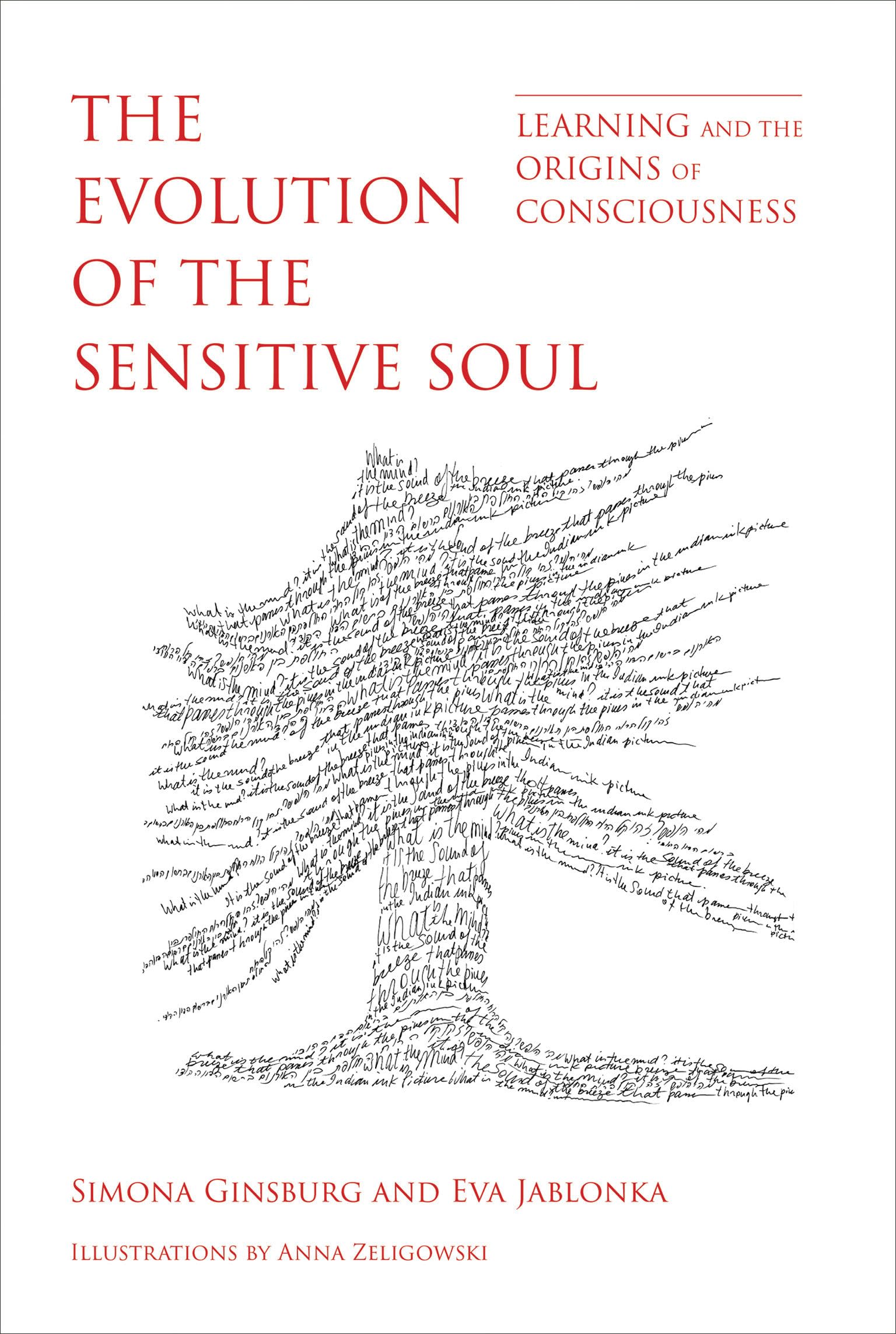
A new theory about the origins of consciousness that finds learning to be the driving force in the evolutionary transition to basic consciousness.What marked the evolutionary transition from organisms that lacked consciousness to those with consciousnessto minimal subjective experiencing, or, as Aristotle described it, the sensitive soul? In this book, Simona Ginsburg and Eva Jablonka propose a new theory about the origin of consciousness that finds learning to be the driving force in the transition to basic consciousness. Using a methodology similar to that used by scientists when they identified the transition from nonlife to life, Ginsburg and Jablonka suggest a set of criteria, identify a marker for the transition to minimal consciousness, and explore the farreaching biological, psychological, and philosophical implications.After presenting the historical, neurobiological, and philosophical foundations of their analysis, Ginsburg and Jablonka propose that the evolutionary marker of basic or minimal consciousness is a complex form of associative learning, which they term unlimited associative learning (UAL). UAL enables an organism to ascribe motivational value to a novel, compound, nonreflexinducing stimulus or action, and use it as the basis for future learning. Associative learning, Ginsburg and Jablonka argue, drove the Cambrian explosion and its massive diversification of organisms. Finally, Ginsburg and Jablonka propose symbolic language as a similar type of marker for the evolutionary transition to human rationalityto Aristotle's rational soul.
⚠️ WARNING (California Proposition 65):
This product may contain chemicals known to the State of California to cause cancer,
birth defects, or other reproductive harm.
For MAP (Minimum Advertised Price) violations and Intellectual Property (IP) or Trademark concerns, please contact:
support@ergodebooks.com
⚠️ California Proposition 65 Warning: Some products sold on this website may expose you to chemicals known to the State of California to cause cancer, birth defects, or other reproductive harm. For more information, visit www.P65Warnings.ca.gov.